A material may look sustainable in a presentation but fail when mixed components, decoration, formula compatibility, and local recycling systems are considered.
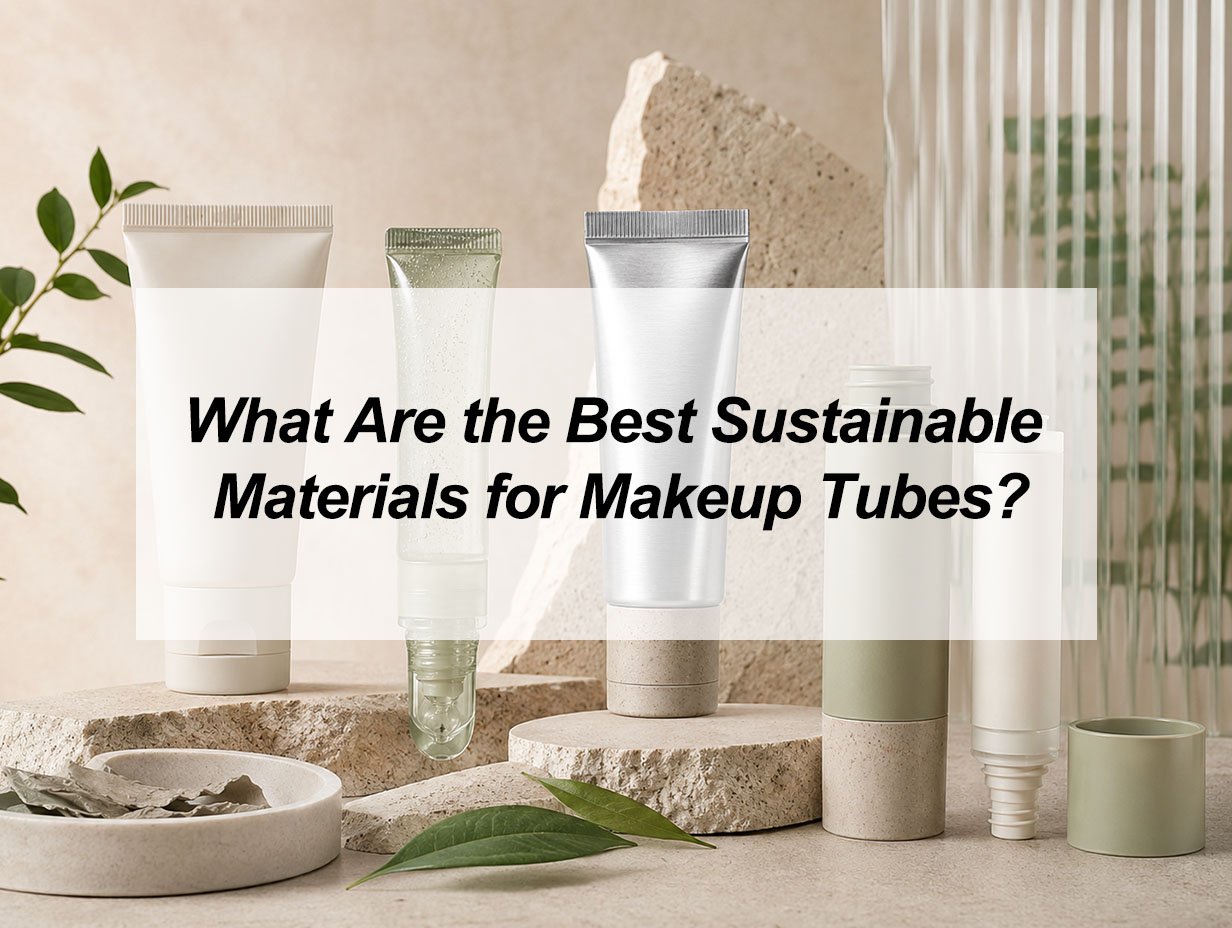
The best sustainable materials for makeup tubes include mono-material PE or HDPE for squeeze tubes, PP for rigid applicator tubes, verified PCR plastic, recycled-content aluminum, and durable refillable structures. Brands should choose them by comparing formula protection, component compatibility, weight, decoration, recyclability, reuse potential, cost, and supplier documentation.
Choosing sustainable makeup tubes requires more than replacing one resin. Brands must match the material, applicator, formula, decoration, recycling stream, refill plan, and production budget before approving packaging at scale.
What Types of Sustainable Materials Work Best for Makeup Tubes?
The word “makeup tube” covers several packaging formats. Each format needs a different material and sustainability strategy.
Mono-material PE or HDPE works well for flexible squeeze tubes. PP works well for mascara, lip gloss, eyeliner, and lipstick tubes. PCR versions can reduce virgin material use. Aluminum can suit premium squeeze tubes, while FSC paperboard works best for cartons, sleeves, inserts, and refill packaging.
1. Mono-Material PE and HDPE
PE and HDPE are strong choices for squeeze tubes used for:
- liquid foundation;
- tinted moisturizer;
- makeup primer;
- cream concealer;
- liquid blush;
- cream highlighter;
- body makeup.
A mono-material tube keeps the body, shoulder, and closure within the same compatible material family. This can simplify recycling compared with older laminated tubes that combine several plastic and metal layers.
RecyClass has approved HDPE tube technologies in which the body, shoulder, and flip-top cap are made mainly from HDPE. Some approved designs use a limited EVOH barrier while maintaining compatibility with the HDPE recycling stream under specific design conditions.
2. PP for Rigid Makeup Tubes
PP is useful for rigid makeup packs because it can be injection molded into precise components. It can support repeated movement, threads, caps, hinges, rods, wipers, and twist mechanisms.
PP is suitable for:
- mascara bottles and caps;
- lip gloss tubes;
- liquid eyeliner tubes;
- lipstick mechanisms;
- brow gel tubes;
- concealer applicator packs;
- refillable makeup cartridges.
RecyClass testing has confirmed that certain rigid PP tube designs can be compatible with the PP recycling stream when the full structure meets specific conditions. This shows why brands need to review the finished package rather than only the main resin.
3. PCR Plastic
PCR means post-consumer recycled material. PCR PE, HDPE, or PP can lower the amount of virgin plastic used in a makeup tube.
However, PCR creates practical questions:
- What percentage is used?
- Is the material mechanically recycled?
- Can the supplier trace each batch?
- Is it suitable for the intended formula?
- Will the color remain consistent?
- Does it create odor or surface variation?
- Can the decoration process handle the material?
A brand should not call a complete tube “recycled” when only one component contains PCR. The percentage and component should be stated clearly.
4. Aluminum
Aluminum can work for premium squeeze tubes used for cream makeup, color corrector, multipurpose pigment, and high-value treatment makeup.
Recycled aluminum requires much less energy to produce than primary aluminum. The Aluminum Association states that making recycled aluminum uses around 5% of the energy required to make new aluminum.
However, aluminum is not automatically the best option. Brands still need to review inner coating, shoulder and cap materials, dent resistance, product evacuation, decoration, shipping, and actual recycling access.
Are Mono-Material PE and PP Better for Cosmetic Tube Recycling?
Mono-material design can make recycling easier, but a mono-material claim must cover the full tube structure, not only the main body.
Mono-material PE and PP can improve cosmetic tube recyclability when the body, shoulder, closure, liner, valve, wiper, label, ink, and barrier remain compatible with one recycling stream. Brands should use recognized design guidelines and testing rather than assuming every PE or PP package will be recycled.
1. Why Material Compatibility Matters
A squeeze tube may look like one piece, but it can include:
- printed tube wall;
- barrier layer;
- adhesive layer;
- shoulder;
- cap;
- liner;
- tamper seal;
- valve;
- decorative foil.
A mascara tube may contain even more components:
- bottle;
- cap;
- rod;
- brush;
- wiper;
- neck insert;
- label;
- weight or decorative shell.
If these components use incompatible materials, the package may be harder to sort and recycle. The APR Design Guide states that every packaging feature should be assessed and that packaging should be evaluated as consumers normally discard it. It does not assume that consumers will remove labels, closures, or other parts before recycling.
2. PE for Flexible Squeeze Tubes
For flexible makeup squeeze tubes, PE or HDPE is usually the clearest recycling direction. The best design keeps the tube wall, shoulder, and closure within the PE family.
RecyClass guidance and approvals show several important design points:
- PE should remain the main material.
- The closure should be compatible with the PE stream.
- Barrier materials should remain within approved limits.
- Printing and decoration must not disrupt sorting or recycling.
- Dark colors and metallic layers require careful review.
3. PP for Rigid Tubes
PP is usually a better material direction for mascara, lip gloss, and lipstick components because these packages need rigidity and mechanical movement.
A PP package can still include incompatible parts. A metal spring, ABS shell, PETG bottle, rubber wiper, magnet, mirror, or metallic coating can change the recycling result.
4. Design Guidance Is Not a Marketing Claim
A package may follow general design guidance but still need market-specific review. The APR squeeze-tube resource states that design compatibility alone is not enough to support a recyclability marketing claim.
| Design Choice | Better Direction | Riskier Direction |
|---|---|---|
| Tube body | PE or PP mono-material structure | Mixed plastic and aluminum laminate |
| Cap | Same compatible polymer family | Unidentified mixed material |
| Barrier | Limited compatible layer | Thick incompatible barrier |
| Color | Natural, white, or sortable color | Carbon-black or difficult dark pigment |
| Decoration | Limited compatible printing | Full metallic coating or heavy foil |
| Label | Compatible or easily separable | Full sleeve that blocks sorting |
| Applicator | Simplified compatible parts | Many small mixed components |
Mono-material design is a strong starting point. It is not a guarantee of collection, sorting, or recycling in every market.
When Should Brands Choose PCR Plastic, Aluminum, or Refillable Tubes?
Alternative materials work best when they solve a clear packaging problem. They should not be selected only to support a marketing headline.
Brands should choose PCR plastic when they want to reduce virgin resin without changing the main packaging system. Aluminum suits premium or high-barrier squeeze tubes. Refillable structures suit products with strong repeat-purchase behavior. Each option requires formula testing, supplier evidence, and clear customer instructions.
1. Choose PCR When the Existing Format Works
PCR is useful when the brand wants to improve an existing PE or PP package without changing the filling line, closure, or customer routine.
PCR works best when:
- the supplier can provide stable material;
- the percentage is documented;
- formula-contact suitability is confirmed;
- color variation is acceptable;
- the package still passes drop and leakage tests;
- the claim names the correct component and percentage.
PCR may not be ideal when the brand needs crystal-clear walls, very bright colors, highly consistent white, or an extremely glossy luxury finish.
2. Choose Aluminum for Premium Squeeze Tubes
Aluminum can give cream makeup a distinctive pharmaceutical or artistic appearance. It also blocks light and creates strong shelf differentiation.
Aluminum works best when:
- the formula fits a lined aluminum tube;
- light protection is valuable;
- the retail price supports higher packaging cost;
- denting is acceptable or part of the visual character;
- the cap and shoulder are designed carefully;
- recycled content or recycling guidance can be documented.
The sustainability value of aluminum becomes stronger when recycled material is used and the package enters a functioning collection system. Packaging labels should not imply that every customer can recycle the tube locally.
3. Choose Refillable Tubes for Repeat Products
Refillable structures can work for:
- lipstick;
- mascara;
- brow products;
- lip gloss;
- concealer;
- multipurpose color sticks.
The outer pack should be durable enough for many uses. The inner refill should be smaller, lighter, and easy to replace.
A refill system becomes weak when:
- the refill costs almost as much as the complete package;
- the replacement process is messy;
- the refill is difficult to find;
- the outer case breaks early;
- mixed materials increase rather than reduce complexity;
- customers do not repurchase the same product.
4. Use Paper Where Paper Performs Well
FSC paperboard is useful for cartons, refill sleeves, shipping boxes, inserts, and product instructions. FSC states that manufacturers using forest-based materials can obtain chain-of-custody certification, which supports verified FSC claims and label use.
FSC also states that its FSC Recycled label is used for products containing 100% reclaimed material.
Paper is usually not the best direct-contact material for mascara, liquid foundation, gloss, or eyeliner. These products need strong barriers, precise closures, and formula compatibility.
What Should Buyers Test Before Choosing Sustainable Makeup Tube Materials?
A sustainable tube still needs to protect the formula, run on the filling line, survive shipping, and work smoothly for the customer.
Before choosing sustainable makeup tube materials, buyers should test formula compatibility, leakage, dispensing, cap fit, applicator performance, decoration durability, PCR consistency, drop resistance, transport stability, recyclability claims, and supplier documentation. Sustainability should be reviewed alongside quality, cost, production risk, and customer use.
1. Formula Compatibility
Makeup formulas can contain:
- oils;
- waxes;
- alcohol;
- fragrance;
- pigments;
- silicones;
- solvents;
- powders;
- preservatives;
- active ingredients.
These materials can interact with the tube body, inner coating, wiper, rod, cap, label, adhesive, or barrier layer.
Brands should check:
- swelling;
- stress cracking;
- staining;
- odor change;
- color change;
- leakage;
- formula separation;
- evaporation;
- brush or wiper performance.
2. Functional Testing
Each makeup tube needs format-specific tests.
| Tube Format | Important Tests |
|---|---|
| Squeeze tube | Seal strength, squeeze force, leakage, product evacuation |
| Mascara tube | Wiper control, brush loading, neck seal, drying risk |
| Lip gloss tube | Applicator dosage, leakage, stopper fit, formula pullback |
| Eyeliner tube | Tip loading, cap seal, evaporation, precision |
| Lipstick tube | Twist torque, cup fit, cap retention, refill replacement |
| Aluminum tube | Liner compatibility, fold behavior, denting, cap seal |
3. Decoration Testing
Sustainable materials can behave differently during decoration. PCR resin may show color variation. PE can need surface treatment for printing. Aluminum decoration can scratch. Paper labels can lift when exposed to oils.
Brands should test:
- ink adhesion;
- hot-stamping durability;
- rub resistance;
- oil resistance;
- water resistance;
- scratch resistance;
- batch color consistency;
- label separation during recycling.
4. Supplier Documentation
Buyers should request:
- material data sheet;
- resin identification;
- PCR percentage and traceability;
- recycled-content certificate;
- recyclability test or assessment;
- formula compatibility support;
- color tolerance;
- production specification;
- quality inspection standard;
- certificate validity and scope.
The EU Packaging and Packaging Waste Regulation entered into force on February 11, 2025 and generally applies from August 12, 2026. It introduces requirements intended to improve recyclability, recycled-material use, waste prevention, reuse, and circular packaging systems.
This makes supplier evidence more important. A verbal promise that a tube is “eco-friendly” is not enough.
How Should Brands Rank Sustainable Makeup Tube Materials?
A practical ranking should separate flexible tubes, rigid applicator tubes, premium metal tubes, and refill systems.
For flexible makeup tubes, mono-material PE or HDPE is usually the strongest starting point. For rigid mascara and lip gloss tubes, PP is often more practical. PCR versions improve virgin-material reduction. Aluminum suits selected premium formulas, while refill systems work best for loyal, repeat-purchase products.
Practical Material Ranking
| Rank | Material Direction | Best Use | Overall Reason |
|---|---|---|---|
| 1 | Mono-material PE or HDPE | Squeeze makeup tubes | Lightweight, practical, and compatible with established design guidance |
| 2 | Mono-material PP | Mascara, gloss, eyeliner, lipstick | Supports rigid parts, closures, wipers, and mechanisms |
| 3 | PCR PE, HDPE, or PP | Existing plastic tube formats | Reduces virgin plastic while keeping familiar production |
| 4 | Durable refillable PP or aluminum system | Lipstick and premium repeat products | Can reduce repeated outer-pack production |
| 5 | Recycled-content aluminum | Premium squeeze makeup tubes | Strong barrier, high material value, and shelf distinction |
| 6 | FSC paperboard | Cartons, sleeves, and refill boxes | Strong secondary-packaging option, not a universal primary tube |
Choose Mono-Material PE or HDPE When:
- the product uses a soft squeeze tube;
- low weight matters;
- the formula fits a PE structure;
- the cap can remain PE-compatible;
- recycling design is a key target.
Choose PP When:
- the tube needs rigidity;
- the package uses a wiper or rod;
- the product needs threads, hinges, or a twist mechanism;
- the supplier can simplify mixed components.
Choose PCR When:
- the existing PE or PP format already works;
- recycled-content documentation is available;
- the brand can accept some color variation;
- performance remains stable.
Choose Aluminum When:
- premium shelf impact matters;
- the formula needs light protection;
- a compatible inner coating is available;
- higher cost and denting are acceptable.
Choose Refillable Packaging When:
- the product has strong customer loyalty;
- the refill is lighter than the full package;
- the replacement process is simple;
- refills are easy to buy;
- the outer case survives repeated use.
My insights: What Are the Best Sustainable Materials for Makeup Tubes
A makeup tube may look sustainable, but mixed components, coatings, applicators, and unclear disposal instructions can weaken its real environmental value.
The best sustainable materials for makeup tubes are mono-material PE or HDPE for squeeze tubes, PP for rigid mascara and lip gloss tubes, verified PCR PE or PP, recycled-content aluminum, and durable refillable structures. The right choice must match the formula, applicator, recycling stream, decoration, cost, and customer use.
From Sustainable Resin to a Complete Packaging System
Material selection should start with the type of makeup tube. A soft foundation tube does not need the same structure as a mascara tube. A lipstick case also needs different parts from a lip gloss package.
| Material Direction | Best Makeup Use | Main Benefit | Main Limitation |
|---|---|---|---|
| Mono-material PE or HDPE | Foundation, primer, concealer, cream makeup | Lightweight and compatible with tube recycling design | Limited rigidity |
| Mono-material PP | Mascara, lip gloss, eyeliner, lipstick | Strong for caps, rods, wipers, and mechanisms | Small mixed parts can reduce recyclability |
| PCR PE or PP | Tubes, caps, and rigid components | Reduces virgin plastic demand | Color, odor, and supply may vary |
| Aluminum | Cream makeup and premium squeeze tubes | High material value and strong barrier | Dents, coating, and cost require review |
| Refillable structure | Lipstick, mascara, gloss, and premium makeup | Reduces repeated outer-pack production | Only works when customers buy refills |
| FSC paperboard | Cartons, sleeves, and refill boxes | Supports responsible fiber sourcing | Usually not suitable for direct wet-formula contact |
The best sustainable option is not simply the material with the strongest environmental image. It is the structure that protects the formula, uses fewer incompatible parts, supports recycling or reuse, and survives filling, shipping, and daily use.
Conclusion
The best sustainable makeup tube material depends on format. PE suits squeeze tubes, PP suits rigid tubes, while PCR, aluminum, and refills require clearer testing and proof.