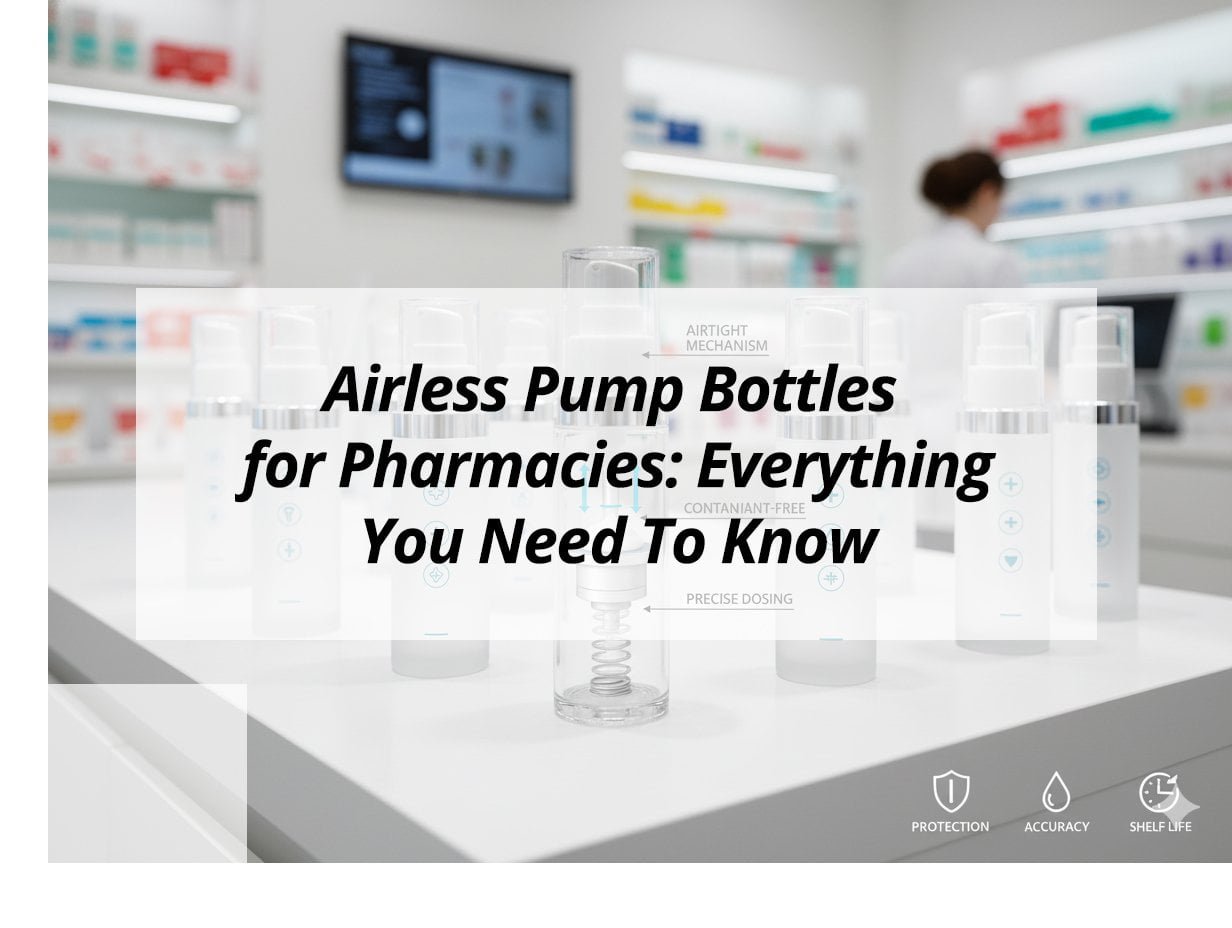
Are you a pharmacist or pharmaceutical buyer? You need packaging that protects sensitive medicines. Traditional bottles often fall short.
Airless pump bottles are ideal for pharmacies because they provide superior protection for sensitive formulas. They prevent air and contaminants from reaching the product. This extends shelf life and maintains ingredient stability. Their hygienic dispensing ensures precise dosing. This makes them a reliable choice for pharmaceutical cosmetic packaging products.
I have seen the high demands in the pharmaceutical sector. Product integrity is very important. Airless bottles offer a solution that meets these strict requirements. They ensure product safety and effectiveness.
What Are the Benefits of Airless Pump Bottles?
Are you concerned about product stability and shelf life? Many pharmaceutical products lose effectiveness when exposed to air. This can compromise patient treatment.
Airless pump bottles offer many benefits. They shield pharmaceutical products from air and contamination. This extends their shelf life and maintains ingredient potency. They also ensure almost 100% product usage. This reduces waste. Their hygienic dispensing provides a consistent dose. This is important for medication accuracy.
I know that for pharmaceutical cosmetic packaging1 products, every detail matters. For example, a cream for a skin condition needs to stay potent. An airless bottle ensures this. It prevents the active ingredients from degrading. This means the patient gets the full benefit of the medicine.
Key Advantages for Pharmaceutical Products
Airless pump bottles2 bring critical advantages to pharmacy use. They ensure product effectiveness and patient safety.
| Benefit | Explanation | Impact on Pharmaceutical Product |
|---|---|---|
| Enhanced Product Stability | Airless bottles prevent air entry. This stops oxidation. It protects sensitive active ingredients. | Medications like retinoids or specific topical antibiotics retain full potency longer. |
| Contamination Prevention | The sealed system keeps bacteria and external contaminants out. Fingers do not touch the bulk product. | Reduces risk of infection. Maintains sterility for sterile products. |
| Maximized Product Usage | The piston mechanism pushes nearly all product out. This reduces residue inside the bottle. | Ensures patients get the full prescribed dose. Minimizes waste of costly medications. |
| Precise Dosing | Airless pumps deliver a consistent and controlled amount of product with each pump. | Important for accurate medication application. Helps prevent under- or overdosing. |
| Extended Shelf Life | By protecting from environmental degradation, airless bottles help products remain effective longer. | Allows for longer storage times without losing therapeutic benefits. |
Why Pharmacies Choose Airless Bottles
Pharmacies need reliable solutions. They look for packaging that supports patient health. Airless bottles are a smart choice for many reasons.
- Integrity of Active Ingredients: Many medicines have sensitive active ingredients. Airless bottles protect them.
- Patient Compliance: Easy and hygienic dispensing encourages consistent use.
- Reduced Waste: Minimizing product left in the bottle is important for cost and environmental reasons.
- Safety: Preventing contamination is key for patient safety.
When selecting pharmaceutical cosmetic packaging products, airless options should be a top priority. They help ensure the medicine works as intended.
What Is the Trick to Opening Pump Bottles?
Do you ever struggle to open a new pump bottle? It can be frustrating when the pump will not pop up. There is usually a simple trick.
The trick to opening most pump bottles is to turn the pump head counter-clockwise while holding the collar or base securely. This unlocks the pump mechanism. Some pumps may require a gentle upward pull while twisting. For airless bottles, "opening" usually refers to priming, as they do not have a traditional opening mechanism like a dip tube pump.
I know this common problem. I once spent minutes twisting a bottle the wrong way. A simple counter-clockwise turn solved it. This trick saves time and frustration. For airless bottles, the process is slightly different.
Opening Traditional Pump Bottles
Most traditional pump bottles use a similar mechanism.
- Hold the Collar: Grip the base of the pump head. This is the part that sits directly on the bottle neck. Hold it firmly.
- Turn the Pump Head: Rotate the top part of the pump (the actuator) counter-clockwise. You should feel a click or a release.
- Pop Up: The pump head should then pop up. It is now ready to use.
- Prime the Pump: Press the pump a few times until the product comes out. This removes air from the dip tube.
How Airless Bottles "Open" (Prime)
Airless bottles do not "open" in the same way. They do not have a twist-up pump.
- No Twist-Up Mechanism: Airless pump bottles are sealed units. The pump head does not usually twist to unlock.
- Priming is Key: If the airless bottle does not dispense, it needs priming. This means removing any air pockets from the pump mechanism.
- Priming Steps:
- Place the bottle upright.
- Pump it slowly and firmly about 10-20 times. You may need to cover the dispenser hole with your finger on some designs.
- The product should start to come out. If not, try pumping more or storing it upside down for a few minutes.
| Pump Type | Opening Method | Key Feature | Common Troubleshooting for No Dispense |
|---|---|---|---|
| Traditional Pump | Twist pump head counter-clockwise while holding collar | Dip tube, vent hole | Twist correctly, prime pump, check dip tube for clogs |
| Airless Pump Bottle | No traditional opening; "priming" is the process. | Piston mechanism, sealed chamber, no dip tube | Prime pump repeatedly, store upright/upside down |
| Spray Pump | Twist nozzle to "open" or "spray" | Fine mist or stream delivery | Ensure nozzle is fully open, prime pump |
For pharmaceutical cosmetic packaging products, clear instructions on opening and priming are important. This ensures correct product use.
How Do Airless Pump Bottles Work?
Have you ever wondered about the clever design of airless pump bottles? They work differently from standard pumps. This difference is key to their effectiveness.
Airless pump bottles operate using a piston mechanism. When the pump is pressed, a disc or piston at the bottom of the bottle rises. This creates a vacuum. This vacuum pulls the product upward without a dip tube. This design keeps air out of the product chamber. It ensures precise and hygienic dispensing for sensitive formulas.
I often explain this to clients. They see airless bottles and think they are just like any other pump. But the internal system is unique. This system is why airless bottles are so good for preserving ingredients. It is vital for pharmaceutical cosmetic packaging products.
The Piston and Vacuum System
The core of an airless pump bottle is its unique internal structure.
- No Dip Tube: Unlike traditional pumps, airless bottles do not have a straw. This is a main difference.
- Rising Piston: Inside the bottle, there is a movable disc or piston at the base of the product chamber.
- Vacuum Creation: When you press the pump head, it creates pressure. This pressure lifts the piston. The product above the piston moves up.
- Product Dispensing: The product is then pushed out through the nozzle.
- Air Exclusion: No air enters the bottle. This means the product is never exposed to outside elements.
Steps in the Airless Process
Understanding the steps makes the process clear.
- Press the Pump: Your finger presses down on the pump actuator.
- Piston Rises: This action causes the piston at the bottom of the bottle to move up.
- Product Moves Up: The product is forced upwards by the rising piston.
- Dispensing: The product exits through the pump nozzle.
- Vacuum Seal: As the piston rises, it maintains a vacuum seal. This keeps air from entering.
| Component | Function | Importance for Pharmaceutical Use |
|---|---|---|
| Actuator | The part you press down. | Controls dose delivery. |
| Pump Head | Contains the mechanism that creates pressure. | Ensures consistent and precise medication dispensing. |
| Piston | Moves upwards inside the bottle. | Pushes product out, maintains airless seal, minimizes waste. |
| Outer Bottle | Protects the inner mechanism and holds the product. | Provides structural integrity and protection against external damage. |
| Inner Pouch | (Some designs) Collapses as product is used. | Alternative to piston, also maintains airless condition for specific cosmetic packaging products. |
For pharmaceutical cosmetic packaging products, the precise and sealed nature of airless bottles is a big advantage. It protects medicine integrity.
Are Airless Pump Bottles Better?
Do you question if airless pump bottles are truly superior? Many people wonder if the benefits are worth the often higher cost.
Yes, airless pump bottles are generally better, especially for sensitive pharmaceutical and cosmetic products. They offer superior protection from air, light, and contamination. This extends product shelf life and maintains ingredient potency. They also ensure maximum product usage and provide hygienic, consistent dosing. These advantages lead to better product performance and user satisfaction.
I have seen countless examples where airless packaging made a real difference. For instance, a topical steroid in an airless bottle will remain more effective over time than one in a jar. The protection is simply superior. This is vital for medicines.
Airless vs. Traditional Pump Bottles
The differences are important for product effectiveness.
- Air Exposure:
- Traditional: Product is exposed to air in the headspace and through the dip tube. This causes oxidation.
- Airless: Product is completely sealed from air. This preserves active ingredients.
- Contamination:
- Traditional: Risk of microbial contamination from air and fingers (for jars).
- Airless: Sealed system prevents external contamination.
- Product Evacuation:
- Traditional: Leaves significant product residue.
- Airless: Nearly 100% product is dispensed, minimizing waste.
- Dosing Consistency:
- Traditional: Can be inconsistent, especially with low product levels.
- Airless: Delivers a precise, consistent dose every time.
Benefits for Pharmacy and Consumers
These differences matter greatly in a pharmacy setting.
- For Pharmacies:
- Stability: Ensures medications maintain therapeutic efficacy.
- Inventory Management: Longer shelf life can reduce waste from expired products.
- Reputation: Provides high-quality, reliable pharmaceutical cosmetic packaging products.
- For Patients:
- Effectiveness: Ensures the medicine works as prescribed.
- Value: Get all the product they paid for.
- Hygiene: Safer to use, especially for those with compromised immunity.
| Feature | Traditional Pump Bottles | Airless Pump Bottles | Advantage for Pharmacies |
|---|---|---|---|
| Product Protection | Good (better than jars), but air exposure still a factor. | Superior (sealed from air, light, contaminants). | Maintains drug efficacy, prevents degradation. |
| Hygiene | Good (no direct finger contact with bulk), but air can enter. | Excellent (sealed system, no air entry, no finger contact). | Reduces risk of infection, essential for sterile products. |
| Product Usage | Can leave significant residue. | Nearly 100% evacuation. | Minimizes waste of expensive medications. |
| Dosing Accuracy | Can be less consistent. | Highly consistent. | Ensures precise medication delivery for patients. |
| Shelf Life | Shorter for sensitive formulas. | Longer for sensitive formulas. | Reduces expired stock, better for long-term treatments. |
When you purchase cosmetic packaging products for pharmaceuticals, airless bottles are a premium choice. They provide the highest level of protection and performance.
My Insights: Comprehensive Guide to Airless Pump Bottles in Pharmacies
Concerned about contamination and dosage precision in pharmaceuticals? Airless pump bottles offer an effective solution, ensuring medication safety and efficacy.
Airless pump bottles prevent contamination by minimizing air exposure and provide precise dosing for pharmaceuticals. They enhance product stability, extend shelf life, and offer hygienic dispensing, supporting both pharmacies and patient needs.
Key Aspects of Airless Pump Bottles for Pharmacies
How They Work:
-
Piston Mechanism: Utilizes a rising piston or diaphragm to dispense product without air intake.
-
Vacuum System: Prevents contamination, oxidation, and bacterial growth, ensuring product integrity.
Key Benefits:
| Aspect | Description |
|---|---|
| Product Stability | Extends shelf life for sensitive formulations and reduces preservative need. |
| Hygiene and Precision | Provides no-touch dispensing and accurate dosing, enhancing patient compliance and safety. |
| Waste Reduction | Facilitates nearly complete product usage, reducing waste. |
Types and Sizes:
-
Variations: Available in sizes from 15ml to 250ml with doses from 0.2ml to 1.45ml.
-
Designs: Standard colors and top-fill designs facilitate pharmacy operations.
Suppliers and Regulations:
-
Compliance: Meets FDA standards with tamper-evident features and quick shipping options.
-
Providers: Suppliers like PharmaPump and Total Pharmacy Supply offer ready-to-use solutions with customization.
Airless pump bottles are a vital tool in pharmacies, promoting medication safety and efficient dispensing through advanced packaging solutions.
Conclusion
Airless pump bottles are vital for pharmacies. They offer superior protection and stability for sensitive products. Their hygienic, precise dispensing makes them better. They are a reliable choice for pharmaceutical cosmetic packaging products.