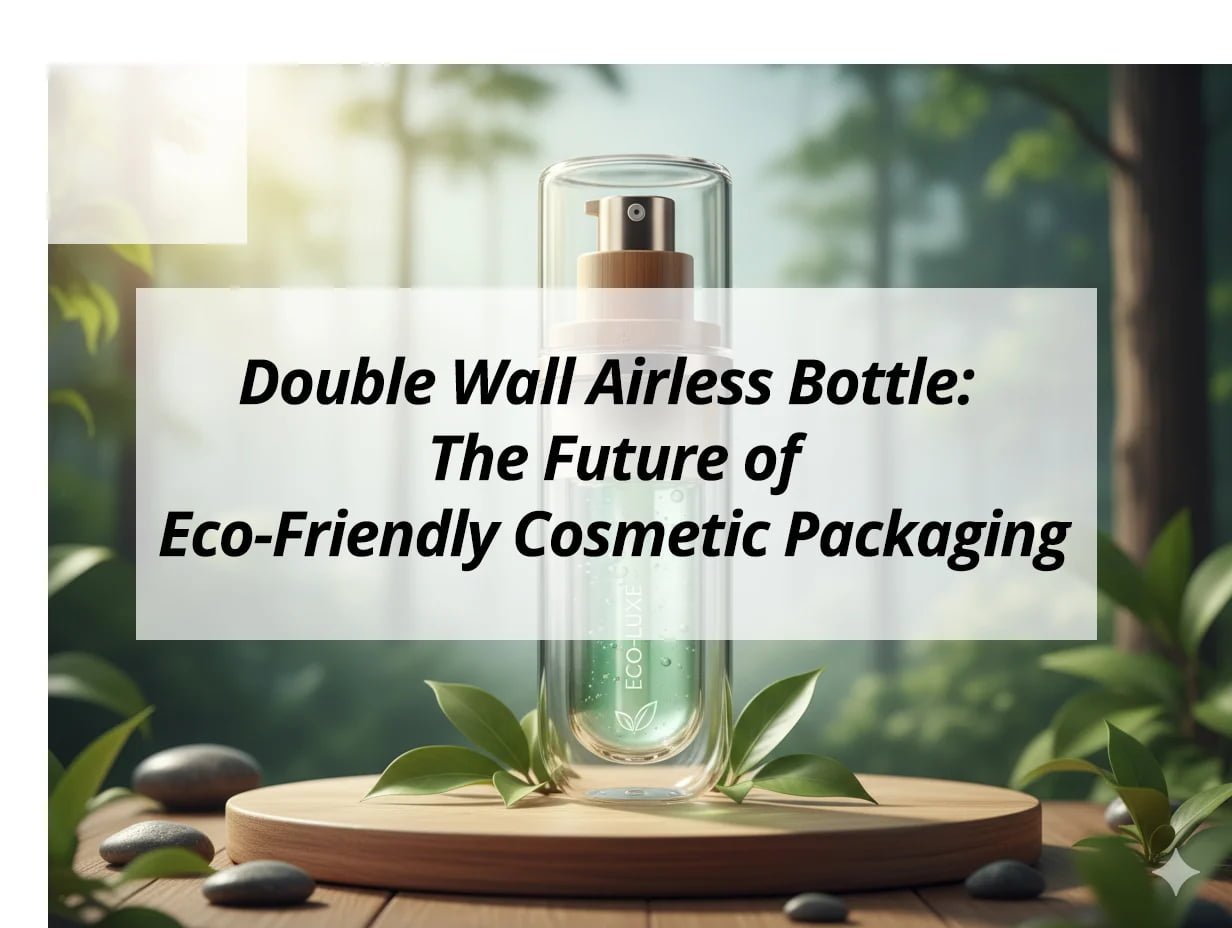
The cosmetic industry now highly values eco-friendly packaging. Making smart choices is crucial for brands to stay competitive. Many buyers face challenges in finding green packaging that also performs well. They need solutions that protect products effectively and reduce environmental impact.
This article will explain why double-wall airless bottles are a leading option for eco-friendly cosmetic packaging. These bottles offer high-level product protection. They also contribute to environmental goals. They keep cosmetic formulas fresh and safe. This offers benefits for brands and their customers.
The evolution of cosmetic packaging shows a constant drive for better protection and less waste. Innovations like double-wall airless bottles address current industry needs. These systems solve practical problems for both businesses and end-users. They represent a significant step forward in packaging technology.
What is the most eco-friendly packaging for cosmetics?
Selecting truly eco-friendly packaging can be complex. Many options claim environmental benefits, but identifying the best choice is hard. Brands often feel uncertain. They aim to make sustainable choices while also ensuring product integrity. This can lead to difficulties in balancing both requirements.
The most eco-friendly packaging for cosmetics generally uses materials that are recyclable, reusable, or made from recycled content. It also aims to reduce product waste and energy use throughout its life cycle. Double-wall airless bottles1 are a strong candidate. They protect sensitive formulas, extend product shelf life, and often use fewer resources over time.
Discussions within the industry highlight a growing demand for sustainability. Buyers consistently inquire about environmentally friendly packaging solutions. It is clear that "green" practices are not merely a trend. They are becoming a fundamental business requirement. This demand is evident across various global markets.
How Different Materials Compare for Eco-Friendliness
Various packaging materials have distinct environmental footprints. Understanding these differences helps in making informed decisions. This includes materials used for Airless pump cosmetic packaging2 and other forms.
- Glass:
- Pros: Highly recyclable, offers a premium aesthetic. Suitable for Glass Airless Pump bottles3.
- Cons: Heavy, prone to breakage, high shipping costs, requires significant energy for production.
- PET/PCR PET:
- Pros: Lightweight, widely recyclable, can incorporate post-consumer recycled (PCR) content.
- Cons: Not infinitely recyclable like glass or aluminum.
- PP (Polypropylene):
- Pros: Durable, provides good barrier properties, frequently used in Airless cosmetic bottles.
- Cons: Recycling infrastructure can vary by region.
- Aluminum:
- Pros: Very lightweight, infinitely recyclable, excellent barrier.
- Cons: Can dent easily, may have higher initial costs.
- Sugarcane-based plastics:
- Pros: Derived from a renewable resource, helps reduce carbon footprint.
- Cons: Still a plastic, recycling capabilities may not be universal yet.
The Role of Design in Packaging Sustainability
Packaging design significantly influences its eco-friendliness. It involves more than just the material choice. It also relates to how the package functions.
- Lightweighting: Reducing material use lowers the carbon footprint. Lighter packages require less fuel for transportation.
- Modularity: Some designs allow components to be replaced or refilled. This extends the product's lifespan.
- Product Protection: Packaging that effectively protects the product minimizes waste. If a product spoils, the resources used in its creation are lost. Airless systems excel in this area. They shield sensitive formulas from air and contamination. This results in less product being wasted.
Why Airless Systems Offer Sustainable Advantages
Airless pump cosmetic packaging2 integrates several eco-friendly benefits. Its pump system minimizes product residue. It protects ingredients, thus extending product longevity. This means fewer products are discarded before being fully used. For businesses, this translates to reduced losses from spoiled goods. The design of Airless Pump Bottles supports this objective.
Considering the entire life cycle of packaging is essential. From manufacturing to consumer use and disposal, an eco-friendly package performs well at every stage. For cosmetic packaging, an airless system helps maintain product freshness. This is crucial for formulas with sensitive ingredients. It ensures consumers can use the product completely. This contributes to waste reduction.
What are the benefits of airless bottles?
Many conventional cosmetic packages allow air ingress. This can degrade sensitive ingredients. Do products lose their efficacy too quickly? Brands frequently worry about product stability. They seek packaging that keeps formulas fresh and potent. This concern can lead to customer dissatisfaction and decreased sales.
Airless bottles create a hermetic seal. This prevents air from entering the container. It protects sensitive ingredients from oxidation and external contaminants. This design extends the product's shelf life. It also allows consumers to use nearly all the product inside. This results in less waste and enhanced product value.
A common challenge for brands is maintaining the integrity of highly active ingredients. When traditional packaging compromises product efficacy, switching to Airless cosmetic bottles often provides a clear solution. This improves product performance, increases customer satisfaction, and helps mitigate financial losses from product spoilage. This is a practical benefit that airless systems consistently deliver.
Protecting Sensitive Formulations
Sensitive ingredients require specific protection. Oxygen, light, and microbial exposure can degrade them. Airless Pump Bottles provide superior defense.
- No Air Exposure: The pump mechanism prevents external air from entering the bottle. This stops oxidation, which can break down active ingredients like Vitamin C, retinol, and various antioxidants.
- No Contamination: Direct finger contact with the product is avoided. This reduces the risk of bacterial contamination. This is especially important for natural or formulas with minimal preservatives.
- Extended Shelf Life: Product stability is maintained, leading to a longer usable life. This means less product waste for consumers and improved inventory management for brands.
Maximizing Product Utilization
Traditional packaging often leaves residual product at the bottom or sides. This is inefficient for users and contributes to waste.
- Full Product Evacuation: A piston mechanism pushes the product upwards. This ensures that almost all the product is dispensed. Consumers receive full value from their purchase.
- Consistent Dispensing: Each pump delivers a uniform dose. This helps users control application amounts. This is beneficial for expensive or highly concentrated formulas.
The Advantage of Double-Wall Construction
Double Wall Airless Bottle designs add extra layers of protection and aesthetic appeal.
- Enhanced Structural Integrity: The outer wall provides additional strength. It shields the inner container from potential damage.
- Premium Presentation: The double-wall design often conveys a more luxurious appearance. This helps brands establish a high-end image. This contributes to brand perception.
- Thermal Stability: It can offer some insulation, helping to maintain a more stable product temperature inside.
Essential Applications for Airless Technology
Certain product categories greatly benefit from Airless Pump Bottles.
| Product Type | Benefits of Airless Packaging |
|---|---|
| Serums and Facial Oils | Protects delicate active ingredients like Vitamin C and antioxidants. |
| Eye Creams | Prevents contamination from finger contact, ensures precise dosing. |
| Natural or Organic Formulas | Reduces the reliance on harsh chemical preservatives. |
| Foundation and BB Creams | Maintains color stability, prevents product drying out. |
| Sunscreens | Ensures consistent application, preserves SPF effectiveness. |
Providing Airless Pump bottles wholesale4 means offering effective solutions to businesses. Packaging is expected to perform reliably. It ensures that products deliver on their promises. Airless technology is instrumental in achieving this.
Can you reuse airless pump bottles?
The concept of reusing packaging is gaining traction due to environmental concerns. However, the feasibility of reusing airless pump bottles warrants careful consideration. Both brands and consumers often inquire about refilling these containers. This desire for reusability can sometimes conflict with product safety standards or practical limitations.
Generally, reusing airless pump bottles for commercial or extended personal use is not recommended without rigorous sanitation. While refilling is technically possible, achieving complete sterilization of the internal mechanism and product pathways is exceptionally difficult. This presents a risk of contamination, which can compromise the integrity of new products.
Questions about the reusability of packaging are common. The aim is to clarify the balance between environmental goals and product safety requirements. For cosmetic products, maintaining strict hygiene is paramount. Therefore, emphasis is often placed on high-quality, recyclable packaging options instead of repeated reuse.
The Challenge of Internal Cleaning
The design of an airless pump bottle makes thorough cleaning difficult.
- Complex Internal Mechanism: The pump system contains numerous small components. Disassembling and sanitizing every internal surface is not straightforward.
- Inaccessible Inner Walls: The piston moves from the bottom, meaning the inner walls of the container are not easily accessible for scrubbing or sterilization.
- Risk of Residue Accumulation: Residual product can remain within the system. This residue may react with new formulations. It also provides an environment for microbial growth.
Why Contamination Poses Significant Risks
Contamination can lead to product spoilage and potential harm to users.
- Microbial Proliferation: Even minimal traces of old product or moisture can foster the growth of bacteria, yeasts, or molds. These can cause skin irritation, infections, or product spoilage.
- Product Instability: Mixing old and new product traces can alter the new formulation's stability. This may reduce its effectiveness. It can also change its texture or scent.
- Preservative Efficacy: If the new product contains preservatives, their effectiveness might be compromised by existing contamination within an improperly cleaned bottle.
Prioritizing Recyclability Over Direct Reusability
For optimal environmental benefit, recyclability is often a more practical approach for airless systems.
- Material Selection: Materials like PP or PET are commonly used for Airless Pump Bottles. These are widely recyclable in many regions.
- Design for Disassembly: Some advanced designs facilitate easier separation of different materials for recycling.
- End-of-Life Management: Promoting correct recycling ensures that materials can be reprocessed. This reduces the demand for virgin raw materials.
This approach guides proper disposal and recycling practices. For cosmetic brands, product safety and integrity are primary concerns. While reusability is a valuable environmental goal, it must be balanced with practical health and safety considerations. Businesses are advised on best practices for their specific product ranges, especially when acquiring Airless Pump bottles wholesale.
Sustainable Alternatives to Direct Bottle Refilling
Other methods exist to achieve sustainability without directly refilling the original bottle.
- Recyclable Inner Pouches: Some designs feature a removable inner pouch. Consumers discard the pouch and retain the outer bottle. This simplifies the recycling process.
- Dedicated Refill Systems: Brands can offer larger refill containers that consumers use to replenish a new, clean airless bottle at home. This still ensures a fresh container for the product.
- Bulk Sourcing: For businesses, purchasing Airless Pump bottles wholesale in large quantities from reputable suppliers generally reduces overall packaging and shipping waste.
This strategy balances product safety with environmental objectives. It helps brands fulfill their commitments to consumers without jeopardizing product quality. It represents a pragmatic solution within the industry.
What is airless packaging?
Many pump bottles might appear airless, but not all are true airless systems. Understanding the distinction is important. Confusion often arises between standard pump bottles and genuine airless containers. This can lead to incorrect expectations regarding product preservation. Clarifying what defines "airless" packaging is therefore essential.
Airless packaging is a dispensing system that utilizes a mechanical pump and a movable piston. This mechanism creates a vacuum effect. The piston ascends to dispense the product. No air enters the bottle. This design safeguards the product from oxidation, contamination, and maintains its freshness until complete evacuation.
The design of a true airless system involves sophisticated engineering. It is more than a basic pump mechanism. It is an advanced method for preserving sensitive cosmetic formulas. This understanding is key for buyers to appreciate the full benefits for their brands.
Distinguishing from Traditional Pumps
Standard pump bottles typically incorporate a dip tube.
- Dip Tube Mechanism: A tube extends into the product. When pumped, air enters the bottle to displace the dispensed product. This air can introduce microbes and lead to oxidation.
- Constant Air Exposure: Each pump cycle exposes the product to external air. This accelerates the degradation of sensitive ingredients.
Explaining the Airless Mechanism
Airless pump cosmetic packaging operates on a different principle.
- Absence of Dip Tube: There is no internal tube.
- Piston Driven System: A piston is located at the base of the bottle. Upon pressing the pump, this piston moves upwards. It pushes the product out.
- Vacuum Formation: This creates a vacuum. No air is allowed to enter the bottle. Consequently, the product remains isolated from the external atmosphere.
- Maximal Product Use: The upward movement of the piston ensures that virtually all product is dispensed. This minimizes product waste.
Key Components of Airless Packaging Systems
Understanding the individual components clarifies the system's effectiveness.
- Actuator (Pump Head): This is the user-operated component. It controls the dispensed volume.
- Pump Engine: This is the core mechanical part. It generates the vacuum and drives the piston.
- Piston: The disc inside the bottle that rises to expel the product.
- Bottle Body: The container that holds the product. Dual Chamber Cosmetic Bottles often feature two distinct inner bodies for separate formulations.
- Overcap: Protects the actuator and prevents accidental dispensing.
The Indispensable Role of Airless in Modern Cosmetics
Today's cosmetic market features many advanced formulations. These ingredients demand optimal protection.
- Preservative-Reduced Formulations: Reduced air exposure means products require fewer chemical preservatives. This appeals to consumers seeking "clean" beauty options.
- High-Value Ingredients: When using costly ingredients, maintaining their efficacy is paramount. Airless packaging ensures this.
- Viscous Formulas: Airless pumps are often more effective at dispensing thicker creams and gels compared to some dip-tube pumps.
- Dual Chamber Airless Pump: This enables the simultaneous or separate dispensing of two distinct formulas. This is ideal for products like dual serums or day/night cream systems.
These advanced packaging solutions are vital for meeting high industry standards. Packaging functions beyond mere containment. It is an integral aspect of the product itself. It provides protection, preserves integrity, and enhances presentation. This makes it crucial for brand success.
My Insights: Double Wall Airless Bottles - The Eco-Friendly Future
Struggling with product wastage and environmental impact in cosmetic packaging? Discover how double wall airless bottles can revolutionize sustainability.
Double wall airless bottles protect sensitive formulas, reduce waste, and extend product shelf life with their airtight design. Made from recyclable materials, these bottles support eco-friendly practices while enhancing product stability and appearance.
Exploring the Benefits of Double Wall Airless Bottles
What is a Double Wall Airless Bottle?
A double wall airless bottle features an inner container for the product and an outer shell for structure, utilizing an airless pump system to prevent air entry. This mechanism enhances formula protection and offers a sophisticated look.
Environmental Benefits:
- Reduced Waste: Airless technology ensures nearly complete use of product contents, minimizing partially used discards.
- Longevity: By protecting from air and light, these bottles decrease preservative needs, slowing degradation and reducing repurchases.
- Recyclability: Often made from polypropylene, they can include high percentages of post-consumer recycled materials.
Design and Performance:
- Refillable Systems: Allows replacement of only the inner cartridge, decreasing plastic usage and meeting sustainability goals.
- Product Integrity: Ideal for sensitive products like vitamin C, maintaining effectiveness through consistent, contamination-free dosing.
- Aesthetic Advantage: Offers customizable finishes, providing a premium feel aligned with eco-friendly messaging.
| Feature | Benefit |
|---|---|
| Airless Technology | Prevents air contact, reducing waste |
| Material Sustainability | Incorporates recyclable and PCR materials |
| Refillable Design | Lowers plastic use, supports sustainability |
| Enhanced Presentation | Premium look with customizable finishes |
As sustainability pressures rise, double wall airless bottles pave the way for greener beauty packaging through innovation and eco-conscious design.
Conclusion
Double-wall airless bottles are a strategic choice for cosmetic packaging. They shield products from air and contaminants, extending freshness. They also contribute to waste reduction by enabling full product use. These bottles combine advanced design with environmental considerations.
-
Discover the advantages of double-wall airless bottles and how they can enhance product longevity and sustainability. ↩
-
Explore the benefits of airless pump packaging and how it can improve product preservation and reduce waste. ↩ ↩
-
Learn why glass airless pump bottles are a sustainable choice and how they contribute to reducing environmental impact. ↩
-
Find reliable suppliers for wholesale airless pump bottles to enhance your product offerings. ↩