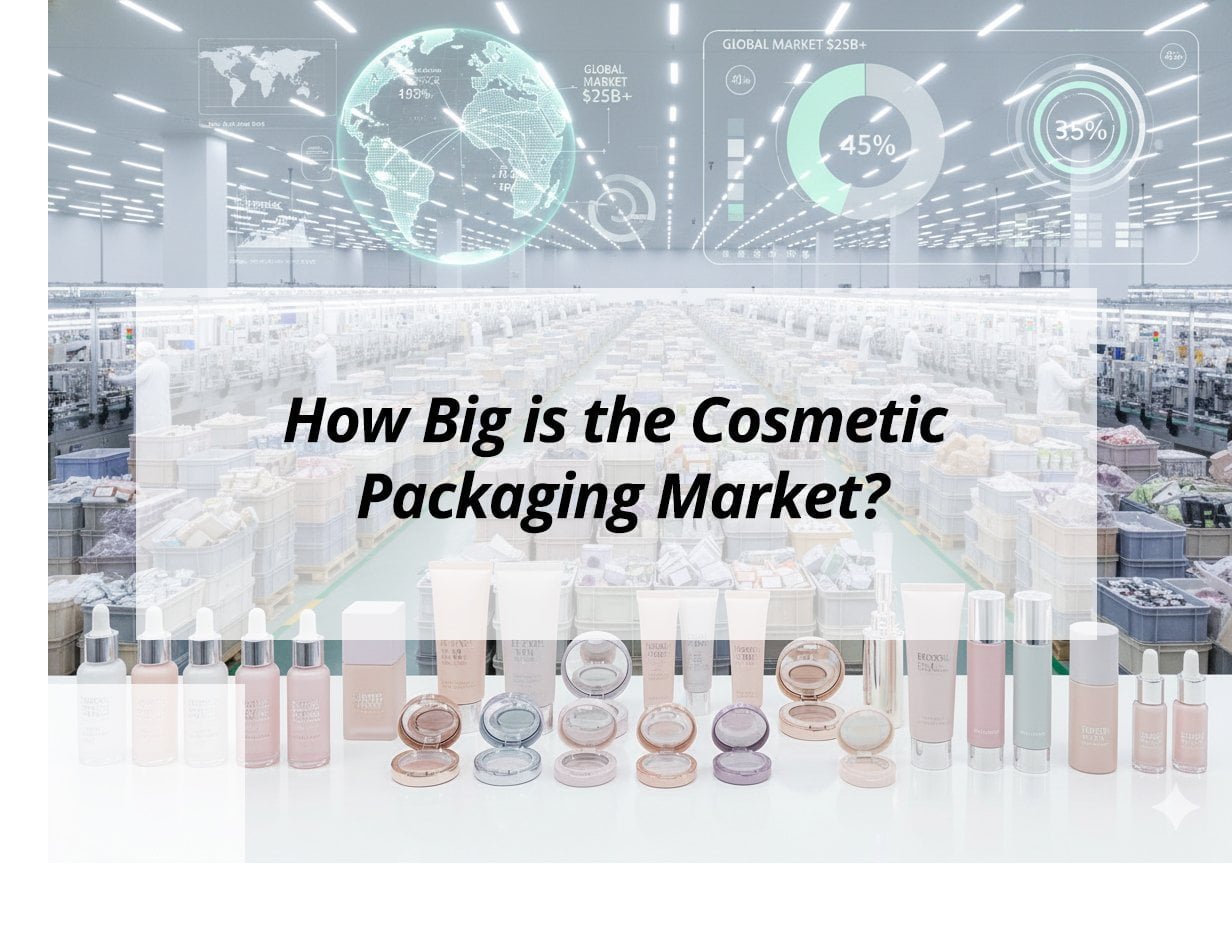
Are you evaluating the scale of the cosmetic packaging market? This sector is substantial. It is also crucial for the success of beauty brands globally.
The global cosmetic packaging market represents a multi-billion dollar industry. It shows consistent annual growth. This expansion is fueled by increasing worldwide demand for beauty products. It also benefits from advancements in packaging materials and designs.
The cosmetic packaging market has expanded considerably. Its complexity and competitiveness require careful analysis. Understanding its magnitude helps businesses make informed strategic decisions. It also reveals emerging industry trends.
What is the market size of packaging industry?
Do you consider the overall dimensions of the global packaging industry? This sector is immense. It influences the delivery of nearly every consumer product.
The global packaging industry is a vast market. It is valued in trillions of dollars. This industry supplies containers and protective solutions for countless goods. Its scope extends from food products to advanced electronics.
Understanding the size of this general industry provides context for the cosmetic packaging sector. It highlights packaging's fundamental role in global commerce. It also emphasizes its significant economic contribution.
Global Packaging Industry Overview
The packaging industry supports numerous economic sectors. Its scale reflects its vital function in international trade. It is driven by both consumer demand and industrial requirements.
-
Primary Market Segments:
- Food and Beverages: This segment is the largest, including diverse formats like bottles, cans, and flexible pouches.
- Healthcare: Packaging for pharmaceutical products and medical devices. This demands strict adherence to safety and regulatory standards.
- Personal Care and Cosmetics: This sector focuses on visually appealing and functional packaging solutions. It uses a variety of materials.
- Industrial Goods: Packaging for heavy machinery, components, and raw materials. This often requires robust and protective solutions.
- E-commerce: The growth of online retail increases demand for durable and sustainable shipping packaging.
-
Key Market Drivers:
- Population Expansion: A rising global population correlates with increased product consumption and, consequently, higher packaging demand.
- Urbanization Trends: Growing urban populations typically lead to greater consumption of packaged goods.
- Evolving Lifestyles: Convenience-oriented products and on-the-go consumption patterns necessitate specialized packaging solutions.
- Sustainability Imperatives: Consumer preference for environmentally friendly options drives innovation in recyclable, reusable, and biodegradable packaging materials.
- Technological Progress: Advances in materials science and manufacturing processes enhance packaging efficiency, functionality, and aesthetic appeal.
The global packaging market is dynamic. It continuously adapts to shifting consumer preferences and regulatory landscapes. For instance, the demand for sustainable materials is rapidly increasing. Businesses must monitor these changes closely. Manufacturers focusing on cosmetic packaging contribute to this larger industry by providing specialized solutions for beauty brands. Their products, such as lipstick tubes and cream jars, are integral components of this extensive market.
What sells the most in the beauty industry?
Are you interested in identifying the top-selling product categories within the beauty industry? This insight helps in understanding consumer focus. It also indicates key market segments.
Skincare products consistently achieve the highest sales within the beauty sector. They account for a substantial market share. This trend reflects an increasing consumer emphasis on personal health and well-being.
The demand for skincare products significantly influences packaging requirements. Consumers often invest in formulations promising visible benefits. This makes the packaging for serums, creams, and lotions particularly important for product integrity and appeal.
Leading Sales Categories in Beauty
Skincare maintains the largest market share. However, other beauty categories also contribute considerably to overall industry sales. Understanding these trends assists businesses in refining their market strategies.
-
Skincare Products:
- Cleansers and Toners: Fundamental steps in daily routines. High demand for effective cleansing and skin preparation.
- Moisturizers and Serums: Essential for hydration and targeted skin concerns. Often utilize specialized packaging to protect active ingredients.
- Sun Protection: Growing public awareness of UV damage drives sales of sunscreens. Packaging must ensure product stability and user-friendly application.
- Anti-Aging Solutions: Significant consumer expenditure on products designed to mitigate signs of aging.
-
Makeup Products:
- Foundations and Concealers: Core products for complexion uniformity. Precision in color matching is critical.
- Lip Products: Lipsticks and lip glosses are popular for color and hydration. Packaging is vital for brand recognition and application experience.
- Eye Makeup: Mascara and eyeliner are essential for eye enhancement. The design of the applicator is a crucial functional aspect.
- Eyeshadows: Offer a wide range of colors and finishes. Palettes require robust and attractive presentation.
-
Hair Care Products:
- Shampoos and Conditioners: Daily necessities for hair hygiene. Typically sold in larger volume packaging.
- Styling Aids: Gels, mousses, and sprays. Packaging needs to facilitate effective product dispensing.
- Hair Treatments: Masks and oils targeting specific hair concerns. Often presented in smaller, premium packaging formats.
-
Fragrance Products:
- Prestige Fragrances: Eau de Parfum and Eau de Toilette represent a luxury segment. Emphasis on elegant bottle design and sophisticated presentation.
- Body Sprays and Mists: More accessible options, often featuring simpler packaging designs.
The strong performance of skincare categories directly impacts cosmetic packaging manufacturers. There is high demand for vacuum bottles, lotion bottles, and cream jars. These products must combine functionality with aesthetic appeal. Additionally, makeup items such as lipstick tubes, lip gloss tubes, and eyeshadow cases are consistently required. Customization, including logo printing, is essential for brands to differentiate themselves in these competitive sectors. Suppliers aim to provide high-quality packaging solutions that meet the diverse needs of brand company buyers and cosmetic finished product factories.
What is the largest market for cosmetics?
Are you inquiring about the leading geographical market for cosmetic sales? The global market exhibits diverse consumer bases. However, certain regions demonstrate particular prominence.
The Asia-Pacific region currently stands as the largest market for cosmetics. It displays robust growth. This growth is attributable to increasing economic prosperity and a vast consumer population.
Demand from this region significantly influences global sourcing and manufacturing strategies. Understanding this market assists businesses in focusing their strategic planning and resource allocation.
Global Leaders in Cosmetic Consumption
Several regions are pivotal contributors to the global cosmetic market. Each possesses distinct consumer preferences and unique growth catalysts.
-
Asia-Pacific (APAC):
- Market Dominance: Represents the largest and most rapidly expanding cosmetic market. Key contributors include China, Japan, South Korea, and India.
- Growth Stimuli: Characterized by large populations, rising disposable incomes, significant influence of K-Beauty and J-Beauty trends, and expanding e-commerce penetration.
- Product Focus: High demand for advanced skincare, especially anti-aging and brightening products. Also, a strong market for innovative makeup formulations.
-
North America:
- Market Characteristics: A mature market demonstrating consistent demand. The United States is a primary driving force.
- Key Drivers: Strong brand loyalty, appetite for premium and independent brands, and an increasing emphasis on "clean beauty" and sustainability.
- Product Focus: Broad demand across all categories, with notable interest in inclusive foundation shades and ethically sourced ingredients.
-
Europe:
- Market Characteristics: A large and well-established market. France, Germany, and the United Kingdom are significant national markets.
- Growth Impulses: Rich tradition of luxury beauty, stringent regulatory frameworks, and a growing preference for natural and organic ingredients.
- Product Focus: Premium skincare, sophisticated fragrances, and classic makeup brands.
-
Latin America:
- Market Characteristics: An emerging market with considerable growth potential. Brazil and Mexico are leading regional markets.
- Drivers: A youthful demographic, increasing beauty consciousness, and prevalent direct sales distribution channels.
- Product Focus: Strong demand for hair care products, fragrances, and vibrant makeup.
-
Middle East and Africa (MEA):
- Market Characteristics: A developing market experiencing high growth rates. Driven by strong consumer demand for luxury goods.
- Growth Factors: High disposable incomes in certain areas, cultural emphasis on personal grooming, and expansion of digital commerce platforms.
- Product Focus: High-end fragrances, elaborate makeup, and specialized hair care solutions.
The substantial size of the Asia-Pacific market, alongside other expanding regions, fuels demand for cosmetic packaging. Manufacturers often export to areas like Southeast Asia and the Middle East. These regions require a diverse range of products, including eyelash tubes, eyeliner tubes, and eyeshadow cases. Brand company buyers and cosmetic packaging middlemen in these locales seek high-quality packaging and customizable branding options. Suppliers strive to meet these varied international specifications, ensuring their products support client success in respective markets.
How much does cosmetic packaging cost?
Are you assessing the financial investment required for cosmetic packaging? This represents a critical cost component for any beauty brand. Pricing can fluctuate considerably.
Cosmetic packaging costs are determined by several factors. These include material selection, design intricacy, and order quantity. Understanding these elements aids in effective budget management.
Managing packaging expenditures is crucial for maintaining profitability. It involves balancing product quality with cost efficiency. The following explains the key cost determinants.
Influential Factors in Cosmetic Packaging Pricing
Packaging cost is not a fixed figure. It results from a calculation based on numerous variables. Each decision made impacts the final expenditure.
-
Material Selection:
- Plastics (e.g., PET, PP, ABS): Generally more economical. They offer versatility for various products like lotion bottles and cream jars.
- Glass: More expensive than plastic. It conveys a premium feel and provides enhanced chemical stability for specific formulations. Often used for vacuum bottles and high-end serums.
- Metals (e.g., Aluminum): Utilized for lipstick tubes and compacts. Provides durability and a luxurious appearance. Associated with higher costs.
- Sustainable Materials: Post-Consumer Recycled (PCR) plastics, bamboo, or biodegradable alternatives can sometimes incur higher costs. However, they appeal to environmentally conscious consumers.
-
Design Complexity:
- Custom Tooling: Creating unique packaging shapes necessitates new molds, which require a significant initial investment.
- Standard Tooling: Utilizing existing mold designs is a more cost-effective option.
- Decoration Techniques: Printing, hot stamping, spraying, and plating add to the unit cost. Multi-color decoration is typically more expensive than single-color.
- Special Features: Advanced components like airless pumps, unique applicators, or magnetic closures increase complexity and overall cost.
-
Order Volume:
- Economies of Scale: Larger production orders generally lead to reduced per-unit costs. Manufacturers can optimize production runs for efficiency.
- Minimum Order Quantity (MOQ): Suppliers often set MOQs. Meeting these thresholds is important for cost efficiency. Smaller orders usually result in higher per-unit pricing.
-
Finishing and Assembly:
- Secondary Packaging: Additional components such as boxes, inserts, and labels contribute to the overall cost.
- Assembly Requirements: If packaging consists of multiple parts requiring manual or automated assembly, labor costs will increase.
Suppliers aim to provide high-quality cosmetic packaging with competitive pricing. They work with brand company buyers and cosmetic finished product factories. Product offerings include lipstick tubes, lip gloss tubes, and eyeshadow cases. Vacuum bottles and lotion bottles are also common. Custom logo application is a frequent service. Understanding these cost drivers helps clients, who prioritize both quality and price, make well-informed decisions. Transparent pricing models are essential for wholesale B2B operations, ensuring clients receive optimal value for their investment.
My Insights: Exploring the Size of the Cosmetic Packaging Market
Curious about the booming cosmetic packaging market1? Discover its growth potential and key drivers influencing this multi-billion dollar industry.
The global cosmetic packaging market is valued between USD 36-55 billion, with projections expanding to USD 60-88 billion by 2034. Growth is driven by skincare demand, e-commerce, and sustainable packaging trends2, with Asia-Pacific dominating regional shares.
Understanding the Dynamics of the Cosmetic Packaging Market
Market Size and Growth Estimates:
- Current Valuation: The market stands at USD 36-55 billion, showcasing robust growth forecasts.
- Projected Expansion: Expected to reach USD 60-88 billion by 2034, supported by a CAGR of 4.8-5.1%.
Key Growth Drivers:
- Skincare Demand: Skincare products hold a significant market share, driving expansion.
- Sustainable and Eco-friendly Trends: Increasing emphasis on sustainability shapes packaging innovation.
- Regional Insights: Asia-Pacific leads with 42-45% share, spearheaded by Chinese consumer consumption.
Market Trends:
| Factor | Impact on Market Growth |
|---|---|
| Skincare Demand | Fuels significant market share |
| Sustainable Packaging | Drives innovation and change |
| E-commerce Growth | Promotes innovative solutions |
| Regional Dominance | Asia-Pacific leads with high share |
The cosmetic packaging market’s dynamic growth is influenced by environmental pressures, technological advancements, and regional demand patterns. Brands must capitalize on customization and premiumization to thrive.
Conclusion
The cosmetic packaging market is large and expanding, driven by global beauty demand. Skincare leads sales, with Asia-Pacific being the primary market. Costs vary based on materials, design, and order size.