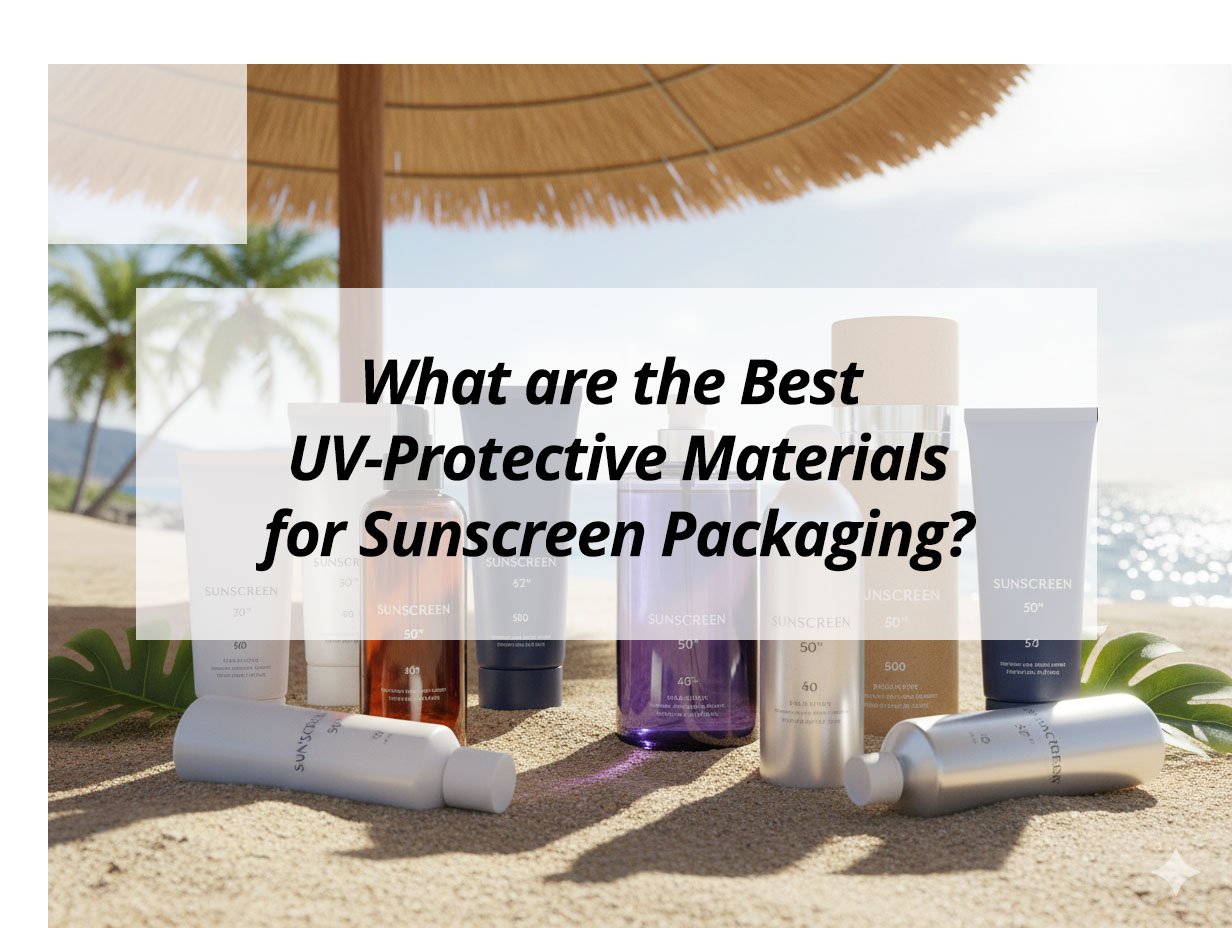
Have you considered the importance of sunscreen packaging materials? The choice of material is not merely aesthetic. It plays a crucial role in maintaining product integrity. It protects the sunscreen from environmental factors, especially UV radiation.
The most effective materials for UV protection in sunscreen packaging typically include opaque plastics, such as HDPE or PET, and certain types of glass. These materials are designed to prevent UV light penetration. This shields the product formulation from degradation. Various materials offer distinct protective qualities. They all aim to extend the efficacy and shelf life of the sunscreen.
The selection of appropriate packaging is a key factor in product stability. Understanding material properties helps ensure product quality.
What is the best material for UV protection?
Which material offers the most effective UV protection? This is a fundamental question in product development. The primary goal is to safeguard the product's chemical composition. This requires more than just blocking visible light.
Opaque plastic materials are generally superior for UV protection in packaging. High-density polyethylene (HDPE) and polyethylene terephthalate (PET) are prominent examples. They are effective at preventing UV radiation from reaching the product. This helps maintain the stability and efficacy of the sunscreen.
To elaborate, UV radiation from sunlight can cause chemical reactions within sunscreen formulations. These reactions can lead to the breakdown of active ingredients. This compromises the product's ability to provide adequate protection. Therefore, robust packaging is essential.
Importance of Opaque Materials
Opaque materials are characterized by their inability to transmit light. This property is critical for UV protection. A dark, non-transparent container inherently blocks UV light. In contrast, clear or even tinted transparent containers may still allow significant UV transmission. Opaque options offer a superior barrier.
- HDPE (High-Density Polyethylene): This material is widely used due to its strength and light weight. Its inherent opacity makes it an excellent choice for sunscreen containers. It offers reliable protection and is a cost-effective option for bulk procurement.
- PET (Polyethylene Terephthalate): While PET can be clear, it is also manufactured in opaque forms. Opaque PET provides good UV protection and offers excellent barrier properties against oxygen. These characteristics are beneficial for many cosmetic applications.
Impact of Container Color
The color of the packaging also contributes to UV blocking. Darker colors absorb more UV radiation. Black and dark brown containers are highly effective in this regard. This is why sunscreen is frequently packaged in white, black, or dark-colored bottles. It is a strategic choice for product preservation.
| Material Type | UV Protection Level | Opacity | Common Application |
|---|---|---|---|
| HDPE | Excellent | High | Bottles |
| PET (Opaque) | Good to Excellent | High | Bottles |
| Glass (Amber/Opaque) | Good | Medium-High | Jars |
| PP | Moderate | Medium | Caps |
When selecting packaging, it is important to consider both the material composition and its color. The objective is to achieve optimal product protection.
What blocks UV rays in sunscreen?
What are the active components in sunscreen that provide UV protection? The efficacy of sunscreen relies on specific ingredients designed for this purpose. Understanding these components is important for selecting suitable packaging.
Sunscreens incorporate active ingredients to block UV radiation. These primarily consist of mineral filters, such as zinc oxide and titanium dioxide, or various chemical filters. These ingredients function by either absorbing or reflecting UV light. This prevents it from penetrating and damaging the skin.
There are two primary categories of UV blockers in sunscreen. Each operates through a distinct mechanism to protect the skin. Both types require effective packaging to maintain their stability.
Mineral Filters
Mineral filters are inorganic compounds. They form a physical barrier on the skin's surface. They work by scattering and reflecting UV rays away from the skin.
- Zinc Oxide: This is an effective broad-spectrum blocker. It provides protection against both UVA and UVB radiation. It exhibits high photostability. This means it resists degradation when exposed to light. This is beneficial for product longevity.
- Titanium Dioxide: This also blocks UV radiation, primarily UVB and some UVA. It is frequently used in combination with zinc oxide. Their combined action enhances protection.
These mineral ingredients necessitate stable packaging. They can separate over time within the formula. Effective packaging helps maintain their uniform distribution.
Chemical Filters
Chemical filters function by absorbing UV radiation. They then convert this energy into heat, which is dissipated from the skin.
- Oxybenzone: This is a common chemical filter. It absorbs a wide spectrum of UV rays.
- Avobenzone: This filter is primarily effective against UVA rays. It can be less photostable than mineral filters. It requires robust packaging to ensure its sustained efficacy.
Chemical filters can sometimes be prone to photodegradation. This means the packaging must provide a complete UV barrier. If light penetrates the container, the sunscreen's effectiveness may be reduced. This underscores the importance of materials like HDPE.
Packaging's Role in Ingredient Preservation
Packaging plays a critical role in protecting these active ingredients. UV light entering the container can degrade the sunscreen's components. This can diminish the active ingredients' protective capabilities. Consequently, the user receives less effective sun protection.
| Filter Type | Mechanism of Action | UV Protection | Photostability |
|---|---|---|---|
| Zinc Oxide | Reflects/Scatters | Broad-spectrum | High |
| Titanium Dioxide | Reflects/Scatters | Broad-spectrum | High |
| Oxybenzone | Absorbs & Converts | Broad-spectrum | Moderate |
| Avobenzone | Absorbs & Converts | UVA | Lower |
The specific sunscreen formulation should guide packaging material selection. Formulations with less photostable ingredients require superior UV-protective packaging. This is a crucial consideration for product development.
What sunscreen works best with malassezia?
When selecting sunscreen for skin prone to malassezia, specific formulation considerations are necessary. Not all sunscreens are suitable for this condition. The choice of formulation, and subsequently its packaging, is highly significant.
For skin affected by malassezia, sunscreens that are oil-free and non-comedogenic are most appropriate. Mineral sunscreens, containing zinc oxide and titanium dioxide, are often recommended. These ingredients do not provide nutrients for the yeast associated with malassezia. Such sensitive formulations require packaging that fully blocks UV light and preserves product stability.
Malassezia is a genus of yeast naturally found on human skin. In certain individuals, it can proliferate excessively, leading to conditions such as fungal acne. The selection of sunscreen for these conditions must prioritize specific ingredient profiles.
Ingredient Considerations for Malassezia-Prone Skin
Certain ingredients can exacerbate malassezia overgrowth. These often include various oils and fatty acids that can serve as a food source for the yeast. Therefore, sunscreens for this condition must exclude such components.
- Avoid: Ingredients like coconut oil, olive oil, and certain esters (e.g., isopropyl palmitate) may be problematic.
- Seek: Mineral sunscreens, particularly those with zinc oxide and titanium dioxide, are generally considered safe. They provide effective protection without promoting yeast growth.
Sunscreens formulated as "malassezia-safe" are free from specific undesirable ingredients. This makes the formula inherently more delicate. It necessitates robust packaging to maintain its stability and efficacy.
Packaging's Role in Sensitive Formulations
Delicate formulations require enhanced protection. They may be more susceptible to degradation from environmental factors. UV light, in particular, can break down active ingredients. This is a general concern for all sunscreens, but it is especially critical for specialized formulations.
If the packaging permits UV light penetration, it can alter the sunscreen's composition. This could lead to a reduction in efficacy. It could also potentially induce changes in the product's physical or chemical properties. For individuals with malassezia-prone skin, such changes could trigger irritation, which must be avoided.
Packaging Options for Malassezia-Safe Sunscreen
Opaque packaging is consistently recommended for optimal UV protection. For sensitive and specialized formulations, it is an essential requirement.
| Packaging Aspect | Benefit for Malassezia-Safe Sunscreen |
|---|---|
| Opaque Materials | Prevents UV-induced degradation of delicate ingredients. |
| Airless Pumps | Minimizes air exposure, enhancing ingredient freshness. |
| Sealed Tubes | Provides a barrier against external contamination. |
Packaging options such as airless pumps and sealed tubes are beneficial for sensitive products. They contribute to formula stability and maintain product hygiene. These features are often prioritized by buyers seeking high-quality and reliable packaging solutions.
What sunscreen is best for Accutane?
The choice of sunscreen is critically important for individuals undergoing Accutane treatment. This medication significantly increases skin photosensitivity. Therefore, selecting appropriate sunscreen and its packaging is paramount.
For individuals on Accutane, the most suitable sunscreens are broad-spectrum, possess an SPF of 30 or higher, and are formulated to be gentle. Mineral sunscreens, containing zinc oxide and titanium dioxide, are frequently favored due to their minimal irritancy. Their stable formulations demand packaging that completely blocks UV light and preserves product integrity.
Accutane (isotretinoin) is a potent medication used to treat severe acne. A major side effect is heightened sensitivity to solar radiation. The skin becomes highly prone to sunburn. Consequently, robust sun protection is indispensable.
Increased Sun Sensitivity with Accutane
Accutane causes skin thinning and reduces sebaceous gland activity. This renders the skin more vulnerable and diminishes its natural protection against UV radiation. Even brief sun exposure can result in severe sunburn.
Given this heightened sensitivity, sunscreen must meet specific criteria:
- High SPF: A minimum of SPF 30 is necessary, with SPF 50 often recommended. This ensures substantial protective capabilities.
- Broad-Spectrum Protection: The sunscreen must shield against both UVA and UVB rays. UVA contributes to photoaging, while UVB primarily causes sunburn. Both are harmful when skin is sensitized by Accutane.
- Gentle and Non-Irritating: The skin is already compromised. The sunscreen should not exacerbate irritation. Fragrance-free and hypoallergenic formulations are generally preferred.
Mineral Versus Chemical Sunscreens for Accutane Users
For many Accutane users, mineral sunscreens are the preferred option.
- Mineral Sunscreens (Zinc Oxide, Titanium Dioxide): These form a physical barrier on the skin. They are generally less irritating and are well-suited for already sensitive skin.
- Chemical Sunscreens: Some individuals may find chemical filters irritating. These absorb into the skin, which can be overly stimulating for highly sensitive skin. Mineral sunscreens are often a safer choice.
Packaging's Role in Protecting Accutane-Safe Sunscreens
Packaging is vital for sunscreens designed for Accutane users. Their formulations are crafted for gentleness and effectiveness. Packaging failure could compromise the sunscreen's performance.
- UV Protection: The packaging must completely block UV light. If UV radiation degrades the sunscreen, its protective function will be diminished. This could lead to severe sunburn.
- Airless Packaging: An airless pump or bottle system can be highly beneficial. It prevents air exposure to the product, which can degrade certain ingredients. It also maintains product hygiene, important for sensitive skin.
- Durable Materials: The packaging must be robust. It needs to withstand regular use while maintaining its protective properties. Materials such as HDPE and PET are designed for durability and protection.
Reliable packaging ensures that a product formulated for sensitive skin remains safe and effective for its intended users.
My Insights: Best UV-Protective Materials for Sunscreen Packaging
Worried about your sunscreen losing effectiveness due to packaging exposure? UV-protective materials like glass, aluminum, HDPE, or PET with stabilizers ensure product stability and shelf longevity.
UV-protective materials like amber glass, aluminum, HDPE, and pigmented PET safeguard sunscreen formulas from UV degradation. Combined with UV stabilizers, these packaging options preserve active ingredients and enhance overall product protection.
Exploring UV-Protective Materials for Sunscreen Packaging
1. Amber Glass
Amber glass blocks up to 99% of UV light below 450nm, making it one of the best materials for light-sensitive formulas. Plus, its recyclable nature complements sustainability goals. Transparent glass, conversely, offers little to no UV shielding, posing risks to sunscreen efficacy.
2. Aluminum Containers
Aluminum packaging provides exceptional UV and air barriers, protecting sunscreen formulas from both light and oxidation. Lightweight, sturdy, and recyclable, it’s a premium option for eco-friendly and durable sunscreen containers.
3. High-Density Polyethylene (HDPE)
HDPE naturally offers better opacity compared to standard plastics, blocking harmful UV exposure and preserving product quality in outdoor settings. It is impact-resistant and recyclable, ideal for cost-effective and durable solutions.
4. PET Plastics with UV Stabilizers
Amber-colored or UV-treated PET enhances sunscreen protection across the UV spectrum. Additives like benzotriazoles or HALS are incorporated into PET to extend its light-blocking properties while keeping it lightweight and recyclable.
5. UV-Enhancing Additives for Flexible Plastics
UV stabilizers such as benzotriazoles or benzophenones can further enhance the efficacy of polypropylene (PP) or PET packaging. These additives prevent sunscreen degradation caused by prolonged sunlight exposure.
| Material Type | UV Protection Strength | Recyclability | Cost Efficiency |
|---|---|---|---|
| Amber Glass | Blocks up to 99% UV light | Fully recyclable | Higher cost than plastic |
| Aluminum | Exceptional UV and air barrier | Fully recyclable | Moderate cost |
| HDPE | Naturally opaque; blocks UV rays | Highly recyclable | Economical |
| Amber PET with UV Additives | Effective with stabilizers; durable | Recyclable with UV stabilizers | Cost-efficient |
| PP with UV Stabilizers | Good UV protection with additives | Recyclable | Moderate cost |
Choosing UV-protective packaging materials is essential to maintain sunscreen efficacy. While amber glass and aluminum offer premium protection, cost-effective options like HDPE and UV-treated PET appeal to brands balancing performance, recyclability, and market value. By incorporating appropriate materials and additives, brands can ensure sunscreen remains effective in diverse environments.
Conclusion
The selection of UV-protective packaging is critical for sunscreen products. It ensures the product's efficacy and stability. Opaque materials like HDPE and PET are highly effective. They safeguard sensitive formulations from the damaging effects of UV radiation.