Are you tracking the future of sunscreen packaging? The industry is undergoing significant changes. Understanding these shifts is crucial for staying competitive.
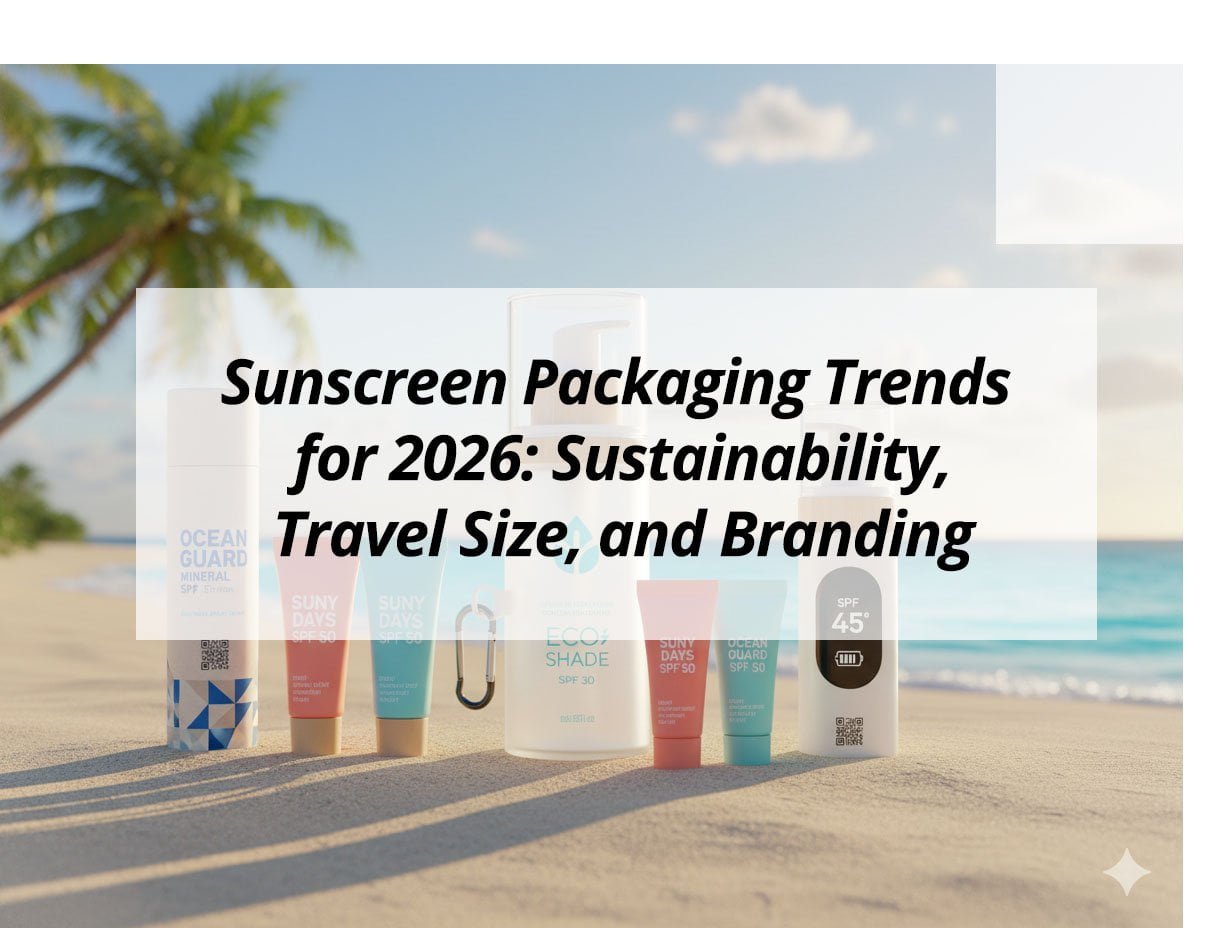
Sunscreen packaging in 2026 will prioritize sustainability, convenient travel sizes, and distinct branding. This evolution is driven by consumer demand and environmental concerns. New materials and designs will reshape the market.
This article provides an overview of these important trends. It helps stakeholders prepare for upcoming developments. Let's examine the emerging landscape.
What Are the Packaging Design Trends in 2026?
Are you considering future packaging aesthetics for sunscreen products? Design trends are constantly evolving, influenced by consumer preferences and technological advancements. This section explores upcoming styles.
In 2026, sunscreen packaging designs will emphasize minimalism, functionality, and visual appeal. Clean lines and simple aesthetics will dominate. User-friendly features and portability will also be key design aspects.
Effective packaging balances visual appeal with practical use. For example, a design that looks good on the shelf must also be easy for the consumer to handle and carry. This combination drives purchasing decisions and overall user satisfaction.
The Rise of Minimalism in Design
Minimalist design focuses on simplicity and clarity. For sunscreen, this means uncluttered labels and straightforward forms. It enhances product perception.
- Clean Aesthetics: Packaging will feature minimal graphics and text. This creates a sophisticated and modern appearance.
- Clear Information Hierarchy: Essential product details will be prominent. This allows quick identification of SPF, ingredients, and usage.
- Streamlined Forms: Simple shapes and smooth surfaces will be common. These designs are often easier to manufacture and store.
Functional and Intuitive Packaging
Packaging in 2026 will integrate smart features. These features improve the user experience and product efficacy. This can include practical aspects that enhance daily use.
- Ergonomic Shapes: Bottles and tubes will be designed for comfortable handling. This improves grip, even in wet conditions.
- Precision Applicators: Some products will feature specific applicators. These allow for targeted and controlled sunscreen application.
- Travel-Friendly Features: Designs will focus on portability and security. This includes leak-proof closures and compact sizes suitable for travel.
| Design Element | Description | Consumer Benefit |
|---|---|---|
| Simple Forms | Uncomplicated, geometric shapes | Modern look, efficient storage |
| Legible Labels | Clear and concise product information | Easy product selection |
| Secure Closures | Caps and pumps that prevent leaks | Product integrity, travel readiness |
| Pump Dispensers | Controlled product dispensing | Hygienic, reduces waste |
What Are the Latest Trends in Eco-Friendly Packaging?
Are you aware of the advancements in sustainable sunscreen packaging[^1]? Environmental concerns are increasingly influencing consumer choices. This is driving significant innovation in packaging materials and processes.
The latest trends in eco-friendly sunscreen packaging[^2] involve the use of recycled content, biodegradable materials, and refillable systems. Brands aim to reduce their environmental impact. They also seek to attract environmentally conscious consumers.
The push for sustainability is not limited to specific regions. It is a global movement. Many markets now demand packaging solutions that are both effective and responsible. This broad acceptance highlights the importance of these trends.
Recycled and Post-Consumer Recycled (PCR) Materials
Utilizing PCR plastics reduces the demand for new plastic production. This conserves resources and minimizes waste.
- PCR Plastic Containers: A growing number of bottles and tubes are made from recycled plastics. Common types include rPET and rHDPE.
- Recycled Glass Options: For certain premium sunscreen products, recycled glass offers an elegant solution. It is also a highly recyclable material.
- Sustainable Paperboard: Outer cartons frequently consist of recycled paperboard. This is a widely adopted and environmentally sound choice.
Biodegradable and Compostable Solutions
New materials are designed to decompose naturally. This helps address long-term waste management issues.
- Plant-Based Plastics: Materials such as PLA originate from renewable sources. These can break down in industrial composting facilities.
- Compostable Tubes: Some flexible tubes are now manufactured from compostable polymers. These offer an alternative to conventional plastic tubes.
- Eco-Friendly Inks: Printing inks are also becoming more sustainable. They are formulated to decompose without releasing harmful substances.
Refillable and Reusable Packaging Systems
Refillable packaging significantly minimizes waste. Consumers purchase a durable primary container once. They then buy only product refills.
- Refill Pouches: Many brands offer lightweight pouches for refilling existing containers. These pouches use less material than new bottles.
- Modular Designs: Some packaging systems feature replaceable components. For example, an inner cartridge can be inserted into a permanent outer casing.
- Circular Programs: Certain companies implement programs where empty containers can be returned for cleaning and refilling. This promotes a closed-loop system.
| Eco-Friendly Strategy | Description | Environmental Advantage |
|---|---|---|
| PCR Materials | Incorporates plastics from recycled goods | Lowers virgin plastic demand |
| Biodegradable | Decomposes naturally over time | Reduces landfill burden |
| Refillable | Reuses primary packaging with new product | Substantial waste reduction |
| Lightweighting | Minimizes material used per packaging unit | Conserves resources, cuts transport emissions |
What Are the Brand Design Trends for 2026?
Are you considering how brands will articulate their identity through sunscreen packaging in 2026? Brand design goes beyond visual elements. It communicates a product's essence and connects with consumers.
Brand design trends for 2026 will focus on authenticity, compelling storytelling, and seamless digital integration. Companies will utilize distinctive visuals and clear narratives. They will also ensure their branding is effective across all platforms.
A strong brand identity is vital for market differentiation. When packaging clearly conveys a brand's values, it helps products stand out. This distinctiveness can significantly influence consumer choice and loyalty.
Authenticity and Transparency in Branding
Consumers increasingly seek brands that are honest and trustworthy. This requires transparent branding that reflects genuine company values.
- Ingredient Clarity: Packaging will prominently feature ingredient lists. This allows consumers to make informed choices.
- Ethical Sourcing Communication: Brands will highlight commitments to responsible sourcing and fair practices. This builds consumer confidence.
- Brand Narrative: Companies will share their unique stories. This personal connection helps establish trust and resonance with the audience.
Storytelling Through Packaging Design
Packaging serves as a visual medium for brand narratives. It uses imagery and text to create an emotional connection with the consumer.
- Visual Narratives: Illustrations and graphics can convey product origins or benefits. For example, images of natural elements can suggest organic ingredients.
- Distinctive Typography: Unique fonts can establish a brand's personality. This helps in creating a memorable visual identity.
- Strategic Color Palettes: Colors are chosen to evoke specific moods or associations. This helps differentiate products and attract target demographics.
| Branding Element | Description | Consumer Perception |
|---|---|---|
| Consistent Voice | Uniform messaging across all touchpoints | Fosters reliability and familiarity |
| Unique Visuals | Distinctive logos, color schemes, and imagery | Enhances market recognition |
| Emotional Connection | Design that resonates with consumer values | Builds loyalty and engagement |
| Digital Optimization | Branding adapted for online viewing and interaction | Broadens digital market reach |
Digital Integration in Branding
Branding in 2026 will increasingly connect with digital platforms. This enables consumers to access more information and engage with the brand online.
- QR Codes: Packaging may include QR codes. These link to product details, usage guides, or brand websites.
- Augmented Reality (AR) Features: Some packaging could incorporate AR. Consumers can scan it to access interactive content or product simulations.
- Social Media Compatibility: Designs will be optimized for visual sharing on social media. This encourages user-generated content and brand visibility.
What Are the 5 P's of Packaging?
Are you familiar with the foundational elements of effective packaging? Understanding these principles is essential for developing successful sunscreen packaging[^3] solutions. They ensure a holistic approach.
The 5 P's of packaging are Product, Protection, Price, Promotion, and Placement. These strategic considerations guide packaging development. They ensure packaging meets both consumer and business requirements.
Considering the lifecycle of a product, packaging decisions are multifaceted. For instance, a packaging solution must protect the product during transit. It must also present it appealingly at the point of sale. These 5 P's provide a comprehensive framework for such evaluations.
Product
Packaging must be inherently suitable for the product it contains. For sunscreen, this involves considering its physical form and chemical composition.
- Formulation Type: Is the sunscreen a lotion, spray, stick, or powder? The packaging must correspond to its physical state. A spray requires an aerosol or pump dispenser. A lotion typically needs a tube or bottle.
- Ingredient Sensitivity: Certain ingredients are vulnerable to light, air, or temperature. Packaging must safeguard these components. Airless pumps prevent oxidation. Opaque containers block UV degradation.
- Application Method: How will consumers apply the product? A facial sunscreen might require a precise applicator. A body sunscreen might necessitate a larger, more easily dispensed container.
Protection
A primary function of packaging is product protection. This encompasses physical integrity and preservation of product quality.
- Physical Integrity: Packaging must prevent damage or leakage during shipping and handling. Robust materials and secure closures are vital.
- Environmental Barrier: Sunscreen requires protection from external elements like heat, cold, and moisture. Specialized materials can offer UV resistance and temperature stability.
- Contamination Prevention: Packaging seals the product from external contaminants such as dirt and microbes. This maintains hygiene and product efficacy.
Price
The cost associated with packaging directly impacts the product's final retail price. Brands must carefully balance material quality with cost-effectiveness.
- Material Expenses: Different packaging materials carry varying costs. Glass is generally more expensive than plastic. Sustainable materials can also have different price points.
- Manufacturing Investment: Complex designs or advanced finishing techniques can increase production expenses. Simpler designs often result in lower manufacturing costs.
- Logistics Costs: The weight and volume of packaging influence shipping expenses. Lightweighting initiatives can lead to reduced transportation costs.
Promotion
Packaging serves as a critical promotional tool. It captures attention and communicates brand value effectively.
- Shelf Impact: The design must visually appeal and stand out in a retail environment. Distinctive shapes, colors, and branding enhance visibility.
- Brand Representation: Packaging visually reinforces the brand's identity and values. It communicates the company's personality to consumers.
- Information Conveyance: It provides essential product information. This includes benefits, usage instructions, and safety warnings, guiding consumer decisions.
Placement
The distribution channels and retail environment significantly influence packaging design decisions. This includes both physical and online sales.
- Retail Display: Packaging needs to integrate seamlessly with store shelves and displays. It should be stable, stackable, and space-efficient.
- E-commerce Suitability: For online sales, packaging must endure more handling during transit. It should also be optimized for efficient and protective shipping.
- Portability: If the product is intended for travel or on-the-go use, the packaging must be compact and secure. It needs to comply with travel regulations when applicable.
| The 5 P's of Packaging | Key Consideration | Example for Sunscreen Packaging |
|---|---|---|
| Product | Sunscreen type, composition, application | Lotion in an airless pump bottle, stick format |
| Protection | Against damage, spoilage, external factors | UV-blocking tube, secure tamper-evident seal |
| Price | Material, production, and shipping costs | Using lightweight, cost-effective plastics |
| Promotion | Visual appeal, brand messaging, information | Distinctive brand colors, clear benefits on label |
| Placement | Retail setting, distribution, portability | Compact tube for travel, sturdy box for online orders |
My Insights: Sunscreen Packaging Trends for 2026—Sustainability, Portability, and Bold Branding
Navigating evolving consumer demands? Sunscreen packaging for 2026 revolves around eco-friendly materials, travel-friendly designs, and branding innovations that enhance shelf appeal while supporting sustainability.
Sunscreen packaging trends in 2026 focus on biodegradable materials, compact travel sizes, and minimalist designs with bold branding. Features like refillable systems and digital elements are rising to meet eco-conscious and lifestyle-driven demands.
Exploring Key Sunscreen Packaging Trends
1. Sustainability Focus
The shift toward sustainability leads brands to prioritize biodegradable, recycled, and refillable packaging materials. Options include plant-based bioplastics, aluminum pouches, and airless pumps in glass or durable eco-friendly plastics. Sustainable labeling and ink further reduce environmental impact while maintaining aesthetic appeal. Reef-safe formulas paired with eco-packaging amplify brand credibility among eco-conscious consumers.
2. Compact Travel Sizes
Portable formats like sunscreen sticks (0.5–1 oz), TSA-compliant tubes (1.7–3 oz), and lightweight pouches address on-the-go lifestyles. Flip-top caps and ergonomic designs enhance convenience, allowing easy application during travel or outdoor activities. With portability and practicality driving consumer choices, brands betting on compact designs are poised for widespread appeal.
3. Branding Innovation
Minimalist aesthetics with bold colors, interactive packaging (e.g., QR codes), and clear ingredient transparency are key to capturing market attention. Premium yet eco-friendly visuals distinguish brands in saturated markets while aligning them with sustainability narratives. Reef-safe claims, luxurious finishes, and personalized branding elements integrated with AI help products stand out on crowded shelves.
| Trend | Key Features | Consumer Appeal |
|---|---|---|
| Sustainability | Biodegradable/recycled materials; refillable packs | Eco-conscious and environmentally responsible choices |
| Travel Size | Compact sticks, TSA-friendly tubes, pouches | Portability and convenience |
| Bold Branding | Minimalist design; QR codes; reef-safe storytelling | Differentiation and premium positioning |
For 2026, sunscreen packaging demands a balance between aesthetics, functionality, and eco-conscious practices. Compact formats cater to modern travel needs while sustainable packaging aligns with consumer values. Bold branding and digital innovations further expand market opportunities, creating packaging that resonates across lifestyle and environmental priorities.
Conclusion
Sunscreen packaging is experiencing dynamic shifts. By 2026, the focus will be on sustainable materials, practical travel sizes, and strong brand narratives. These trends address evolving consumer expectations and industry demands.