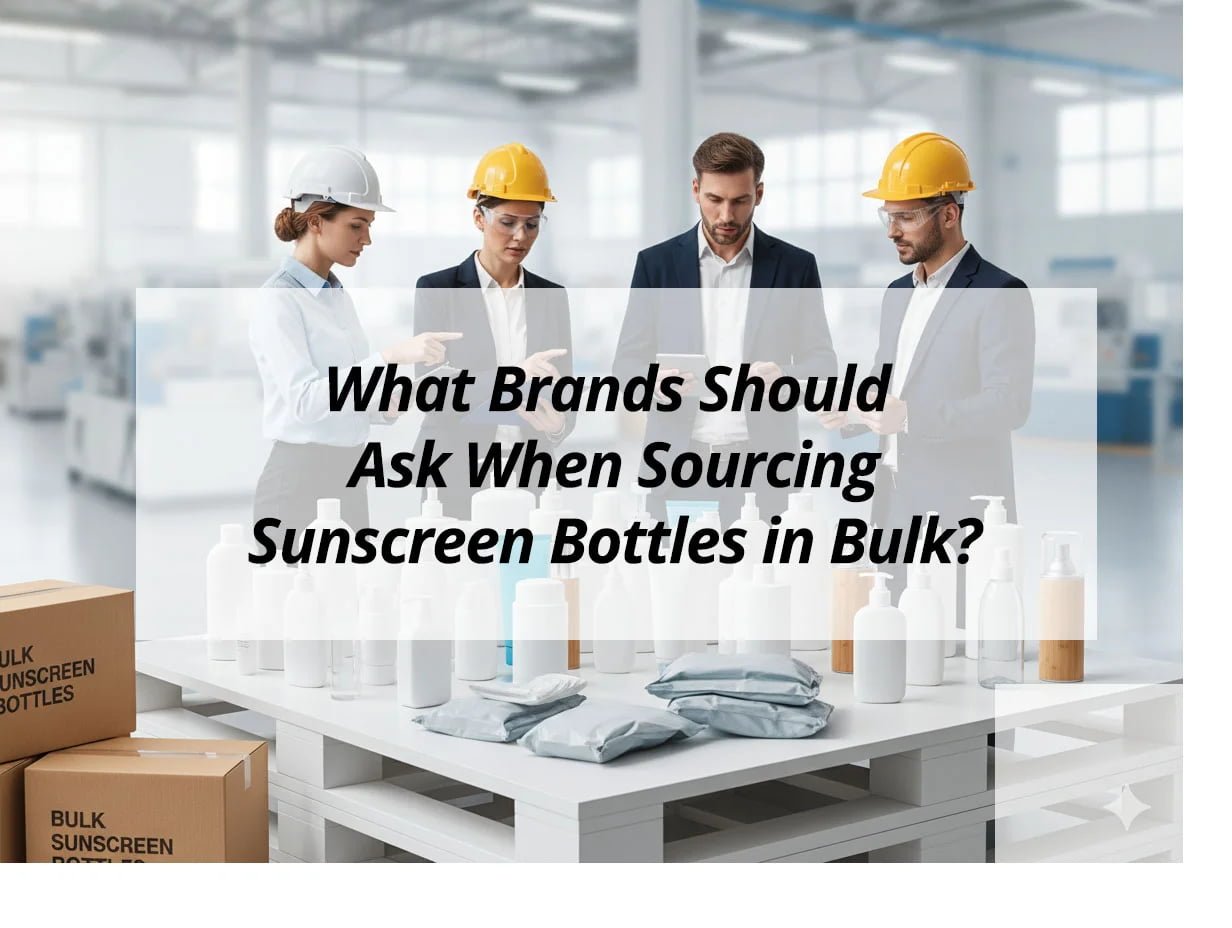
The sunscreen market is expanding rapidly. For brands to succeed, choosing the right packaging is very important. This guide helps you know what questions to ask when buying sunscreen bottles in bulk. This will help prevent issues and support good decisions.
When sourcing sunscreen bottles in bulk, brands should prioritize material safety, compatibility with formulations, durability, design flexibility, and supplier reliability. This ensures product integrity, market appeal, and efficient supply chain management. Key considerations also include certifications, Minimum Order Quantity (MOQ), and lead times.
Finding suitable packaging requires careful thought. It involves asking specific questions. This helps brands make informed choices.
What Are the Top Brands of Sunscreen?
Many brands are well-known for sunscreen products. They have strong customer bases. What makes these brands successful? They offer effective products and reliable packaging solutions.
Leading sunscreen brands often achieve success through effective product formulations, consistent quality, strategic marketing, and packaging that protects the product while appealing to consumers. Brands like Neutrogena, La Roche-Posay, and Hawaiian Tropic are recognized globally for these combined factors.
Let us examine the factors contributing to the prominence of these brands. They use effective ingredients. Their packaging performs well. They also communicate clearly with their customers.
Factors Contributing to Sunscreen Brand Success?
Successful brands build consumer confidence. This is achieved through product effectiveness. They also use packaging that ensures product safety. Consumers expect high standards.
- Product Efficacy: Formulas are effective. They provide good skin protection. This is crucial for consumer trust.
- Reliable Packaging: Bottles must secure the sunscreen. They prevent leaks. They also have an appealing shelf presence.
- Market Positioning: Brands communicate a clear value proposition. This helps them connect with buyers.
- Consumer Loyalty: When consumers trust a brand, they continue to purchase its products. This fosters business growth.
Strategies for New Brands to Compete?
New brands can learn from established leaders. Focus on product quality and thoughtful design. Offer distinct advantages.
| Strategy | Description | Rationale |
|---|---|---|
| Differentiated Formula | Develop a sunscreen with unique characteristics. | Attracts consumers seeking specific benefits. |
| Sustainable Practices | Utilize environmentally friendly materials. | Appeals to eco-conscious consumer segments. |
| Functional Design | Create packaging that is user-friendly and visually attractive. | Enhances product visibility and appeal. |
| Clear Communication | Articulate product benefits simply and directly. | Builds trust and simplifies the purchase process. |
Brands need to consider these points when entering the market.
What Is the Target Market for Sunscreen?
Understanding consumers is fundamental. Sunscreen is used beyond recreational activities. Many individuals use it daily.
The target market for sunscreen is diverse, including active individuals, families, children, and those prioritizing skin health and anti-aging. Different segments have specific requirements, such as water resistance for athletes or gentle formulations for sensitive skin. Identifying these groups helps brands customize products and packaging.
Let us explore the various consumer groups who purchase sunscreen. This informs appropriate packaging selections.
Consumer Segments for Sunscreen?
Different groups purchase sunscreen. Each group has specific needs.
- Families and Children: Require gentle, high-SPF formulations. Packaging should be easy for caregivers to use. It must also be safe for children.
- Athletes and Outdoor Enthusiasts: Need water-resistant and sweat-proof sunscreen. Bottles must be robust. They also need to be portable.
- Daily Users: Individuals who apply sunscreen daily for skin health maintenance. They seek lightweight formulas. Packaging should be sleek.
- Anti-Aging Consumers: Seek sunscreens that offer additional anti-aging properties. They often purchase premium products. Packaging should reflect a high-end aesthetic.
How Does Target Market Influence Packaging Choices?
The consumer base dictates packaging decisions. For instance, sunscreen for children requires different packaging than a luxury anti-aging product.
- Child-Friendly Packaging:
- Material: Must be highly safe.
- Design: Often features vibrant colors. Easy-to-open closures.
- Size: Smaller formats for convenience.
- Athletic Packaging:
- Material: Durable, impact-resistant plastics.
- Design: Secure closures to prevent leakage during activity.
- Functionality: Often spray mechanisms for easy application.
- Luxury Packaging:
- Material: High-quality plastics or glass-like materials.
- Design: Elegant forms. Smooth finishes.
- Customization: Often includes bespoke branding elements.
These considerations guide effective packaging strategies for various market segments.
What Are Some Things to Consider When Purchasing Sunscreen?
Purchasing sunscreen involves several considerations. It extends beyond just the SPF number. Consumers evaluate multiple factors.
When purchasing sunscreen, consumers evaluate SPF level, broad-spectrum protection, water resistance, ingredients, and texture. They also consider brand reputation, price point, and product feel on the skin. Packaging influences decisions, particularly concerning ease of use and portability.
Let us delve deeper into the factors influencing consumer purchasing choices. This helps in understanding their requirements.
Consumer Priorities in Sunscreen Selection?
Consumers seek products that perform effectively. They also value safety and a pleasant user experience.
- SPF Level: Indicates protection against UVB rays.
- Broad-Spectrum Protection: Essential for defense against both UVA and UVB rays.
- Water Resistance: Important for activities involving water or perspiration.
- Ingredients: Many prefer natural or reef-safe ingredients. Some avoid specific chemicals.
- Texture and Feel: Sunscreen should apply smoothly. It should not feel sticky or greasy.
- Packaging: Must be easy to dispense, portable, and secure.
The Impact of Packaging on Buying Decisions?
Packaging is the initial point of contact for a consumer. It significantly affects purchase intent.
- Visual Appeal: Attractive packaging draws consumer attention.
- Functionality: Ease of opening and leak prevention are critical features.
- Information Clarity: Labels should clearly present SPF, ingredients, and usage instructions.
- Brand Perception: Packaging design communicates the brand's quality and values.
Key Packaging Attributes for Sunscreen
| Attribute | Significance | Application for Sunscreen Packaging |
|---|---|---|
| Material Safety | Must not interact negatively with the formulation. | HDPE, PET, PP are commonly used safe plastics. |
| UV Protection | Safeguards the sunscreen from light degradation. | Opaque containers or bottles with UV-blocking additives. |
| Dispensing Mechanism | Facilitates easy and controlled product retrieval. | Pumps, flip-top caps, sprayers. |
| Portability | Convenient for travel and daily use. | Compact sizes, secure closures, robust materials. |
| Aesthetics | Captures consumer interest. | Unique shapes, customized colors, matte or glossy finishes. |
These attributes collectively enhance the product's market appeal and user satisfaction.
What Does PA++++ Mean in Sunscreen?
Understanding protection ratings is vital. PA++++ is a significant rating for sunscreen. It indicates UVA protection levels to consumers.
PA++++ is a Japanese grading system signifying the highest level of UVA protection in sunscreen. PA stands for "Protection Grade of UVA." Each plus sign indicates a greater degree of protection against UVA rays, which contribute to skin aging and damage. PA++++ denotes extremely high UVA protection.
Let us detail what PA ratings mean for product formulation and consumer benefit.
The Role of UVA Protection?
UVA rays differ from UVB rays. They primarily cause skin aging and damage, not just sunburn.
- UVA Rays: These penetrate deeply into the skin. They lead to wrinkles, hyperpigmentation, and skin aging. They can also contribute to skin cancer development.
- UVB Rays: These are the primary cause of sunburn. SPF measures protection against UVB.
Interpretation of PA Ratings?
The PA system assists consumers in selecting appropriate sunscreens. It offers a straightforward indicator of protection.
- PA+: Denotes some UVA protection.
- PA++: Indicates moderate UVA protection.
- PA+++: Signifies high UVA protection.
- PA++++: Represents extremely high UVA protection.
Significance of PA++++ for Brands
Offering PA++++ products is a strong marketing advantage. It demonstrates a brand's commitment to comprehensive protection.
- Consumer Confidence: Consumers trust brands that provide high protection ratings.
- Health Benefits: It offers protection against aging and damage. This appeals to a broad consumer base.
- Competitive Edge: Products with a PA++++ rating gain prominence in the market.
Brands should clearly communicate such features. If a sunscreen has a PA++++ rating, this should be evident on the packaging. This empowers consumers to make well-informed decisions.
My Insights: What Brands Should Ask When Sourcing Sunscreen Bottles in Bulk?
Worried about mismatched packaging affecting product quality, regulations, or branding? Asking the right questions when sourcing sunscreen bottles[^1] can help avoid supply chain issues and ensure success at every step.
When sourcing sunscreen bottles in bulk, brands should inquire about material compliance, UV resistance, recyclable options, MOQ, lead times, and customizable branding features. Prioritize compatibility, durability, and certifications to align with market needs.
Key Questions for Bulk Sunscreen Bottle Sourcing
1. Identify Material and Compatibility Requirements
Sunscreen bottles must protect formulations from UV damage and oxidation. Ask if the material is UV-resistant (e.g., HDPE, aluminum) and compatible with the product type (lotion, spray, stick). Verify whether airless pumps, durable closures, and leak-proof designs are available.
2. Ask About Sustainability Goals
Brands shifting toward sustainable practices should confirm if bottles are recyclable, biodegradable, or refillable. Request eco-certifications for packaging and inquire about sustainable labeling and ink options that align with environmental branding goals.
3. Minimum Order Quantities (MOQ) and Pricing
Inquire about MOQs for bulk orders, available discounts at higher volumes, and whether additional costs (sample fees, tooling, or freight charges) are included in quotes. Request price breakdowns to optimize cost-effectiveness.
4. Test Quality with Samples
Always request product samples to check durability, leak resistance, and compatibility with your sunscreen formula. Ensure bottles conform to safety and cosmetic-grade material certifications (FDA, EU, or local approvals).
5. Fulfillment and Lead Times
Ask about production timelines, reorder turnaround, defective unit policies, and transportation durability. Confirm remaining shelf life upon delivery as sunscreens with older stock could reduce end-market value.
| Key Category | Question to Ask Suppliers | Purpose |
|---|---|---|
| Material & Design | Is the material UV-resistant, and are closures leak-proof? | Ensures product stability and consumer convenience |
| Sustainability | Are the bottles recyclable, biodegradable, or refillable? | Aligns with eco-conscious branding goals |
| Pricing & MOQ | What is the MOQ, and are there volume discounts? | Optimizes bulk cost without overspending |
| Testing Quality | Can you provide samples and compliance certifications? | Confirms safety and durability before commitment |
| Lead Times | What are production, fulfillment, and delivery timelines? | Avoids delays in supply chain and loss of sales opportunities |
Successful sunscreen bottle sourcing begins with asking targeted questions about materials, sustainability, pricing, and efficiency. Brands must carefully match supplier offerings with product stability and marketing goals to balance cost, compliance, and consumer satisfaction in a competitive market.
Conclusion
Sourcing sunscreen bottles in bulk requires careful evaluation. Brands must consider material properties, target consumer segments, specific product needs, and protection ratings. This ensures the selection of optimal packaging solutions for market success.