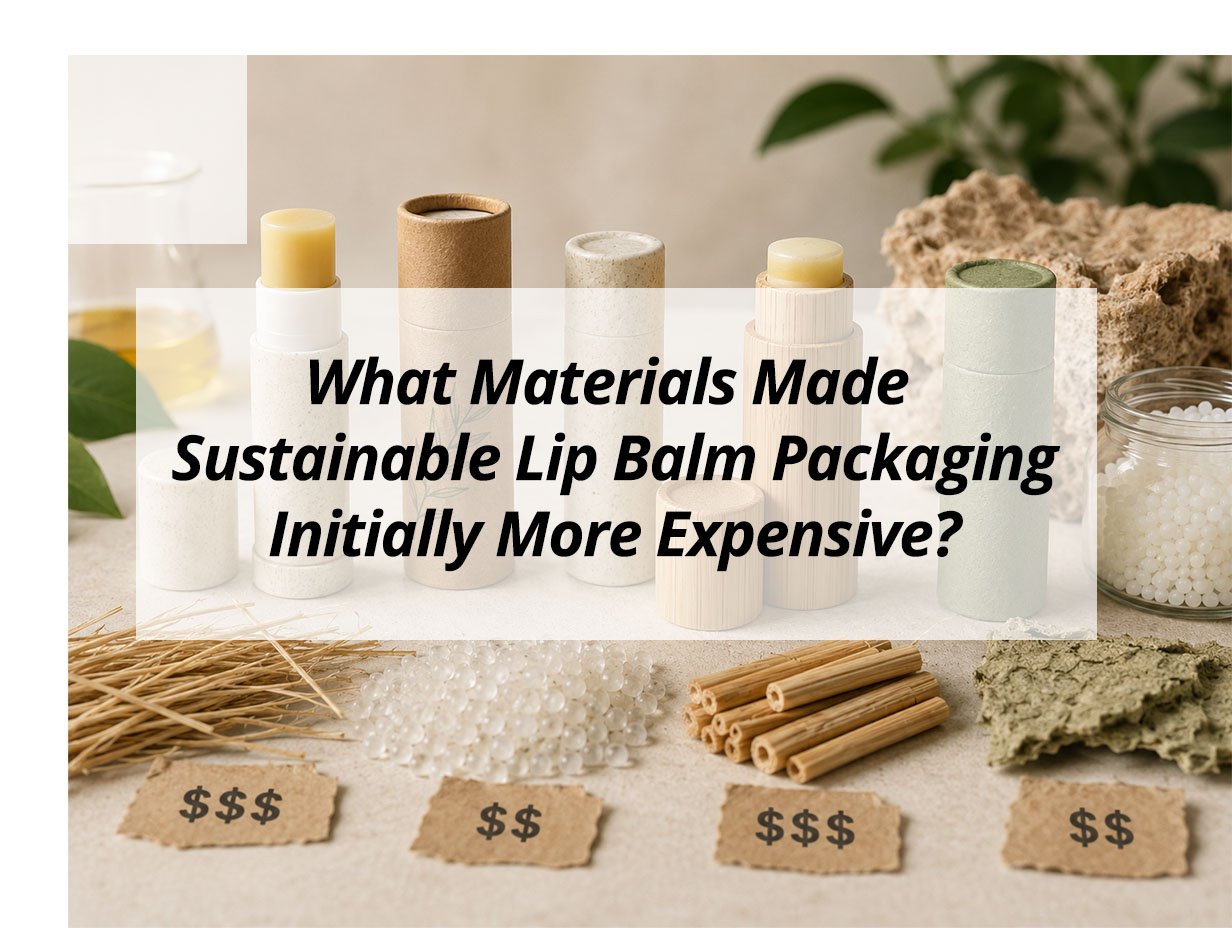
The adoption of sustainable cosmetic packaging has grown. However, these environmentally friendly options often presented a higher initial cost. This disparity raised questions regarding the economic viability of green packaging solutions.
Initially, sustainable lip balm packaging incurred higher costs due to several primary factors. These included elevated prices for raw materials, limited manufacturing economies of scale, and less mature production technologies. These elements combined to create a higher unit cost compared to traditional packaging alternatives.
Transitioning to sustainable packaging requires a comprehensive evaluation of the supply chain. This shift offers environmental benefits but also introduces economic considerations that businesses must address. Understanding these factors is crucial for successful implementation.
Why is Sustainable Packaging More Expensive?
When sustainable packaging first entered the market, a noticeable price difference often existed. This prompted inquiries into the reasons behind the increased investment for eco-friendly options.
Sustainable packaging is more expensive because of several core reasons. These include the higher procurement costs for eco-friendly raw materials, the constrained production volumes of specialized facilities, and the advanced technological requirements for manufacturing. Additionally, the expenses associated with required certifications contribute to the overall pricing.
A detailed examination of these cost drivers reveals a multifaceted issue. It is not a single factor but a combination of elements that influence the final price point.
Raw Material Costs: The Foundation of Pricing
Sustainable materials frequently originate from novel sources, such as bio-based polymers or advanced recycled content. Their supply chains are often less developed, resulting in higher acquisition costs compared to conventional materials.
- Sourcing Complexity: Obtaining sustainable raw materials can involve more intricate supply chains. This complexity can translate into increased costs over readily available conventional materials.
- Specialized Processing: Many sustainable materials demand specific manufacturing processes. These processes can be more complex and costly than those used for traditional plastics.
- Certification Expenses: To substantiate sustainability claims, materials often require specific environmental certifications. The auditing and certification processes incur costs, which are then integrated into the material price.
Production Scale: Economies of Manufacturing
The production of sustainable packaging often operates at a smaller scale compared to mass-produced conventional packaging. Lower production volumes typically lead to higher per-unit costs.
| Production Model | Unit Cost Implication | Market Accessibility |
|---|---|---|
| Large-Scale | Lower unit cost | Wide market penetration |
| Small-Scale | Higher unit cost | Niche or specialized markets |
| Emerging Sustainable | Higher initial cost | Growing market adoption |
As the demand for sustainable packaging expands, increased production scale is anticipated. This scaling is expected to contribute to more competitive pricing in the future.
Manufacturing Technology: Investment in Innovation
The production of sustainable packaging often necessitates significant investment in new machinery and innovative manufacturing techniques. These technological advancements represent considerable capital outlays.
- Research and Development: Companies dedicate substantial resources to researching and developing sustainable packaging solutions. These R&D costs are incorporated into the product's pricing.
- Process Optimization: New manufacturing processes for sustainable materials may require extensive optimization. This can involve initial inefficiencies and learning curves that add to production expenses.
- Energy and Resource Consumption: While some sustainable processes aim for reduced energy use, others may have different energy profiles or require specialized resources, impacting overall production costs.
Why is Lip Balm Expensive?
The market price of lip balm can show wide variation, regardless of its packaging type. Understanding the elements that determine lip balm pricing is relevant for businesses and consumers.
Lip balm can be expensive due to the quality and origin of its constituent ingredients, the brand's market positioning and promotional expenditures, the complexity of its formulation, and the inherent cost of the packaging. Products featuring specialized ingredients, advanced benefits, or strong brand identities typically command premium prices.
An examination of these components provides insight into the pricing architecture of lip balm products. Packaging material selection represents one factor within this broader economic framework.
Ingredients: The Core Formulation Components
The raw materials integrated into lip balm formulations are a primary determinant of its cost. High-quality or specialized ingredients often result in elevated retail prices.
- Ingredient Quality: Premium ingredients, such as organic waxes, rare botanical oils, or specific emollients, are typically more costly to procure.
- Active Compounds: Lip balms containing active ingredients, such as sun protection factors (SPF) or specific skin-benefiting compounds, involve higher material costs and formulation complexities.
- Sourcing and Purity: The process of responsibly sourcing ingredients and ensuring their purity, including testing and quality assurance, adds to overall costs.
Brand and Marketing: Perceived Value and Promotion
A significant portion of a product's price often reflects its brand value and associated marketing investments. These elements shape consumer perception and influence demand.
- Brand Equity: Established brands with strong reputations can command higher prices. Consumers often associate these brands with reliability and quality assurance.
- Advertising and Promotion: Marketing campaigns across various media platforms represent a considerable financial commitment. These expenses are integrated into the product's final retail price.
- Design and Aesthetics: Beyond material costs, premium packaging designs require significant investment in industrial design and visual appeal, contributing to the product's overall value proposition.
Formulation and Development: Scientific Investment
The creation of an effective lip balm necessitates scientific research and development. This investment contributes to the product's comprehensive cost structure.
- Research Initiatives: Developing new lip balm formulations involves scientific research to identify optimal ingredient combinations and ensure product efficacy and safety.
- Safety and Efficacy Testing: Products undergo stringent testing for safety, stability, and performance. These essential tests contribute to the development overhead.
- Quality Assurance: Maintaining consistent product quality across manufacturing batches requires robust quality control procedures. These processes are integral to operational costs.
What is the Most Sustainable Cosmetic Packaging?
Identifying the most sustainable cosmetic packaging solution is a frequent inquiry in the industry. This reflects an increasing commitment to environmental stewardship.
The most sustainable cosmetic packaging typically incorporates materials that are readily recyclable, utilize post-consumer recycled (PCR) content, or are fully biodegradable and compostable. Materials such as glass, aluminum, and specific types of recycled plastics are often regarded as highly sustainable due to their inherent lifecycle properties.
Determining the "most" sustainable option requires a comprehensive assessment of a package's environmental impact across its entire lifecycle.
Recycled Materials: Enhancing Resource Efficiency
The incorporation of recycled content is a key strategy for improving packaging sustainability. This approach reduces dependence on virgin resources and minimizes waste generation.
- Post-Consumer Recycled (PCR) Plastics: These plastics are derived from consumer waste streams. Their use reduces the demand for new plastic production, conserving fossil fuels and lowering carbon emissions.
- Recycled Glass: Glass is a material that can be recycled indefinitely without degradation. Its use in packaging decreases landfill volume and the energy consumption associated with new glass manufacturing.
- Recycled Aluminum: Aluminum is also highly recyclable. Its lightweight nature further enhances sustainability by reducing transportation-related emissions.
Biodegradable and Compostable Materials: Natural Decomposition Pathways
Materials engineered to decompose naturally after use offer an alternative approach to sustainability. They aim to mitigate the problem of persistent environmental waste.
| Material Type | Decomposition Process | Environmental Attribute | Application Area |
|---|---|---|---|
| PLA (Polylactic Acid) | Industrial composting required | Reduces plastic footprint | Select containers |
| Sugarcane/Bagasse pulp | Biodegradable/Compostable | Renewable plant source | Molded packaging inserts |
| Paper and Cardboard | Readily compostable | Renewable forest product | Outer packaging and wraps |
Understanding the specific conditions required for the degradation of these materials, such as industrial composting versus home composting, is vital for their appropriate application.
Refillable and Reusable Systems: Extending Product Lifespans
Packaging designed for multiple uses or refill cycles significantly reduces overall material consumption over time.
- Waste Minimization: Refillable systems substantially decrease the quantity of packaging that requires production and subsequent disposal.
- Circular Economy Integration: These systems promote a circular economic model, where packaging assets are continually reused rather than being single-use items.
- Durability in Design: Refillable packaging necessitates robust designs capable of withstanding repeated handling, cleaning, and refilling processes.
What is Sustainable Packaging Made Of?
Understanding the material composition of sustainable packaging is fundamental for informed procurement and design decisions within the industry.
Sustainable packaging comprises materials specifically chosen to minimize environmental impact. These include post-consumer recycled plastics, glass, and aluminum. It also encompasses bio-based materials such as PLA, sugarcane derivatives, bamboo, and various forms of paper and cardboard. Material selection prioritizes recyclability, reusability, or natural degradation.
A closer look at the primary categories of materials currently utilized in sustainable packaging reveals their distinct environmental merits and applications.
Post-Consumer Recycled (PCR) Plastics: A Material Regeneration Strategy
PCR plastics represent a cornerstone of contemporary sustainable packaging. They facilitate the repurposing of plastic waste into new packaging products, thereby contributing to a circular economy for plastics.
- Resource Conservation: The application of PCR plastic directly lessens the demand for virgin plastic production, preserving finite petroleum resources.
- Reduced Environmental Footprint: Manufacturing processes using PCR often consume less energy and result in lower greenhouse gas emissions compared to the production of new plastic.
- Material Versatility: PCR can be integrated into a wide array of packaging formats, offering broad applicability across different product types.
Glass and Aluminum: Materials with Inherently High Recyclability
Glass and aluminum are highly valued for their exceptional recyclability rates and their ability to be recycled repeatedly without material degradation.
- Glass Characteristics: Glass provides a premium aesthetic and is chemically inert, preventing product contamination. Although heavier, its recyclability and protective properties make it a viable sustainable choice for many cosmetic applications.
- Aluminum Characteristics: Aluminum is lightweight, strong, and offers excellent barrier protection. Its high recyclability and the relatively low energy required for recycling make it an environmentally sound material option.
- Established Infrastructure: Both glass and aluminum benefit from well-established recycling infrastructures in many global regions.
Bio-based Materials: Leveraging Renewable Biological Resources
Bio-based materials are derived from renewable biological sources, offering an alternative to plastics sourced from fossil fuels.
- Plant-Derived Polymers: Materials like bio-polyethylene (bio-PE), derived from sugarcane, mimic the properties of traditional plastics but originate from rapidly renewable plant sources.
- Natural Fiber Composites: Bamboo and other natural fibers are utilized to create packaging components that are strong, lightweight, and often biodegradable.
- Paper and Cardboard: These cellulose-based materials are renewable, widely recyclable, and extensively used for both secondary and primary packaging due to their versatility and favorable environmental profile.
My Insights: What Materials Made Sustainable Lip Balm Packaging Initially More Expensive?
Wonder why eco-friendly lip balm packaging costs more? Sustainable materials like bioplastics, bamboo, and paperboard, while eco-conscious, bring added production and engineering challenges that drive up prices.
Sustainable lip balm packaging was initially more expensive due to costly materials like bioplastics, aluminum, and kraft paper. Added tooling, coatings, and certifications for eco-compliance also contributed to higher production costs.
Drivers Behind the Initial Costs of Sustainable Lip Balm Packaging
The higher initial cost of sustainable lip balm packaging is largely due to the transition from conventional plastic to eco-friendly materials, plus the additional design and production requirements. Here's a breakdown of the key factors:
1. High-Cost Material Substitutes
- Bioplastics: Renewable options like sugarcane-based plastics were more expensive than petroleum-based plastics due to smaller production scales and higher raw material costs.
- Kraft Paper & Paperboard: Paper-based tubes, while biodegradable, cost 3 to 5 times more than traditional plastic tubes because of added barriers (like wax coatings) to make them oil- and water-resistant.
- Aluminum & Metal Tins: While fully recyclable, metals like aluminum required energy-intensive recycling processes and added expense for tooling and production.
- Bamboo or Natural Fibers: Harvesting and processing bamboo or other natural fibers required more labor compared to mass-producing synthetic materials, leading to higher costs.
2. Complex Engineering and Testing
The shift from cheap plastics to innovative formats like push-up paper tubes or refillable containers necessitated new manufacturing processes, custom molds, and extensive product testing. The added engineering to ensure functionality, durability, and oil/moisture-resistance contributed to costs.
3. Regulatory Compliance and Certifications
Securing eco-certifications or meeting global sustainability standards required investments in third-party audits and material testing, adding to the initial cost barriers. For example, compostable materials often had to meet specific biodegradability benchmarks that demanded additional R&D efforts.
Key Material Comparisons
| Material | Eco-Friendly Benefit | Cost Drivers |
|---|---|---|
| Bioplastics | Renewable and biodegradable | Expensive raw materials, limited scalability |
| Kraft Paperboard | Biodegradable and recyclable | Coatings for oil-resistance, complex manufacturing |
| Aluminum | Fully recyclable | Energy-intensive production, tooling costs |
| Bamboo | Renewable and compostable | Labor-intensive harvesting and preparation |
| Metal Tins | Durable and reusable | High processing and customization needs |
Breaking Down the Cost Structure of Sustainable Lip Balm Packaging
1. Material Shift Challenges
Compared to traditional petroleum-derived plastics, sustainable materials like bioplastics and paperboard came with higher sourcing, processing, and scalability costs. Paperboard, for instance, required vegetable-wax or equivalent coatings to prevent the lip balm from leaking through or softening the packaging itself, adding another production layer.
2. Engineering Costs for Functionality
Transitioning to sustainable designs also required brands to experiment with alternative formats like push-up paper tubes or metal tins. These innovations often needed custom molds and additional manufacturing steps, increasing setup costs. Moreover, ensuring packaging durability and compatibility with lip balm formulations (e.g., waxes/oils) intensified the testing phase, delaying mass production.
3. Compliance and Certifications
To meet consumer expectations for sustainability, brands often pursued certifications like “compostable,” “biodegradable,” or “recyclable,” which required rigorous testing and validation. Meeting these regulatory and market-specific standards added an extra layer of expenses to already premium materials.
Conclusion
The initial higher cost of sustainable lip balm packaging stemmed from raw material expenses, limited production scale, and evolving technologies. However, continued advancements and increased market adoption are expected to lead to more cost-effective sustainable solutions over time.