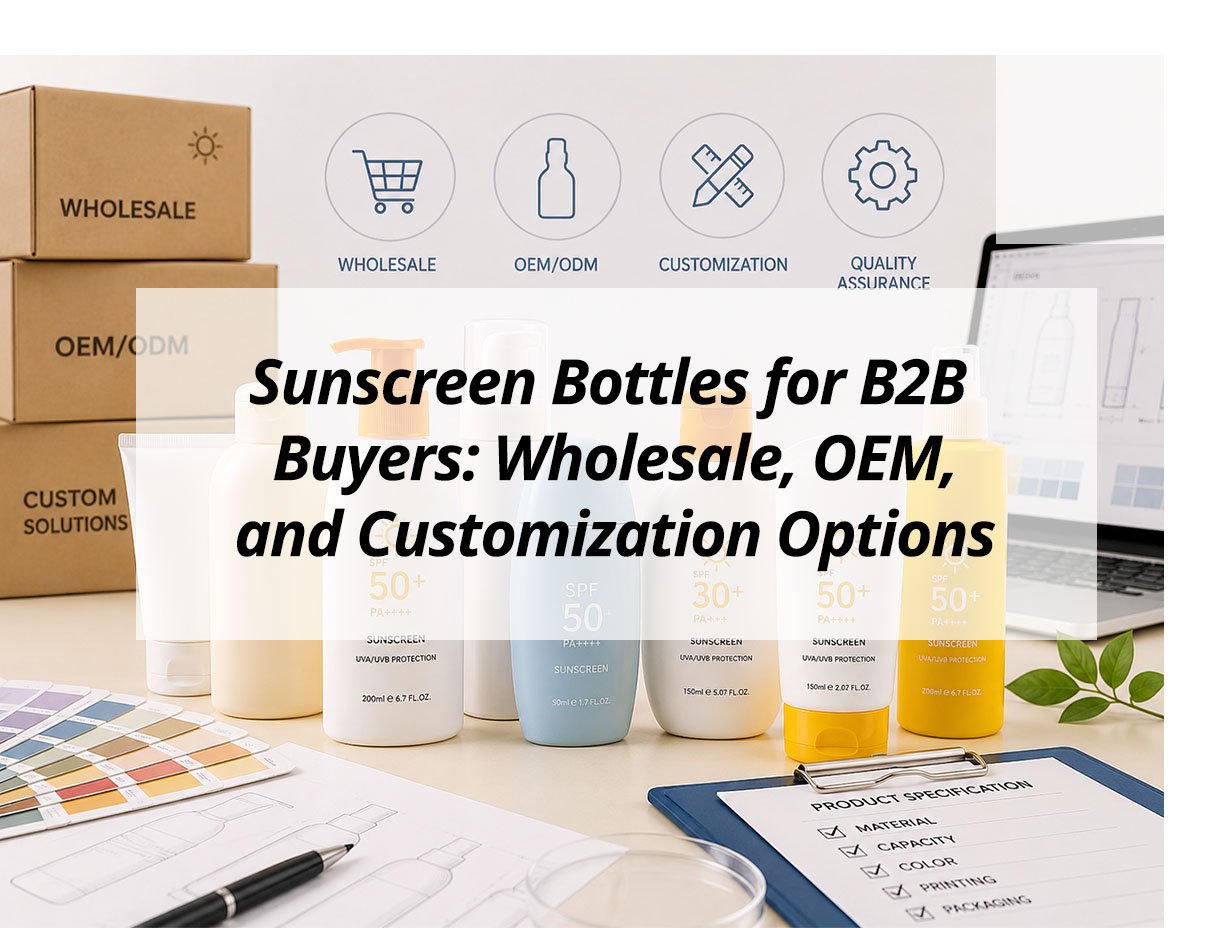
Are you a B2B buyer searching for sunscreen bottles? Sourcing the correct packaging is critical. This involves understanding wholesale, OEM, and customization options. This article helps clarify these aspects.
Selecting the appropriate sunscreen bottle supplier is vital for any brand. This guide explores wholesale, OEM, and customization opportunities. It aims to assist in making informed decisions. We will discuss factors such as quality, cost, and supply chain logistics. This ensures products meet market demands and stand out to consumers. Continue reading to discover the best fit for your business needs.
Sourcing packaging can be complex. Businesses need quality products at competitive prices. Timely delivery is also essential. This information helps navigate these choices.
Who are the largest sunscreen manufacturers, and why does this impact packaging decisions?
Understanding the largest sunscreen manufacturers is beneficial. Their market presence influences packaging trends. Their product lines dictate demand for specific bottle types. Packaging choices often align with established market leaders.
Identifying the largest sunscreen manufacturers provides insight into current market trends. This knowledge helps guide packaging selection. It highlights popular bottle designs and features. This information allows for the selection of packaging that aligns with major brands. It also assists in meeting consumer expectations effectively. Understanding these market dynamics is key for strategic packaging decisions.
Market leaders often set industry standards. Observing their packaging strategies offers valuable insights for other businesses. This can inform decisions on bottle shapes, materials, and dispensing mechanisms.
Key Global Sunscreen Producers
The largest sunscreen manufacturers operate globally. They offer diverse product portfolios. These companies significantly influence consumer preferences and market direction.
- Johnson & Johnson: This company owns several major brands. These include Neutrogena and Aveeno. They offer a wide range of sun protection products.
- L'Oréal: This beauty giant includes brands like La Roche-Posay and Garnier. Their sunscreen offerings cater to various consumer needs.
- Procter & Gamble: Brands such as Olay and Head & Shoulders also feature sunscreen products. They often utilize widely adopted packaging forms.
- Bayer: Coppertone is a well-recognized brand under Bayer. It specializes in sun care. Its products often feature robust packaging solutions.
- Beiersdorf: Nivea, a prominent brand, is part of Beiersdorf. They have a significant presence in the sunscreen market. Their packaging designs are often classic.
These manufacturers produce large volumes of sunscreen. This creates a consistent demand for various packaging solutions. Suppliers must be equipped to handle large orders and offer diverse designs.
Influence on Packaging Trends
Major manufacturers often initiate and reinforce packaging trends. They introduce new bottle types and material innovations.
| Trend | Description | Typical Packaging Example |
|---|---|---|
| Sustainability | Emphasis on environmentally friendly materials and recyclability. | Post-consumer recycled (PCR) plastic bottles, refillable systems. |
| Convenience | Packaging designed for ease of use and portability. | Spray bottles, squeeze tubes with integrated caps. |
| Product Protection | Packaging engineered to maintain product integrity and performance. | Airless pump bottles, opaque containers for light protection. |
| Visual Appeal | Attractive designs that enhance shelf presence. | Custom molded shapes, matte finishes, metallic printing. |
When a large brand adopts a specific packaging type, its popularity often increases. This leads to higher demand for those particular bottles. Packaging suppliers must adapt to these evolving market preferences.
Implications for B2B Buyers
This market insight is valuable for B2B buyers. It helps in selecting suitable packaging solutions. Businesses can choose bottles that align with current market expectations.
- Market Analysis: Review packaging used by leading brands. This indicates consumer preferences.
- Product Compatibility: Ensure packaging is appropriate for the sunscreen's viscosity and application method.
- Brand Alignment: Select packaging that accurately represents the brand's image and values.
Suppliers offering diverse packaging options, including custom designs, can support these needs. This ensures products stand out effectively in the market.
What are the top 3 sunscreens, and how does their packaging affect consumer choice?
The packaging of leading sunscreens plays a significant role. It helps consumers make purchasing decisions. Effective packaging can enhance product appeal and usability.
The top 3 sunscreens often achieve market leadership through effective formulations and strategic packaging. Their bottle designs prioritize user convenience and visual appeal. They also ensure product protection. This directly influences consumer preferences. Buyers frequently select products that are simple to use and aesthetically pleasing. Analyzing their packaging strategies can inform design choices for new products, attracting target customers.
Packaging features, even minor ones, can significantly impact user experience. A well-designed bottle that is easy to handle or fits conveniently in a bag can be a deciding factor for repeat purchases.
Packaging Characteristics of Leading Sunscreens
The packaging of top sunscreens is typically well-engineered. It balances visual design with practical functionality.
- Neutrogena Ultra Sheer Dry-Touch Sunscreen: Often presented in robust plastic tubes or bottles. The design is generally straightforward. Squeeze tubes facilitate controlled dispensing.
- La Roche-Posay Anthelios Melt-in Milk Sunscreen: This brand frequently uses sleek, white bottles. These often include pumps or precise nozzles. Such features aid in consistent application.
- EltaMD UV Clear Facial Sunscreen: Typically supplied in clear or frosted bottles with a pump dispenser. The pump ensures precise product delivery.
These brands focus on a positive user experience. Their packaging is designed for easy opening, closing, and leak prevention.
Consumer Impact of Packaging
Packaging serves beyond containment. It communicates brand value and influences purchasing behavior.
| Packaging Aspect | Influence on Consumer Perception |
|---|---|
| Design | Attracts attention, suggests product quality or premium status. |
| Functionality | Ease of application, convenience, and travel suitability. |
| Material | Perceived safety, environmental impact, or luxury feel. |
| Information | Clarity of SPF, ingredients, and usage instructions. |
Consumers often make quick judgments. The initial visual appeal of packaging can encourage closer examination. User-friendly packaging often leads to repeat purchases.
Insights for B2B Applications
For B2B buyers, this highlights the importance of understanding end-user needs.
- Prioritize usability: Evaluate how easily customers can open and use the bottle.
- Consider portability: Assess if the packaging is leak-proof and convenient for travel.
- Focus on aesthetics: Determine if the design aligns with brand image, whether modern or classic.
A packaging supplier can offer various options for pumps, caps, and materials. This helps in developing packaging that effectively communicates product value and stands out.
How can one create their own sunscreen, and what are the essential packaging considerations?
Developing a custom sunscreen product involves several stages. Packaging selection is a crucial component of this process. It requires choosing bottles that protect the formulation and attract consumers.
Developing a custom sunscreen encompasses formulation, testing, and branding. Packaging is a critical element. Bottles must effectively protect the formula, offer visual appeal, and ensure ease of use. Key factors include material type, dispensing mechanisms, and overall design. These decisions are vital for product stability, safety, and market acceptance.
Effective packaging is integral to product success. A high-quality formula requires packaging that maintains its integrity and enhances its presentation. Issues with packaging functionality can undermine product quality.
Steps in Sunscreen Development
The process of creating sunscreen involves methodical stages.
- Formulation Development: This includes selecting active ingredients and other components.
- Product Testing: Ensuring safety, efficacy, and SPF compliance is essential. This includes stability assessments.
- Regulatory Adherence: Compliance with relevant industry standards and regulations is mandatory.
- Brand Creation: Developing a unique brand identity, including logos and color schemes.
- Packaging Selection: Choosing appropriate bottles, closures, and labeling for the product.
Packaging selection often occurs later in the process. However, it can influence earlier formulation decisions. For example, a viscous formula may require a specific type of dispenser.
Critical Packaging Considerations
When selecting packaging for a custom sunscreen, several factors require careful evaluation.
| Consideration | Description | Impact |
|---|---|---|
| Material Choice | Options include glass, various plastics (PET, HDPE, PP), or aluminum. | Influences product protection, recyclability, cost, and weight. |
| Dispensing Method | Choices include pumps, sprays, flip-top caps, disc caps, or squeeze tubes. | Affects ease of use, product viscosity, and dosage control. |
| Size and Form | Defines volume (e.g., 50ml, 100ml, 200ml) and ergonomic design. | Impacts portability, shelf presence, and user comfort. |
| UV Protection | Opaque bottles or materials with UV resistance. | Prevents degradation of active ingredients due to light exposure. |
| Visual Design | Encompasses color, finish, label space, and overall aesthetic. | Shapes brand image, enhances shelf appeal, attracts consumers. |
| Sealing Integrity | Ensures product safety and prevents leakage or contamination. | Protects product during transport and storage. |
| Cost Efficiency | Budget for packaging production and shipping expenses. | Affects overall product pricing and profit margins. |
UV protection is a primary concern for sunscreen packaging. Light exposure can compromise active ingredients. Opaque containers or UV-resistant plastics are often preferred.
Customization Opportunities
Customizing packaging can differentiate a brand in the market.
- Color Customization: Matching packaging colors to brand guidelines.
- Printing Services: Applying logos and product information through screen printing, hot stamping, or labeling.
- Surface Finishes: Offering matte, glossy, or soft-touch textures.
- Unique Bottle Shapes: Designing distinctive packaging forms.
A packaging supplier can assist in material and design selection. This ensures custom sunscreen bottles are both professional and perform effectively.
What are the top five sunscreens, and how does their packaging affect market positioning?
The packaging of the top five sunscreens is a key element of their market strategy. It helps to define their presence and appeal to specific consumer segments. Effective packaging clearly communicates product benefits.
The packaging of top sunscreens is crucial for their market positioning. It reflects brand identity, targets specific consumer groups, and enhances product perception. High-quality, functional, and attractive packaging can signal premium quality, effectiveness, or environmental responsibility. This influences consumer decisions and helps brands maintain their leading market status. Analyzing these strategies can inform effective packaging choices for new products.
Packaging design can strongly influence how a product is perceived. A clean, simple aesthetic can convey reliability and quality. This helps to establish trust and premium status for a brand.
Leading Sunscreen Brands and Their Packaging Approaches
The following sunscreens are recognized as top choices. Their packaging plays a vital role in their market success.
- Neutrogena Ultra Sheer Dry-Touch Sunscreen: Valued for its lightweight application. Its packaging is typically functional, often a simple tube or bottle. This conveys reliability and suitability for daily use.
- La Roche-Posay Anthelios Melt-in Milk Sunscreen: This brand targets individuals with sensitive skin. Its packaging often features sleek, white, and often medical-inspired designs. This suggests dermatological expertise.
- EltaMD UV Clear Facial Sunscreen: Frequently recommended by dermatologists. Its packaging is often minimalist, commonly with a pump dispenser. This communicates professionalism and specialized care.
- Supergoop! Unseen Sunscreen: Known for its "clean" feel. Its packaging is modern and often colorful. This appeals to a younger, trend-aware demographic.
- CeraVe Hydrating Mineral Sunscreen: Focused on supporting skin health. Its packaging is practical, often with pumps. This reinforces a scientific and health-oriented image.
Each brand uses its packaging to articulate its unique selling proposition. This helps them connect with their intended audience.
The Role of Packaging in Market Positioning
Packaging significantly shapes product perception. It is instrumental in establishing market position.
| Positioning Strategy | Packaging Characteristics | Example Positioning (Conceptual) |
|---|---|---|
| Premium/Luxury | Glass containers, metallic accents, unique textures. | "Artisan Collection" Sunscreen |
| Clinical/Dermatological | White or clear bottles, minimalist design, pump dispensers. | "Dermacare Shield" Sunscreen |
| Eco-friendly/Natural | Recycled materials, natural tones, simplified labels. | "Pure Earth" Sunscreen |
| Mass Market/Everyday | Standard plastic bottles, vibrant colors, clear labeling. | "Daily Guard" Sunscreen |
| Sport/Active | Durable, ergonomic bottles, secure closures, grip surfaces. | "Endurance Protect" Sunscreen |
To position a sunscreen as a luxury item, premium packaging is essential. For an everyday product, packaging should emphasize ease of access and convenience.
Supplier Capabilities for Packaging Solutions
Packaging suppliers offer a range of services to align packaging with market objectives. These include:
- Material Variety: Options such as PET, HDPE, PP, and glass.
- Dispensing Systems: A selection of pumps, sprays, and various cap types.
- Custom Design: Solutions for unique shapes, colors, and finishes.
- Quality Control: Assurance of defect-free packaging.
Suppliers can assist in balancing quality and cost-effectiveness. This ensures packaging effectively communicates value to the market.
My Insights: Sunscreen Bottles for B2B Buyers: Wholesale, OEM, and Customization Options
Looking for sunscreen bottle solutions that balance cost, branding flexibility, and sustainability? B2B options like wholesale bulk packaging, OEM services, and custom designs offer tailored solutions for every business need.
B2B sunscreen bottle solutions include wholesale purchases for cost-efficiency, OEM options for branded launches, and customized packaging for differentiation. Buyers can choose HDPE, PET, or aluminum bottles depending on their formula and sustainability goals.
Exploring Wholesale, OEM, and Customization Options
B2B buyers have access to tailored sunscreen bottle solutions, ranging from wholesale bulk containers to exclusive OEM customization services. Here are key considerations:
1. Wholesale Bulk Options
For simplicity and affordability, bulk orders of standard formats like squeeze bottles, pump dispensers, and spray bottles are ideal. Plastic materials like HDPE or PET dominate this category due to their durability and versatility. Wholesale suppliers offer travel-size to full-size containers, minimizing costs through economies of scale. Colored or opaque bottles are preferred for UV protection.
2. OEM and Private-Label Solutions
OEM services allow businesses to add custom branding elements like logos, color matching, and surface finishes. Common techniques include silk-screen printing, hot-stamping, and labeling. OEM options are ideal for buyers seeking personalization while leveraging established manufacturing templates. Lead times for OEM orders are generally flexible, ranging from 15 to 30 days depending on customization complexity.
3. Full Customization for Brand Differentiation
For businesses aiming for a standout product, custom tooling enables unique bottle shapes, closure systems (flip-top, disc lids, pump), and advanced barrier coatings. Custom molds allow differentiation but require higher volume commitments (typically 10,000+ units) and longer development timelines. Sustainable options like PCR plastics or refillable aluminum bottles are increasingly favored, though they come with higher upfront costs.
Material Comparisons for Sunscreen Bottles
| Material | Use Cases | Advantages | Challenges |
|---|---|---|---|
| HDPE | Bulk/standard bottles | Durable, opaque, cost-effective | Limited luxury appeal |
| PET | Clear or colored bottles | Lightweight, recyclable | Requires UV-resistant coatings |
| Aluminum | Premium/sustainable lines | Lightweight, recyclable, durable | Higher cost, dent-prone |
| PCR Plastics | Eco-friendly options | Reduces virgin plastic usage | Limited supply, color inconsistencies |
Tailoring Sunscreen Packaging to B2B Needs
1. Balancing Cost and Efficiency
Wholesale bulk packaging is often the default choice for enterprises prioritizing low cost and fast production. HDPE and PET dominate here due to their affordability, compatibility with sunscreen formulas, and ease of transportation.
2. Designing for Brand Identity
OEM solutions offer the perfect middle ground. Businesses can customize logos, colors, and surface designs without investing heavily in unique molds. These semi-customized options maintain branding flexibility while minimizing upfront investments.
3. Advanced Sustainability Goals
For brands concerned with eco-conscious packaging, materials like PCR plastics, refillable containers, and aluminum allow alignment with green strategies. Full customization, though costlier, ensures unique branding while meeting sustainability expectations.
Conclusion
Selecting sunscreen bottles for B2B buyers requires careful consideration. Evaluate wholesale, OEM, and customization options. Understanding market leaders and their packaging strategies is beneficial. Packaging significantly influences product success.