Choosing the right lotion bottle material is important. Various plastics offer different features. Understanding these materials helps in making informed decisions. This guide explores common plastics used in lotion bottles.
Lotion bottles commonly use plastics such as Polyethylene Terephthalate (PET), High-Density Polyethylene (HDPE), Low-Density Polyethylene (LDPE), and Polypropylene (PP). Each material has distinct properties. These properties affect the bottle's appearance, durability, and compatibility with various lotion formulas. These plastics are generally suitable for skincare products.
Different plastic types perform differently depending on the product. Matching the plastic to the lotion's specific needs helps ensure product integrity. This also contributes to customer satisfaction and product shelf-life.
What Are Lotion Bottles Made Of?
Selecting the correct material for lotion bottles is a critical step. It directly influences product preservation and bottle functionality. Several plastics are widely employed in the manufacturing of these bottles.
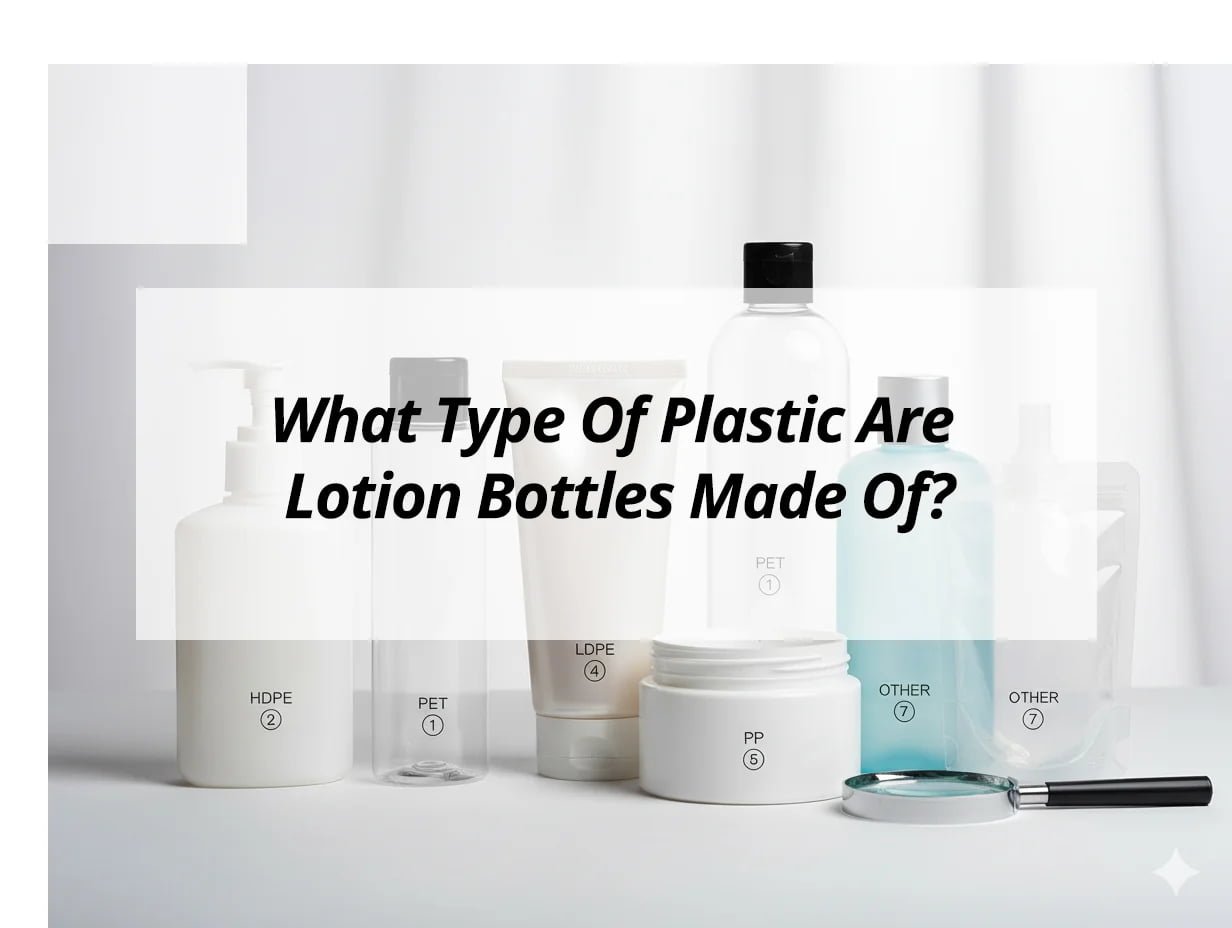
Lotion bottles1 are typically made from PET, HDPE, LDPE, and PP. PET is known for its clarity and strength. HDPE offers robustness and opacity. LDPE provides flexibility and a softer feel. PP is rigid and often used for closures and pumps. Each plastic type offers specific advantages. These benefits make them suitable for various lotion formulas and packaging designs.
The properties of these materials must align with the product's requirements. For example, a thick cream may require a more rigid container. A thinner lotion might benefit from a flexible, squeezable bottle. This careful selection ensures optimal product protection and user experience.
Common Plastics for Lotion Bottles
Several plastics are suitable for lotion bottle manufacturing. Each possesses unique characteristics.
-
PET (Polyethylene Terephthalate): This plastic is transparent. It offers high clarity. It is strong and provides a good barrier against oxygen. This helps in preserving product freshness. Many beverage bottles utilize PET. It is a favored choice for clear lotion bottles due to its barrier properties.
-
HDPE (High-Density Polyethylene): This plastic is robust. It is opaque. It exhibits excellent chemical resistance. This makes it suitable for a wide range of lotions. It is also highly durable. Milk containers often use HDPE. It is a common material for opaque lotion bottles.
-
LDPE (Low-Density Polyethylene): This plastic is softer than HDPE. It is more flexible. Squeeze bottles frequently use LDPE. Its flexibility allows for easy dispensing of lotions. It is also opaque. It is well-suited for products requiring squeezable packaging.
-
PP (Polypropylene): This plastic is rigid. It is very strong. Caps, closures, and pumps often use PP. It is also employed for certain lotion bottles. It is ideal for applications requiring structural rigidity. It also tolerates heat well.
-
PVC (Polyvinyl Chloride): This plastic is less common in modern cosmetic packaging. It can be clear or opaque. It is rigid. Its use has decreased due to environmental considerations associated with its production and disposal.
Why Plastic Type Matters
The choice of plastic material is crucial. It impacts the product's quality and shelf-life.
| Plastic Type | Key Features | Best For |
|---|---|---|
| PET | Clear, strong oxygen barrier | Clear lotions, products sensitive to oxidation |
| HDPE | Opaque, chemical resistant, durable | Thick creams, opaque packaging |
| LDPE | Flexible, squeezable | Squeeze bottles, soft-touch packaging |
| PP | Stiff, heat resistant, strong | Caps, pumps, rigid containers |
Selecting an inappropriate plastic can lead to issues. For example, certain ingredients might react with specific plastic types. This can compromise the lotion's stability or alter the bottle's appearance. Careful material selection helps maintain product integrity and aesthetic appeal. It is vital to match the plastic properties to the specific lotion formulation.
Is Polyethylene Plastic Harmful To People?
Concerns regarding plastic safety are common. People frequently question the safety of polyethylene. Addressing these concerns requires factual information.
Polyethylene plastics, including HDPE and LDPE, are widely considered safe for human contact. They are extensively used in food and cosmetic packaging globally. These plastics do not contain substances like BPA or phthalates. They are stable polymers that do not readily leach chemicals into their contents. Regulatory agencies worldwide approve their use in various applications, affirming their safety profile.
Safety is a primary consideration in packaging design. Ensuring that materials meet strict safety standards is paramount. Polyethylene's widespread approval reflects its established safety record. This allows for confident use in consumer products.
Understanding Polyethylene Safety
Polyethylene is a ubiquitous material in daily life. It is found in numerous consumer goods.
-
HDPE (High-Density Polyethylene): This plastic is highly stable. It is not associated with adverse health effects. It exhibits minimal leaching potential. It is commonly used for dairy containers, detergent bottles, and some children's toys. It is classified as a safe plastic.
-
LDPE (Low-Density Polyethylene): This plastic is also considered safe. It is used in plastic films, squeeze bottles, and food storage bags. It does not release harmful substances. Its widespread application in household items underscores its safety.
Both HDPE and LDPE are approved for food contact. This designation confirms their suitability for containing consumable and personal care products. Their non-reactive nature with most ingredients makes them reliable choices for lotion bottles.
Common Concerns and Facts
Public concerns often arise regarding chemical additives in plastics.
-
BPA (Bisphenol A): Polyethylene plastics (HDPE, LDPE) do not incorporate BPA. BPA is a chemical found in certain other plastics, such as polycarbonate. It is absent in polyethylene formulations.
-
Phthalates: Polyethylene plastics do not contain phthalates. Phthalates are plasticizers used to enhance the flexibility of some plastics. Polyethylene achieves its desired flexibility without these additives.
-
Leaching: Polyethylene is characterized by its high stability. It resists the migration of chemicals from the plastic into the contained substance. This property helps maintain the purity of the lotion.
Scientific studies and regulatory assessments support the safety of polyethylene. Agencies such as the U.S. FDA and equivalent international bodies conduct rigorous testing. These evaluations confirm the material's safety for its intended applications. Adherence to these standards is crucial for material sourcing.
Do All Plastic Bottles Release Microplastics?
The topic of microplastics has gained significant attention. Many individuals wonder about the potential release from plastic lotion bottles. This is a valid area of inquiry.
All plastic bottles can, under prolonged environmental exposure or extreme conditions, degrade into microplastics. However, under normal consumer use and storage conditions, the release of microplastics is negligible. It does not pose a significant concern for personal care products. Plastics like PET, HDPE, and PP are engineered for durability. Proper recycling practices are essential for mitigating environmental impact.
The breakdown of plastics into microplastics typically occurs over extended periods. This process often requires harsh environmental factors. For the expected lifespan of a lotion bottle, microplastic generation is not a primary concern. The focus remains on utilizing stable plastic compositions.
What Are Microplastics?
Microplastics are defined as plastic particles smaller than 5 millimeters in length.
-
Formation: Microplastics result from the fragmentation of larger plastic items. Environmental factors such as UV radiation, mechanical abrasion, and wave action contribute to this breakdown. Plastic bottles discarded in the environment can eventually decompose into microplastics.
-
Environmental Impact: Concerns about microplastics primarily relate to their presence in ecosystems. They can contaminate water bodies and soil. They can also be ingested by wildlife, raising ecological concerns.
For plastic bottles used in typical household settings, the likelihood of significant microplastic release is low. This is especially true when bottles are used as intended and properly disposed of. The degradation process is usually slow and requires specific environmental stressors.
Release from Lotion Bottles
Under standard use, lotion bottles release minimal microplastics.
-
Material Stability: Plastics such as PET, HDPE, and PP are designed for chemical and physical stability. They are engineered to retain their structural integrity during product use. This prevents significant fragmentation during normal handling.
-
Wear and Tear: Minor abrasive contact might result in the shedding of microscopic particles. However, these quantities are extremely small. They are not considered a significant factor in product safety or integrity under normal circumstances.
Maintaining proper storage conditions for bottles helps preserve their integrity. This minimizes any potential for material degradation. The objective is to produce durable and reliable packaging solutions.
Minimizing Microplastic Impact
Strategies exist to reduce microplastic concerns.
-
Recycling: Effective recycling programs are crucial. They divert plastic waste from landfills and natural environments. This directly reduces the potential for large plastics to break down into microplastics.
-
Quality Materials: Employing high-quality plastic resins enhances material stability. Better-quality plastics are more resistant to degradation. This extends their useful life and reduces breakdown potential.
-
Responsible Disposal: Proper waste management prevents plastic litter. This is a key step in preventing plastics from entering environments where they might degrade into microplastics.
Promoting and facilitating the recycling of packaging materials is a vital responsibility. Providing recyclable packaging options contributes to environmental protection. This supports sustainable practices within the industry.
Which Plastic Is Better, 5 Or 7?
Plastic resin codes are often found on bottles. These codes assist in recycling efforts. They also identify the type of plastic material. A common question arises regarding plastics labeled #5 and #7.
Plastic #5 (Polypropylene, PP) is generally considered superior to plastic #7 for most packaging applications, particularly those involving direct contact with consumables. PP is widely recyclable, chemically inert, and free of BPA. Plastic #7 is a composite category for "other" plastics, encompassing various types. Some #7 plastics, such as polycarbonate, may contain BPA, making them less preferred for direct contact uses.
Understanding these resin codes is essential for consumers and manufacturers alike. Code #5 represents a reliable and common choice for many packaging needs, including lotion bottles. These codes guide proper material identification.
Understanding Plastic Codes
These numbers, known as resin identification codes, standardize plastic sorting.
- Plastic #1 (PET): Transparent, commonly used for water and carbonated beverage bottles.
- Plastic #2 (HDPE): Opaque, used for milk jugs, shampoo, and detergent bottles.
- Plastic #3 (PVC): Less prevalent, found in pipes and some specialized packaging.
- Plastic #4 (LDPE): Flexible, used for plastic bags and squeeze bottles.
- Plastic #5 (PP): Rigid, used for yogurt containers, medicine bottles, caps, and pumps.
- Plastic #6 (PS): Polystyrene, commonly found in disposable cups and foam packaging.
- Plastic #7 (Other): This category includes all plastics not fitting into groups 1-6. This can comprise polycarbonate (PC) or newer bioplastics like polylactic acid (PLA).
These codes are instrumental for municipal recycling facilities. They facilitate the segregation of different plastic types. Each plastic demands specific processing methods for effective recycling.
Comparing Plastic #5 (PP) and #7 (Other)
A direct comparison of #5 and #7 reveals key differences.
| Feature | Plastic #5 (PP) | Plastic #7 (Other) |
|---|---|---|
| Material | Polypropylene | Diverse (e.g., PC, PLA, ABS) |
| Safety | Generally safe, BPA-free | Varies; some types (like PC) may contain BPA |
| Recycling | Widely accepted in recycling streams | Less universally recycled; depends on specific plastic |
| Common Use | Caps, yogurt cups, personal care packaging | Large water bottles, specialty items, mixed plastics |
-
Plastic #5 (PP): Polypropylene is highly versatile. It offers strength, heat resistance, and chemical inertness. It is free of BPA. Many closures and pumps for lotion bottles are manufactured from PP. Its broad recyclability and safety profile make it an excellent choice for cosmetic packaging2.
-
Plastic #7 (Other): This category represents a broad range of plastics. It often includes polycarbonate (PC), which may contain BPA. It can also encompass newer materials like bioplastics. The diverse nature of this category makes recycling more challenging. Its safety for direct contact applications varies significantly depending on the specific polymer used. For cosmetic packaging, well-defined plastics are typically preferred over this mixed category.
Prioritizing plastics with established safety and recyclability is a common practice. This includes materials like #5 (PP), #1 (PET), or #2 (HDPE). This approach ensures both product safety and environmental responsibility. Material transparency is a key aspect of ethical manufacturing.
My Insights: What Type Of Plastic are Lotion Bottles Made Of?
Confused about the best plastic for lotion bottles? Discover which materials offer durability, flexibility, and eco-friendliness for your skincare products.
Lotion bottles are primarily made from HDPE, PET, LDPE, and PP plastics. HDPE is strong and resistant, PET offers clarity, LDPE is flexible for squeeze options, while PP is used for pumps and caps.
Understanding Plastic Choices for Lotion Bottles
Common Plastics Used
- HDPE: Offers strong impact resistance, suitable for opaque or semi-opaque bottles.
- PET: Provides clarity and lightweight options, ideal for a glass-like appearance.
- LDPE: Flexible for squeezable bottles, perfect for easy dispensing.
- PP: Utilized in pumps and caps, resistant to heat and chemicals.
Identifying Plastic Types
Most lotion bottles have a recycling symbol with a number indicating the plastic type:
- 1 → PET: Typically clear and rigid.
- 2 → HDPE: Usually opaque and slightly flexible.
- 4 → LDPE: Soft and squeezable.
- 5 → PP: Often in caps or stiff tubes.
| Plastic Type | Characteristics | Uses |
|---|---|---|
| HDPE | Strong, impact-resistant | Opaque, durable bottles |
| PET | Clear, lightweight | Glass-like appearance |
| LDPE | Soft, flexible | Squeezable bottles |
| PP | Stiff, chemical-resistant | Pumps, caps |
Choosing the right plastic for lotion bottles depends on desired durability, appearance, and function. Consider the product's needs and environmental impact when selecting materials.
Conclusion
Understanding plastic types for lotion bottles is vital. PET, HDPE, LDPE, and PP are commonly used and safe materials. Polyethylene plastics are not harmful. While microplastic release is possible over time, it is negligible in normal use. Plastic #5 (PP) is generally preferred over #7 due to its safety and recyclability.