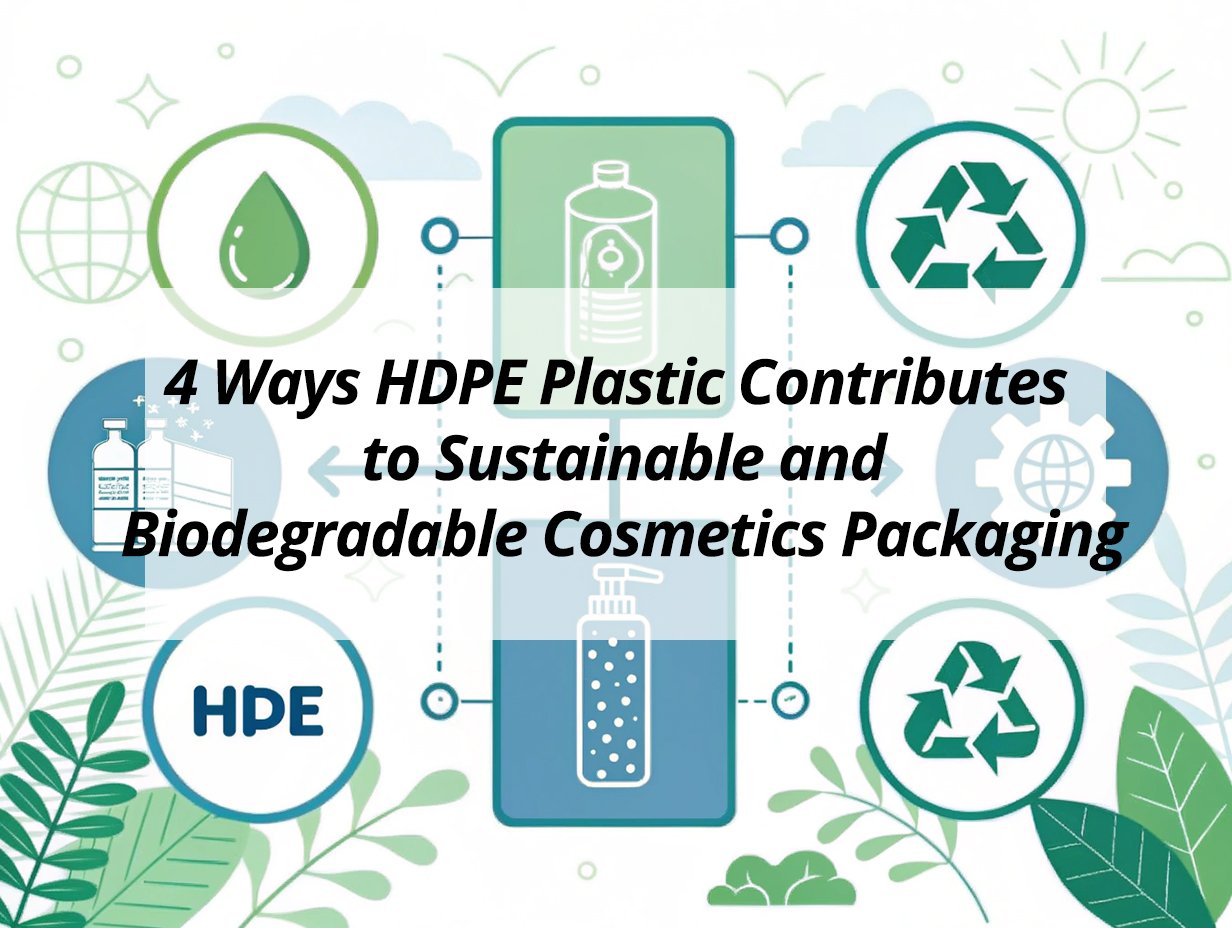
HDPE plastic is crucial in transforming the cosmetics industry toward more sustainable practices. Its inherent qualities make it a preferred choice for eco-conscious brands seeking packaging solutions that align with environmental priorities.
HDPE plastic offers sustainability through recyclability, durability, and its lightweight nature. These features collectively reduce waste, conserve resources, and decrease transportation emissions, crucial for the cosmetic industry's shift to sustainable packaging.
As consumers demand greener products, understanding and utilizing HDPE's benefits becomes essential.
How is HDPE sustainable?
Examining the sustainability of HDPE provides insights into its broader ecological benefits.
HDPE’s sustainability is derived from its recyclability, long-lasting durability, and efficient transport attributes, driving environmentally responsible packaging solutions.
In-depth Analysis
HDPE supports a strategic and social analytics model for sustainable packaging in significant ways:
-
Recyclability: HDPE is commonly accepted across recycling streams, promoting a circular economy. Proper sorting and processing enable its materials to be reused, drastically reducing end-of-life waste compared to non-recyclable counterparts.
-
Durability: The material’s robust nature extends the lifespan of packaging products, minimizing frequent replacement needs. This longevity translates into reduced raw material consumption and lesser environmental impact over time.
-
Lightweight Nature1: HDPE’s lighter weight diminishes transport energy requirements, lessening emissions and operational costs. It also decreases shipping damage, lowering the rate of returns and subsequent waste.
Brands aiming for sustainability must focus on designing HDPE packaging that encourages recyclability, such as single-material constructions that simplify processing.
What are the sustainable packaging options for cosmetics?
Understanding sustainable packaging options is key to advancing eco-friendly strategies in cosmetics.
Sustainable packaging options include HDPE, biodegradable containers, minimalist designs, and PCR (post-consumer resin) innovations, fostering a transition to resource-efficient practices in packaging of cosmetics.
Exploration of Options
Several sustainable pathways can be pursued:
-
Recycled Materials2: Utilizing PCR HDPE enhances sustainability by reducing reliance on virgin resins, aligning with consumer demand for eco-friendly products.
-
Biodegradable containers3: These containers decompose naturally, though compatibility with cosmetic formulations must be considered.
-
Minimalist Designs4: Reducing unnecessary packaging material without sacrificing product protection can streamline resource use and lessen environmental impact.
-
Eco Cosmetic Packaging5: Innovative solutions and designs that integrate recycled or renewable materials support the industry's sustainability goals.
Brands can enhance sustainability by exploring HDPE capabilities combined with biodegradable additives, understanding the trade-offs in material performance for eco-conscious packaging solutions.
Is HDPE plastic biodegradable?
Addressing HDPE’s biodegradability helps clarify its role in sustainable packaging practices.
Conventional HDPE is not biodegradable, but it can be used in combination with biodegradable additives or practices to enhance its environmental value.
Detailed Examination
While HDPE itself does not biodegrade easily, its environmental contributions are still noteworthy:
-
Additives and Innovations: HDPE can be integrated with specific additives that encourage faster decomposition under controlled conditions, adding a layer of sustainability.
-
Sustainable Practices: Employ HDPE in refill-and-return programs, leveraging its strength for extended use, or utilize designs that reduce secondary packaging needs.
For brands prioritizing biodegradability, exploring alternatives like PLA-based blends offers a pathway, yet it's essential to gauge their impact and compatibility with existing infrastructure.
Why is HDPE good for packaging?
HDPE’s attributes make it particularly effective for cosmetics packaging, ensuring both product safety and environmental benefits.
HDPE excels in packaging through chemical resistance, rigidity, lightweight nature, and flexibility in sustainable design applications, providing robust protection while mitigating ecological impact.
Comprehensive Insight
The suitability of HDPE for packaging arises from several critical factors:
| Advantage | Explanation |
|---|---|
| Chemical Resistance | HDPE ensures product stability across various formulations, reducing spoilage and waste. |
| Robustness | Its sturdy nature protects contents during transit and handling, minimizing damage and loss. |
| Lightweight and Efficient | Weight reduction decreases transport energy, emissions, and costs, supporting environmental objectives. |
| Design Flexibility | HDPE accommodates refillable programs and minimalist packaging approaches, enhancing resource efficiency. |
By focusing on high-purity sourcing and increasing the proportion of PCR content, brands can significantly boost HDPE’s ecological benefits. Authentication through credible life-cycle assessments and sustainability certifications ensures transparency and trust.
My Insights: The Ways HDPE Plastic Contributes to Sustainable and Biodegradable Cosmetics Packaging
Considering eco-friendly packaging for cosmetics? Discover how HDPE can enhance sustainability in your products.
HDPE plastic is a sustainable choice thanks to its high recyclability, durability, low environmental impact, and lightweight nature, making it ideal for eco-conscious cosmetic brands seeking biodegradable options.
HDPE's Sustainability Benefits
High Recyclability
- Circular Economy: Widely accepted in recycling programs, HDPE supports closed-loop systems by being reprocessed into new products.
Durability
- Impact Resistance: Ideal for travel-size or pump bottles due to its strength, reducing the need for frequent replacements.
Post-Consumer Recycled Content
- Environmental Footprint: Using PCR HDPE lowers the demand for new materials and demonstrates sustainability commitment.
Sustainable Design Compatibility
- Innovation: Incorporates well with lightweighting, refill systems, and sustainable closures to minimize packaging mass.
| Feature | Benefit |
|---|---|
| High Recyclability | Supports circular economy |
| Durability | Reduces replacements |
| PCR Content | Lowers new material demand |
| Sustainable Design | Combines with eco-friendly strategies |
Ensuring proper labeling and cleanliness maximizes recyclability, aligning HDPE packaging with local recycling capabilities enhances its sustainability impact.
Conclusion
HDPE plastic markedly impacts sustainable packaging in cosmetics, combining durability, recyclability, and innovative design for improved ecological outcomes. By harnessing these attributes, brands can adeptly navigate the shift towards a more environmentally responsible industry.
-
This link will explain how lightweight materials lower transport emissions and costs, enhancing sustainability. ↩
-
Discover how recycled materials like PCR HDPE can significantly reduce environmental impact and meet consumer demand. ↩
-
This resource will provide insights into the effectiveness and challenges of biodegradable options in packaging. ↩
-
Learn how minimalist designs can streamline resource use and reduce environmental impact in packaging. ↩
-
Exploring this topic will reveal cutting-edge solutions that integrate sustainability into cosmetic packaging. ↩