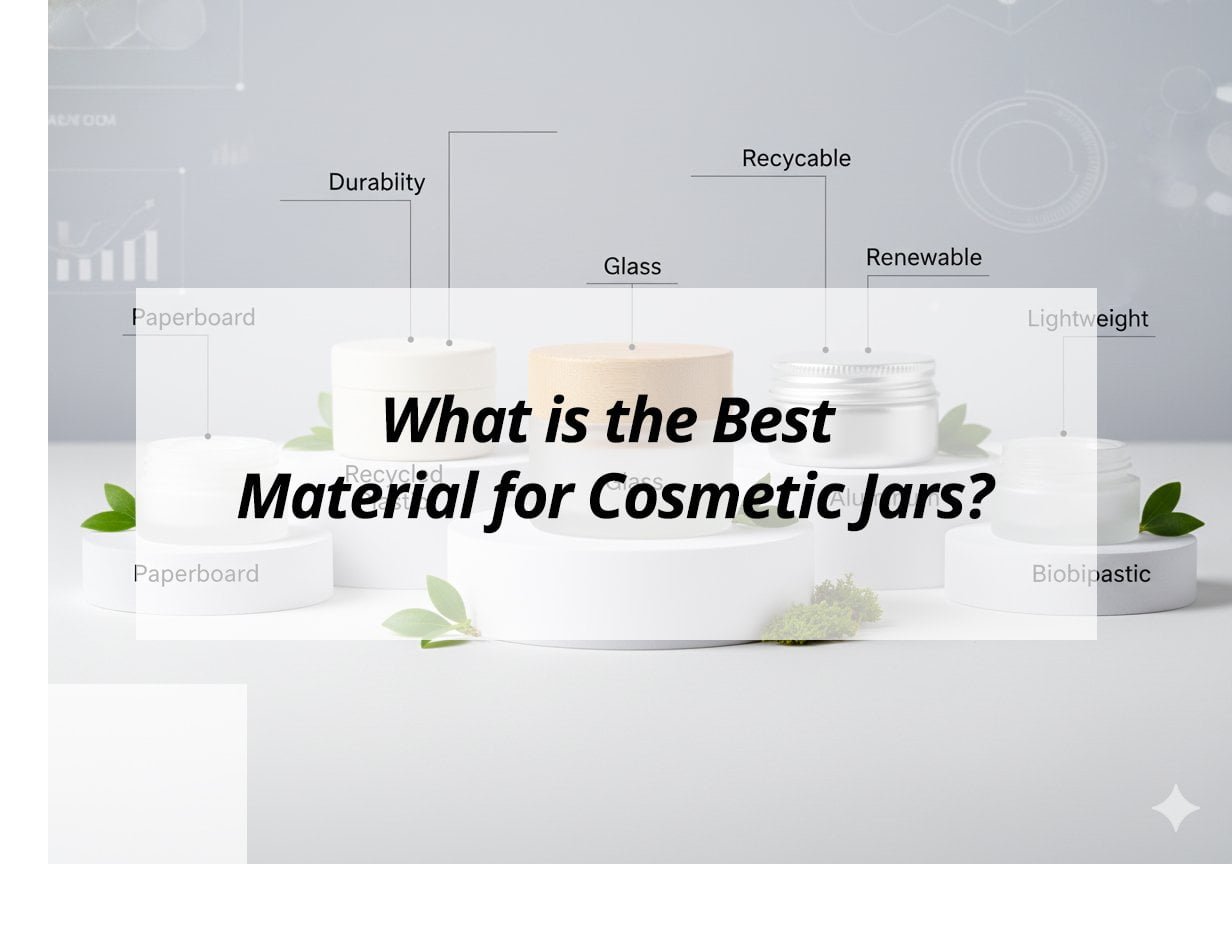
Choosing the right material for cosmetic jars impacts sustainability, cost, and consumer appeal. Let's explore various options and their benefits for your brand.
Selecting the best material for cosmetic jars involves considering eco-friendliness, durability, and cost-effectiveness. Popular choices like glass, bioplastics, and bamboo offer distinct advantages in sustainability, helping brands meet environmental goals and consumer preferences for sustainable beauty packaging solutions.
Understanding these materials helps brands meet consumer demand for sustainable solutions while maintaining product integrity.
What is the most eco-friendly packaging for cosmetics?
Eco-friendly packaging attracts environmentally conscious consumers and enhances brand reputation.
Bioplastics, recycled glass, and bamboo are top eco-friendly packaging options for cosmetics. These materials reduce environmental impact, offering renewable and recyclable solutions, crucial for sustainable beauty packaging trends 2025.
Eco-Friendly Packaging
Choosing eco-friendly materials requires understanding their benefits and applications:
-
Bioplastics: Made from renewable resources, bioplastics break down naturally, reducing landfill waste. They suit a range of cosmetic products, offering flexibility and sustainability.
-
Recycled Glass1: Glass is infinitely recyclable, retaining quality through multiple cycles. It offers premium appeal and durability, making it ideal for high-end products that require glass cosmetic jars wholesale.
-
Bamboo: Rapidly renewable, bamboo provides an aesthetic, eco-friendly alternative. It's versatile, suited to various packaging needs from bottles to lids.
| Material | Benefit |
|---|---|
| Bioplastics | Renewable and biodegradable |
| Recycled Glass | Premium, durable, and endlessly recyclable |
| Bamboo | Renewable, aesthetic, and versatile |
What is the packaging material for cosmetics?
Quality packaging preserves product integrity and consumer trust.
Common materials for cosmetic packaging include plastic, glass, and aluminum. Each material offers different benefits, impacting product preservation, aesthetic appeal, and environmental footprint.
Cosmetic Packaging Materials
The material choice affects durability, aesthetics, and sustainability:
-
Plastic: Lightweight and versatile, plastic suits a range of designs. However, traditional plastics pose environmental challenges, making sustainable options like recycled or biodegradable plastics more appealing.
-
Glass: Known for its non-reactive properties, glass maintains product quality and adds a premium look. Its recyclability and reuse potential make it an eco-friendly cosmetic packaging option.
-
Aluminum: Lightweight and corrosion-resistant, aluminum is perfect for sprays and tubes. It offers recyclability, enhancing its appeal for sustainable packaging.
| Material | Properties |
|---|---|
| Plastic | Lightweight, versatile |
| Glass | Non-reactive, premium |
| Aluminum | Lightweight, durable |
What is the best material to use for packaging?
Finding the right packaging material means balancing various factors.
Glass is often considered the best material for packaging due to its durability, recyclability, and premium appeal. However, bioplastics and bamboo offer eco-friendly and versatile alternatives, fitting different market needs.
Selecting the Best Material
The best material for packaging balances environmental concerns with practical needs:
-
Durability: Glass and aluminum offer strong protection against contamination, vital for maintaining product integrity.
-
Sustainability: Materials like bamboo and bioplastics align with eco-friendly principles, satisfying consumer demand for sustainable beauty packaging.
-
Aesthetic Appeal: Glass provides a classic, high-end look, while bamboo offers a natural, modern appearance, fitting current beauty packaging trends.
| Consideration | Best Material Choice |
|---|---|
| Durability | Glass, Aluminum |
| Sustainability | Bamboo, Bioplastics |
| Aesthetic Appeal2 | Glass, Bamboo |
What is the most profitable beauty product?
Understanding profitable products can guide material choices and marketing strategies.
Skin care products, particularly anti-aging creams and serums, are among the most profitable due to rising consumer demand for effective solutions. Packaging these products attractively and sustainably can enhance brand value.
Profitable Beauty Products
To capitalize on profitable products, align packaging with consumer needs:
-
Anti-aging Products3: Consumers seek effectiveness and premium appeal. Glass jars convey luxury and preserve product quality, enhancing consumer perception.
-
Serums and Oils: Dropper bottles made from bioplastics or glass ensure precision and sustainability, fitting well within Eco-friendly dropper bottles cosmetic packaging trends.
-
Moisturizers and Creams4: Bamboo or recycled plastic jars offer environmental benefits and aesthetic appeal, attracting eco-conscious buyers.
| Product Type | Packaging Option |
|---|---|
| Anti-aging Products | Glass jars for premium feel and quality |
| Serums and Oils | Dropper bottles for precision and style |
| Moisturizers, Creams | Bamboo/recycled plastic for eco appeal |
My insights: The Best Material for Cosmetic Jars
Choosing the right material for cosmetic jars can elevate your brand. Discover how glass, plastic, and eco-friendly options impact product safety, aesthetics, and sustainability.
The best material for cosmetic jars depends on product compatibility, brand image, and sustainability. Glass offers premium appeal and chemical resistance; PET and PP provide lightweight durability; eco-friendly materials support environmental goals.
Evaluating Materials for Cosmetic Jar Selection
Glass:
Favored for luxury skincare, glass excels in chemical resistance, offering a premium look and broad UV protection. It's ideal for products with essential oils or sensitive actives, though heavier and costlier.
Plastic Options (PET, PP, Acrylic):
Lightweight and cost-effective, PET and PP are excellent for mass-market items due to their durability. Acrylic's transparent look offers a premium feel, suitable for mid-range to high-end lines.
Metal and Eco-friendly Materials:
Metal jars, such as aluminum, provide excellent barrier properties and are recyclable. Eco-friendly options like bamboo and bio-based plastics appeal to sustainability-focused brands, though compatibility and availability can vary.
| Material | Pros | Cons | Best For |
|---|---|---|---|
| Glass | Premium look, chemical resistance, recyclable | Heavy, fragile, higher cost | Luxury products, essential oils |
| Plastic (PET, PP) | Lightweight, versatile, cost-effective | Interaction with some ingredients | Mass-market, travel-sized jars |
| Metal | Durable, excellent barriers, recyclable | Interaction concerns, limited shapes | Premium balms, specialty lines |
| Eco-friendly | Sustainable appeal, reduced footprint | Performance varies, cost considerations | Green-focused brands |
Selecting the right material ensures your jars not only protect the product but also resonate with your brand values and consumer expectations.
Conclusion
Choosing the best material for cosmetic jars requires balancing eco-friendliness, durability, and aesthetic appeal. These materials meet sustainable packaging needs while enhancing product and brand value.
-
Learn about the advantages of using recycled glass for eco-friendly cosmetic packaging. ↩
-
Explore the importance of aesthetics in attracting consumers to cosmetic products. ↩
-
Discover the ideal packaging options that enhance the appeal of anti-aging products. ↩
-
Learn about sustainable packaging options that attract eco-conscious consumers. ↩