Selecting the correct packaging is vital for product stability and consumer satisfaction. Are you unsure which products truly benefit from advanced packaging solutions? Do you want to ensure your formulations remain potent and effective from first use to last?
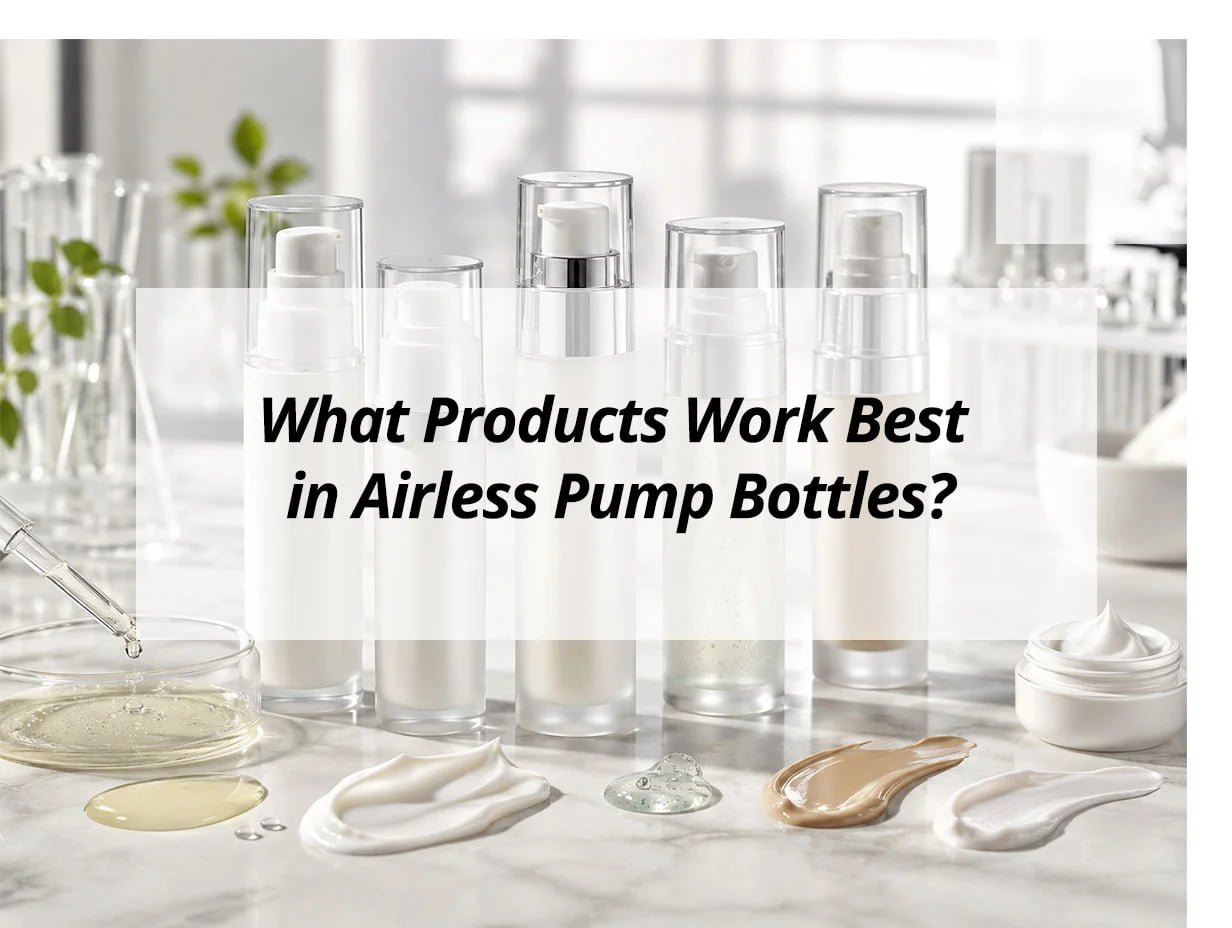
Airless pump bottles are highly effective for preserving oxygen-sensitive cosmetic formulations, including serums, lotions, foundations, and creams, especially those containing delicate active ingredients. They prevent air exposure and contamination, which extends shelf life and maintains product efficacy.
Understanding the advantages of airless technology can transform how products are formulated and presented. This packaging ensures product integrity and performance, protecting valuable ingredients throughout their use.
What to Put in an Airless Pump Bottle?
Identifying the most suitable products for airless packaging can be challenging. What types of formulations gain the most from this specialized container?
Products with sensitive active ingredients and medium to high viscosity are best suited for airless pump bottles. These include anti-aging serums, delicate facial creams, liquid foundations, and certain sunscreens. The airless design protects contents from environmental degradation and maintains hygienic dispensing.
Buyers often prioritize packaging that preserves product quality. They seek solutions that keep formulations stable and effective for their target markets.
Why Airless is Optimal for Sensitive Formulas
Traditional packaging types, such as jars and standard pumps, allow air exposure. Air introduces oxygen and microorganisms, which can degrade sensitive cosmetic ingredients. Airless pump systems operate on a vacuum principle. An internal disc rises with each pump, pushing the product upwards without allowing air to enter the container. This design protects key ingredients like:
- Vitamin C: This antioxidant rapidly oxidizes when exposed to air, reducing its effectiveness.
- Retinol: A highly reactive compound that degrades significantly with constant air contact.
- Peptides: These complex molecules can lose their structural integrity and efficacy when frequently exposed to oxygen.
The controlled environment within an airless bottle minimizes product degradation. This ensures that the active ingredients remain stable and perform as intended throughout the product's lifespan.
Optimal Product Categories for Airless Systems
Specific cosmetic product categories benefit most from airless packaging due to their ingredient profiles and intended use:
| Product Type | Primary Benefit in Airless Pump | Reason for Enhanced Performance |
|---|---|---|
| Serums | Guards potent active ingredients from oxidation. | Ensures antioxidants, vitamins, and other sensitive compounds remain effective. |
| Lotions | Maintains formulation consistency and prevents microbial growth. | Keeps emulsions stable and hygienic for prolonged use. |
| Foundations | Provides controlled, consistent dispensing without drying. | Ensures smooth application and preserves color and texture consistency. |
| Creams | Prevents air entry, maintaining the stability of rich formulas. | Protects nourishing ingredients and extends the product's usable life. |
| Eye Creams | Ensures hygienic application and protects delicate ingredients. | Critical for products used in sensitive areas to prevent contamination. |
| Sunscreen | Keeps UV filters stable and effective. | Guarantees consistent SPF protection and formula integrity over time. |
Airless packaging helps maintain the quality and safety of these products, which is a key factor for brand reliability.
What Can You Put in Pump Bottles?
Considering various product types, how can one determine the suitability for pump bottle packaging? Is every liquid or semi-liquid product a good candidate for a pump dispenser?
Most liquid and semi-liquid cosmetic products, including lotions, gels, shampoos, conditioners, and liquid soaps, can be dispensed via pump bottles. The crucial factor is matching the product's viscosity to the specific pump mechanism to ensure efficient dispensing and prevent issues such as clogging or leaking.
Versatility in packaging is a common requirement for manufacturers. They need solutions that can accommodate a diverse range of product formulations.
Understanding Different Pump Dispenser Types
Pump bottles encompass a variety of mechanisms, each optimized for different product characteristics. These are distinct from airless systems, though some airless bottles also feature pump heads.
- Lotion Pumps: These are standard for products like body lotions, creams, and thicker gels. They typically incorporate a dip tube that draws product from the bottom of the container.
- Treatment Pumps: Often used for serums and targeted treatments, these pumps allow for precise dosage. They also use a dip tube system.
- Spray Pumps: Designed to atomize liquids into a fine mist. They are suitable for toners, facial mists, and fragrance sprays.
- Foamer Pumps: These create foam directly from liquid formulations, commonly used for hand soaps and facial cleansers.
Selecting the right pump type is essential for optimal product delivery and user experience. Improper matching can lead to dispensing difficulties.
Matching Product Viscosity with Pump Mechanism
Product viscosity plays a critical role in pump selection. Viscosity refers to a fluid's resistance to flow.
| Product Viscosity | Recommended Pump Type | Typical Product Examples |
|---|---|---|
| Low Viscosity | Fine Mist Sprayer, Serum Pump (small orifice) | Toners, Liquid Essences, Very Thin Serums |
| Medium Viscosity | Lotion Pump, Treatment Pump | Facial Lotions, Gels, Liquid Foundations |
| High Viscosity | Dispensing Pump, Airless Pump (for viscous) | Thick Creams, Hair Conditioners, Body Butters |
The Importance of Viscosity in Pump Performance
If a product's viscosity is too high for a given pump, it may be difficult to dispense or could cause the pump to clog. Conversely, if the product is too thin, it might leak or be dispensed too quickly and uncontrollably. Airless pumps, however, offer greater flexibility with viscosity because they do not rely on a dip tube. Their piston mechanism can effectively push a wider range of product consistencies. Careful consideration of product viscosity during packaging selection ensures smooth and reliable dispensing for the end-user.
Are Airless Pump Bottles Good?
Is the investment in airless pump bottles a truly beneficial decision for cosmetic brands? Do the advantages outweigh potential considerations?
Airless pump bottles are highly beneficial as they significantly improve product preservation, user hygiene, and brand perception. They safeguard delicate formulations from environmental factors like oxidation and contamination, facilitate precise and hygienic dispensing, and allow nearly complete product evacuation, minimizing waste.
Quality packaging is crucial for brand integrity. It not only protects the product but also reflects the brand's commitment to quality and customer satisfaction.
The Distinct Advantages of Airless Technology
Airless packaging offers several key benefits that distinguish it from conventional packaging methods:
- Superior Product Protection: By preventing air ingress, airless systems protect sensitive ingredients from degradation due to oxygen exposure. This ensures the formulation remains effective throughout its use.
- Extended Shelf Life: The hermetic seal and barrier against external contaminants help to prolong the product's shelf life, maintaining its freshness and efficacy.
- Enhanced Hygiene: The design prevents direct contact between fingers and the bulk product, significantly reducing the risk of microbial contamination with each use.
- Maximized Product Usage: The rising piston mechanism ensures that almost all the product is dispensed, minimizing residual waste often found in traditional packaging.
- Consistent Dosing: Each pump dispenses a uniform amount of product, allowing for precise application and better control for the user.
- Premium Aesthetic: Airless bottles often feature sleek, modern designs that can elevate a brand's image and perceived value.
These advantages collectively contribute to a better product experience for the consumer and stronger brand positioning.
Addressing Common Considerations for Airless Pumps
While airless pumps offer many benefits, it is important to acknowledge certain aspects:
| Consideration | Explanation and Practical Implications |
|---|---|
| Initial Cost | The manufacturing process for airless components can be more complex, potentially leading to a higher unit cost. However, this is often offset by reduced product spoilage and enhanced customer satisfaction. |
| Priming Requirement | Some airless pumps need to be "primed" by pumping several times before the first use. This action creates the necessary vacuum for the system to function correctly. This is a normal part of the initial user experience. |
| Refilling Capability | Many standard airless pumps are sealed for optimum protection and are not designed for easy refilling. This can be a factor for brands focused on refillable solutions, though specialized refillable airless options are available. |
| Material Compatibility | As with all packaging, careful selection of plastic resins (e.g., PP, SAN, PMMA) is crucial to ensure compatibility with the product formulation and prevent chemical interactions that could compromise product or packaging integrity. |
The benefits of airless pump bottles generally outweigh these considerations, particularly for high-value or sensitive cosmetic formulations where product integrity is paramount.
Can You Refill an Airless Pump Bottle?
With increasing focus on sustainability, is it feasible to refill airless pump bottles? What options exist for brands looking to offer reusable packaging solutions?
While many standard airless pump bottles are sealed for optimal product integrity and are not designed for easy refilling, specific refillable airless systems are available. These often feature removable inner cartridges or easily resettable piston mechanisms, catering to environmental goals while maintaining product protection.
The demand for sustainable packaging options is growing. Manufacturers are seeking solutions that balance product protection with environmental responsibility.
The Design Philosophy Behind Refillable Airless Systems
The primary function of an airless pump is to create an airtight seal, preventing external contaminants. For an airless bottle to be refillable, this seal must be easily disengaged and re-established without compromising the system's effectiveness.
- Standard Airless Design: Most conventional airless bottles feature a permanently sealed base. The internal piston moves only upwards, making these units typically single-use.
- Refillable Airless Design: Innovative designs address refillability. These often involve an interchangeable inner cartridge that can be replaced while the outer container is reused. Other designs allow the consumer to unscrew the top and manually reset the piston for refilling.
When selecting packaging, it is important to consider the specific design if refillability is a key objective for the product line.
Common Approaches to Refillable Airless Packaging
Different designs facilitate the refilling of airless pump bottles, each with distinct features:
| Refillable Design Type | Mechanism of Refilling | Advantages for Brands and Consumers | Potential Considerations |
|---|---|---|---|
| Inner Cartridge System | An empty inner cartridge is removed and replaced. | High hygiene, user-friendly, maintains aesthetic of outer packaging. | Higher initial manufacturing complexity for the complete system. |
| Screw-Off Top System | The top component unscrews, allowing direct refilling. | Simpler for consumers to refill, potentially lower unit cost. | Requires careful cleaning by the user, slight risk of air exposure during refill. |
| Removable Base System | The base detaches, allowing access to reset the piston. | Allows direct refilling while keeping the top sealed for product integrity. | Less common, may require specific tools or instructions for assembly. |
These refillable options demonstrate a commitment to reducing waste and promoting circular economy principles in cosmetic packaging.
Considerations for Sustainability and Airless Bottles
Airless bottles contribute to sustainability in multiple ways, even beyond refillability. They reduce product waste by maximizing evacuation and extend product efficacy, meaning less frequent repurchase. For brands prioritizing environmental impact, selecting a refillable airless design is a powerful statement. It aligns with consumer values and contributes to a greener product lifecycle. Continual advancements in packaging technology aim to expand the availability and functionality of sustainable airless solutions.
My Insights: What Products Work Best in Airless Pump Bottles?
Worried your skincare products are losing potency due to air exposure? Airless pump bottles are the ultimate solution for sensitive formulas like serums, sunscreens, and anti-aging creams.
Airless pump bottles work best for oxygen-sensitive, high-viscosity, or preservative-light formulas such as serums, sunscreens, anti-aging creams, moisturizers, liquid foundations, and prescription-grade skincare, ensuring minimal wastage and maximum protection.
Choosing the Right Products for Airless Pump Bottles
Airless pump bottles are ideal for products that benefit from reduced air exposure, contamination prevention, and precise dispensing. Here’s a closer look at which formulas and product types make the most of this packaging format:
1. Products Suitable for Airless Pump Bottles
- Serums: Active ingredients like Vitamin C, retinol, and peptides degrade quickly upon air exposure. Airless systems preserve their potency and prevent oxidation.
- Anti-Aging Creams: These often contain unstable actives requiring airtight conditions to maintain their efficacy.
- Sunscreens: SPF products thrive in airless bottles that protect their UV-blocking properties while ensuring uniform dosing.
- Liquid Foundations and Primers: Makeup benefits from airless packaging to prevent drying out, texture separation, and leftover waste.
- Moisturizers and Lotions: Rich formulas are well-suited for airless pumps due to their high viscosity and need for hygienic dispensing.
- Prescription Skincare: Pharmaceutical-grade formulations benefit from contamination-free application compliant with medical-grade standards.
2. Products Less Suitable for Airless Bottles
- Thick Balms and Dense Pastes: Extremely high-viscosity formulas may encounter dispensing challenges with airless systems.
- Mass-Market Products with Low Sensitivity: Items that do not degrade with air exposure may be overpackaged in airless designs, driving up costs unnecessarily.
Product Type and Airless Bottle Fit
| Product Category | Recommended for Airless Bottles? | Key Benefits | Considerations |
|---|---|---|---|
| Serums | Yes | Preserves active ingredients; reduces oxidation | Essential for premium actives |
| Moisturizers/Lotions | Yes | Precise dispensing; hygienic application | Suitable for rich formulas |
| Sunscreens | Yes | Protects UV filters; ensures consistent dosing | Ideal for SPF creams |
| Foundations/Primers | Yes | Prevents drying and waste | Great for liquid makeup |
| Balms/Dense Pastes | No | Risk of dispensing issues | Test feasibility before choosing |
3. Advantages of Airless Packaging
Airless pump bottles offer key benefits, including:
- Minimal Waste: Near-complete product dispensing ensures customers use every last drop of expensive formulas.
- Extended Shelf Life: Reduced oxygen exposure preserves sensitive ingredients and minimizes spoilage.
- Sustainability Factor: Many airless designs are refillable, lowering the environmental impact of single-use packaging.
Pro Tip
Introduce airless bottles for premium formulas or clean beauty lines that prioritize ingredient stability and waste-free usage. For mass-market products with low sensitivity, stick to traditional pumps or jars for cost efficiency.
Optimizing Product Performance with Airless Bottles
1. Preserving Ingredient Potency
Formulas with vulnerable actives like antioxidants and peptides lose their strength quickly when exposed to air. Airless systems lock out oxygen, ensuring the product retains its effectiveness from first use to the last.
2. Enhancing User Experience
Airless bottles improve application by dispensing uniform amounts with no mess or leftover residue. Their precision dispensing builds customer trust, particularly for luxury or prescription-grade skincare.
3. Balancing Costs and Benefits
Although airless bottles often cost more upfront, their advantages—waste reduction, extended product life, and premium aesthetics—justify the investment for high-value products. For budget items, the practicality of standard packaging often outweighs airless benefits.
Airless pump bottles work best for premium, sensitive, or high-potency skincare and makeup products, providing superior protection against air exposure, waste, and contamination. For maximum ROI, prioritize airless packaging for formulas that depend on precision and stability.
Conclusion
Airless pump bottles are a superior choice for preserving sensitive cosmetic products by protecting them from air and contamination. They enhance product stability and user experience, minimizing waste. Many modern designs also offer refillable options, supporting sustainability goals.