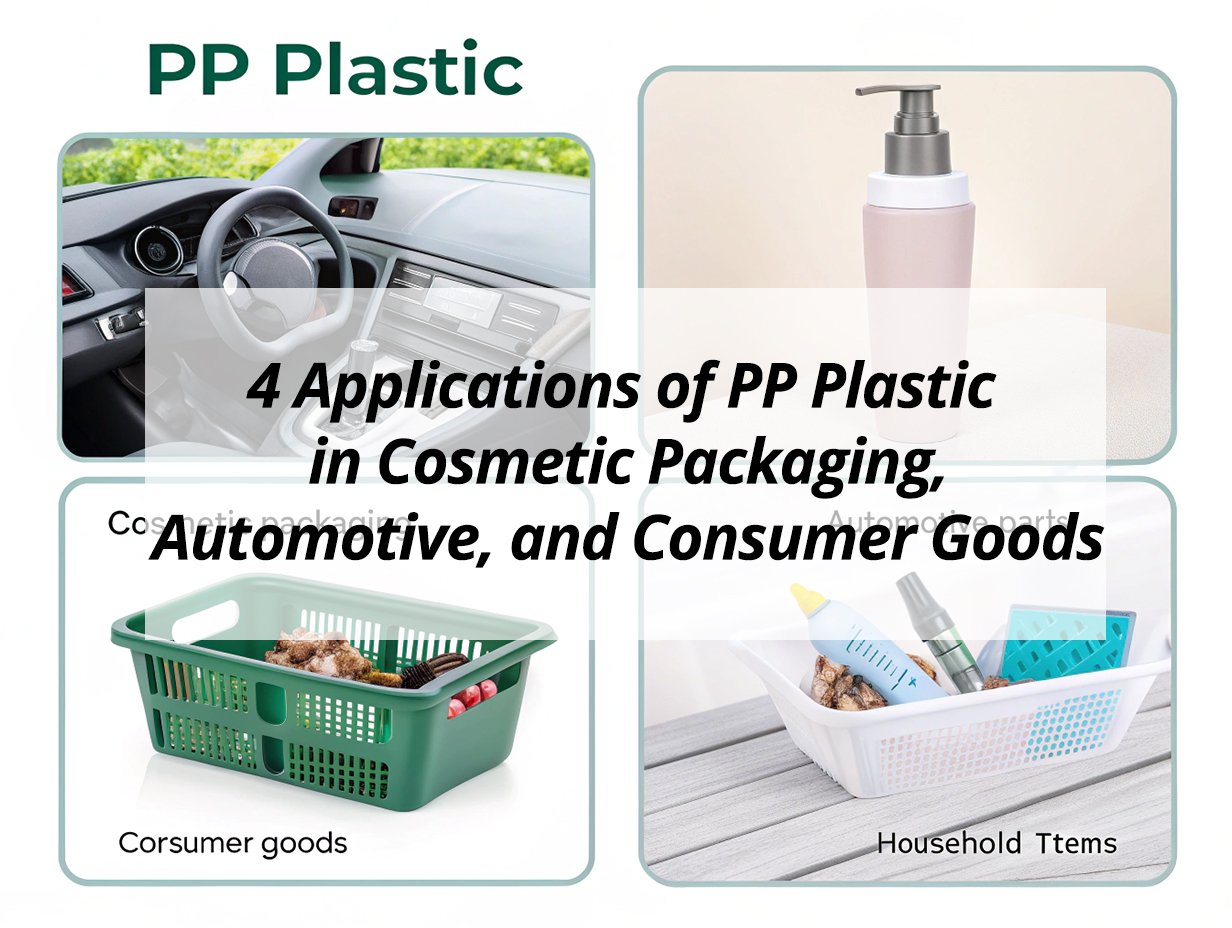
Plastic is crucial across industries, but how does PP plastic specifically contribute to the diverse world of cosmetic packaging, automotive, and consumer goods?
Polypropylene (PP) plastic excels in cosmetic packaging, automotive components, and consumer goods, providing durability, versatility, and cost-effectiveness. Its qualities make it perfect for manufacturers focused on quality and sustainability, offering innovative solutions across industries while reducing environmental impact.
With PP plastic being a favored material, understanding its diverse applications helps businesses optimize their production strategies.
What are the 4 applications of plastic?
Plastic shapes multiple industries, but pinpointing its top uses enhances strategic decisions.
Among plastics, applications commonly revolve around packaging, construction, automotive parts, and electronics. Each domain leverages plastic's unique features like flexibility and robustness to innovate and streamline processes.
To comprehend plastic’s widespread influence, focusing on these primary applications reveals its transformative potential.
Exploring the Core Plastics Applications
Understanding the pivotal uses of plastic requires an exploration into sectors relying heavily on this versatile material.
Packaging
Plastic excels in preserving and protecting products, evident in food, cosmetics, and pharmaceuticals.
- Benefits: Durability, lightweight, customizable.
- Production Impact: Efficient mass production, reduced transportation costs.
Construction
Featured in piping, insulation, and windows, plastic enhances construction projects.
| Benefits | Production Impact |
|---|---|
| Weather resistance | Long-lasting structures |
| Insulation properties | Reduced maintenance |
Automotive
Components like dashboards, bumpers, and seat covers rely on plastic for innovation.
| Benefits | Production Impact |
|---|---|
| Lightweight | Reduced vehicle weights |
| Fuel efficiency | Lower emissions |
Electronics
Used for casings and circuit boards, plastic supports technological advancements.
- Benefits: Heat resistance, insulation.
- Production Impact: Safer and more reliable devices.
Exploring these applications underscores plastic’s crucial role in modern industry.
What are the applications of PP plastic?
Polypropylene’s versatility enhances numerous products, but where does it shine brightest?
PP plastic is prominently used in cosmetic containers1, automotive components2, reusable bags, and household goods. Its balance of durability and cost-effectiveness makes it a preferred choice for manufacturers globally.
Focusing on PP's uses helps businesses select materials aligning with their goals.
Delving into Polypropylene Uses
PP plastic finds a niche in various domains due to its strengths and adaptability.
Cosmetic Containers
PP's resistance to chemicals makes it ideal for storing beauty products safely.
- Strengths: Cost-effective, reliable for diverse products.
- Impact: Enhanced shelf appeal, trusted for safety.
Automotive Parts
Lightweight and robust, PP is used in car parts like battery covers3 and bumpers.
- Strengths: Fuel efficiency, durability.
- Impact: Reduced vehicle weight, improved design flexibility.
Reusable Bags
PP is woven into durable shopping bags, promoting sustainability.
- Strengths: Longevity, eco-friendliness.
- Impact: Reduced reliance on single-use plastics.
Household Goods
From furniture to containers, PP finds its way into homes everywhere.
- Strengths: Versatile, user-friendly.
- Impact: Increased product lifespan, attractiveness.
These insights reveal PP plastic’s integral role across various industries.
What are the applications of polypropylene in automotive?
Innovative car designs lean on materials like polypropylene for advancement, but how?
Polypropylene contributes significantly to automotive advancements by being used in dashboards, bumpers, and interior trims. Its properties enhance vehicle safety, aesthetics, and efficiency, making it invaluable to car makers.
Recognizing PP's role in vehicles clarifies its contribution to industry evolution.
The Automotive Advantage of Polypropylene
Detailed analysis shows how polypropylene supports cutting-edge automotive solutions.
Dashboard and Interior Trims
PP enhances aesthetics and functionality for dashboards and trims.
| Benefits | Impact |
|---|---|
| Customizable designs | Improved cabin feel |
| Quality finishes | Heightened user experience |
Bumpers
PP is ideal for bumpers, offering protection.
| Benefits | Impact |
|---|---|
| Durability | Enhanced safety |
| Cost-efficiency | Reduced replacement costs |
Battery Covers
PP provides robust battery protection.
| Benefits | Impact |
|---|---|
| Insulation | Increased battery lifespan |
| Protection | Reliable performance |
In automotive applications, PP’s advantages make it indispensable for modern vehicles.
What are the application of plastic in automobile?
Plastic redefines automotive manufacturing, but how does it manifest?
In automobiles, plastics are used in seat covers, air ducts, and fuel tanks, significantly contributing to weight reduction and design flexibility. This transformation drives industry growth and innovation.
Exploring plastic’s impacts on automotive reveals its importance in enhancing efficiency and sustainability.
Comprehensive Look at Plastic’s Role in Automobiles
The utilization of plastic revolutionizes vehicle design and performance.
Seat Covers
Plastics facilitate durable, stylish seat covers4 that enhance comfort.
- Benefits: Comfort, customizability.
- Impact: Improved aesthetics, extended lifespan.
Air Ducts
Plastic aids in creating air duct systems that improve cabin airflow.
- Benefits: Lightweight, efficiency.
- Impact: Enhanced passenger experience, climate control.
Fuel Tanks
Fuel tanks made with plastic ensure safety and weight reduction.
- Benefits: Safety, weight savings.
- Impact: Longer travel range, reduced emissions.
Plastic’s automotive applications illustrate its transformative impact on design and functionality.
My Insights: The Applications of PP Plastic in Cosmetic Packaging, Automotive, and Consumer Goods
Struggling to find versatile materials for various industries? PP plastic offers durability, lightweight, and chemical resistance, making it ideal for diverse applications in cosmetics, automotive, and consumer goods.
PP plastic is used in cosmetic packaging for durable containers and caps, automotive interiors and exteriors for lightweight, moldable parts, and consumer goods like household storage for toughness. Its high thermal resistance and recyclability make it a preferred choice across these sectors.
PP Plastic Applications
1. Cosmetic Packaging
| Application | Benefits |
|---|---|
| Containers and Caps | Moisture resistance and cost-effectiveness protect products. |
| Portable Cases | Chemical resistance ensures durability and safety for products. |
2. Automotive
- Interior Parts: Used for dashboards and door panels, offering impact resistance and moldability.
- Exterior Parts: Reinforced PP in bumpers provides rigidity and heat resistance.
3. Consumer Goods
| Application | Benefits |
|---|---|
| Household Containers | Flexibility and chemical resistance enhance safety. |
| Toys and Furniture | Lightweight and resilient properties ensure durability. |
PP plastic supports sustainability through recyclable applications while ensuring functionality across cosmetic, automotive, and consumer goods industries, combining strength and cost-effectiveness with environmental responsibility.
Conclusion
Polypropylene plastic's versatility drives innovation across cosmetic packaging, automotive, and consumer goods, supporting efficiency and sustainable practices.
-
Explore the benefits of using PP plastic for cosmetic containers, ensuring product safety and appeal. ↩
-
Learn about the lightweight and durable nature of PP plastic in automotive applications. ↩
-
Discover how plastic enhances battery protection and performance in automotive applications. ↩
-
Learn how plastic seat covers improve comfort and aesthetics in vehicles. ↩