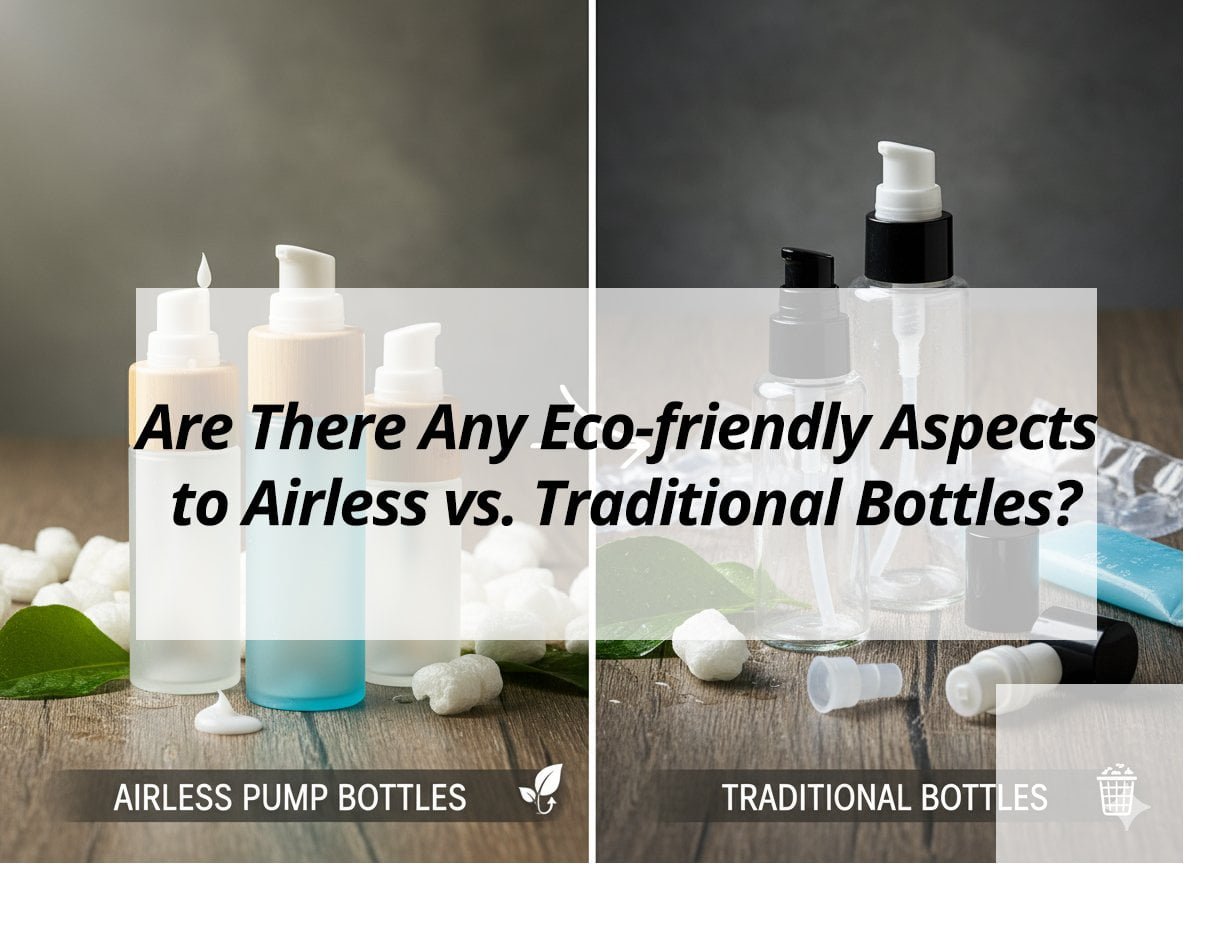
The cosmetics industry constantly seeks improvements. This often involves examining how product packaging affects the environment. Making informed choices about packaging that supports environmental sustainability is crucial. Do airless bottles offer more eco-friendly benefits compared to traditional bottles? This exploration will provide clarity.
Airless bottles frequently demonstrate greater eco-friendliness. They enable more complete product use, which leads to less wasted product and fewer replacements. Traditional bottles often retain residual product, contributing to waste. Airless pump designs also enhance product preservation, extending shelf life. Longer lasting products reduce the frequency of purchases, further minimizing waste. They represent a responsible choice for brands prioritizing environmental considerations.
Understanding packaging choices is important for many. They want to ensure product integrity. They also want to consider planetary impact. This is a significant topic. It requires thorough examination. This article aims to provide a clear understanding.
What is the most environmentally friendly bottle?
Environmental considerations are paramount in packaging selection. Identifying bottles that minimize environmental impact is essential. Numerous options exist in the market. Determining the absolute "most" environmentally friendly option is complex. Each type presents distinct advantages and disadvantages. This section will detail key factors.
The most environmentally friendly bottle is often one manufactured from recycled content. Materials such as glass and specific plastics like PET, when consistently recycled, are strong contenders. Reusable bottles are also highly effective, as they reduce the demand for new production. While airless bottles may pose recycling challenges due to pump mechanisms, their ability to conserve product reduces overall consumption. The optimal choice depends on the entire life cycle and practical application of the bottle.
When evaluating packaging, comprehensive environmental impact is a key consideration. This extends beyond visual appeal. It encompasses the entire ecological footprint. Here is a detailed analysis of what constitutes an eco-friendly bottle.
Recycled Content Importance
Utilizing materials that have already served a purpose is very beneficial. This practice conserves natural resources. It also decreases the volume of waste directed to landfills.
| Material Type | Eco-Friendly Attribute | Primary Consideration |
|---|---|---|
| PCR Plastic | Incorporates plastics already in circulation. | Material consistency can vary. |
| Recycled Glass | Glass can be perpetually recycled. | Heavier, potentially higher transport carbon. |
| Aluminum | Exhibits excellent and frequent recyclability. | Energy-intensive in initial production. |
Prioritizing materials with PCR (Post-Consumer Recycled) content indicates a clear commitment to sustainability. This aspect is increasingly valued by consumers.
Reusability and Refill Systems
A bottle that avoids disposal is inherently superior. If a container can be repurposed, it offers significant environmental benefits.
- Refill models: Some brands implement product refill programs. Consumers retain their original bottle and purchase a refill pouch. This significantly benefits the environment.
- Durable construction: A bottle designed for longevity can endure multiple refills. This reduces its environmental footprint.
- Consumer engagement: For reuse strategies to succeed, consumer participation is vital. Education on reuse practices is important.
The entire product journey is important. From manufacturing to end-of-life, or, ideally, to repeated reuse.
Material Selection Significance
The composition of a bottle profoundly impacts its environmental profile. Certain materials possess greater environmental advantages.
- PET: A common plastic, widely accepted in recycling programs.
- PP: Frequently used for closures and pumps, with varying recycling availability.
- Glass: Offers a premium aesthetic but is susceptible to breakage and is heavy.
- Aluminum: Lightweight, provides an effective barrier, and is highly recyclable.
Sometimes, a combination of materials provides the best balance. This helps both product functionality and environmental responsibility.
What are the benefits of airless pump bottles?
Airless pump bottles have gained considerable popularity. Their widespread adoption prompts questions about their specific advantages. Are they merely a trend, or do they offer substantial value? The numerous benefits associated with them warrant detailed explanation.
Airless pump bottles provide multiple advantages beyond their appearance. They shield delicate formulations from air exposure and external contaminants. This preserves product freshness and efficacy for an extended period. Furthermore, they facilitate nearly complete product dispensing. This minimizes product waste for the end-user. For cosmetic packaging, this feature is highly significant. They maintain hygiene and can extend a product's shelf life, making them an intelligent choice for many skincare and makeup items.
Many clients inquire about innovative packaging solutions. They prioritize product integrity. They seek options that maintain quality. Airless bottles often address these concerns effectively.
Product Protection and Shelf Life Enhancement
This is a primary benefit. Airless bottles effectively isolate the product from external elements.
- Atmospheric protection: Exposure to air can degrade active ingredients. Airless bottles prevent this, preserving ingredient potency.
- Contamination prevention: Direct finger contact with the product is avoided. This enhances hygienic conditions.
- Extended freshness: Due to superior protection, product formulations remain fresh for longer. This benefits both manufacturers and consumers.
The choice of packaging directly impacts product stability. If a product contains sensitive ingredients, protective packaging is crucial.
Maximizing Product Utilization
Minimizing product waste is a common goal. Airless bottles contribute significantly to this objective.
- Near-total evacuation: These pump mechanisms dispense almost all of the product. Very little residue remains inside.
- Reduced consumer waste: Consumers perceive greater value, knowing they utilize most of the product. This fosters consumer satisfaction.
- Consistent dosing: Many airless pumps deliver a uniform amount of product. This aids in precise application.
The difference in product evacuation between an airless bottle and a conventional jar is often notable.
Brand Image and Functional Advantages
Airless bottles also contribute to a refined brand image. Their user experience is often superior. This adds to a brand's perceived value.
| Benefit Category | Description | Relevance for Brands |
|---|---|---|
| Premium Aesthetic | Smooth operation, elegant design. | Appeals to consumers seeking quality. |
| Travel Suitability | Leak-proof, functions at any orientation. | Ideal for portability. |
| Formula Versatility | Accommodates a range of viscosities. | Expands product compatibility. |
Such packaging solutions can help products differentiate themselves in the market. They offer both practical and aesthetic value.
What are eco-friendly materials for bottles?
When considering environmental impact, material composition is fundamental. The choice of bottle material reveals much about its sustainability. Certain materials offer greater environmental advantages. Selecting these materials is not merely a trend. It actively supports environmental preservation.
Eco-friendly materials for bottles typically include PCR (Post-Consumer Recycled) plastics such as PET and PP. Glass is another strong contender due to its infinite recyclability. Aluminum stands out for its high recycling rates and lightweight properties. Plant-derived materials, like PLA, are emerging but require specific composting infrastructure. The most eco-friendly material is one that minimizes new resource consumption, is readily recyclable, or is designed for multiple uses.
The demand for sustainable packaging options is growing. Buyers prioritize both quality and competitive pricing. Solutions that address both concerns are highly valued.
The Impact of Recycled Plastics
The adoption of recycled plastic offers substantial environmental gains. It lessens the reliance on virgin plastic production.
- PCR PET: Commonly used for clear bottles, sourced from recycled plastic bottles. It is widely accepted in recycling streams.
- PCR PP: Used for opaque containers and caps, derived from various plastic waste sources. Its recyclability depends on local infrastructure.
- Ocean-bound plastic: Collected from coastal areas, contributing to marine environment clean-up efforts.
Prioritizing PCR materials demonstrates a tangible step towards sustainability.
Glass: Durability and Recyclability
Glass bottles convey a sense of quality and sophistication. They also possess an excellent recycling profile.
- Infinitely recyclable: Glass can undergo multiple recycling cycles without degradation in quality.
- Inert properties: It does not interact with the product inside, maintaining formula purity.
- Weight and fragility: Disadvantages include increased weight (higher transportation emissions) and susceptibility to breakage.
For premium product lines, glass is frequently chosen. Its advantages are weighed against its practical considerations.
Aluminum: Lightweight and Efficient
Aluminum is another notable material often used in packaging.
- High recycling rate: Aluminum is among the most recycled materials globally.
- Lightweight: This reduces fuel consumption during transportation.
- Excellent barrier: It effectively shields products from light and air.
Aluminum's versatility allows for innovative design applications across various cosmetic packaging needs.
Developing Bio-based Materials
New materials derived from plant sources are continually being developed.
- PLA (Polylactic Acid): Produced from renewable resources like corn starch or sugarcane. It is biodegradable under specific industrial composting conditions.
- Sugarcane plastic: A type of plastic derived from sugarcane. It utilizes a renewable feedstock.
These materials are still evolving. They often require specialized recycling or composting processes. However, they represent promising future directions.
What is the most environmentally friendly drink container?
This question shares principles with cosmetic bottle sustainability, but with distinct considerations. The widespread consumption of beverages means drink containers have a substantial collective impact. Careful evaluation of environmentally superior options is essential.
The most environmentally friendly drink container is typically a reusable one. Stainless steel and robust glass bottles, designed for repeated washing and refilling, significantly reduce waste generation. For single-use applications, aluminum cans are often preferred due to their high recycling rates and light weight. Key factors for environmental friendliness in drink containers include a low carbon footprint in production and transport, and widespread recyclability.
The underlying principles of sustainability, favoring reuse and then easy recycling, are consistent across packaging types.
Prioritizing Reusable Containers
Containers designed for repeated use consistently outperform single-use options.
- Stainless steel bottles: Highly durable, effective at temperature retention. They offer exceptional longevity.
- Reusable glass bottles: Provide a clean aesthetic, but are prone to breakage. Suitable for various liquid contents.
- Personal mugs/cups: Used for hot beverages, significantly reducing the use of disposable alternatives.
Adopting reusable items is a simple yet impactful environmental action.
Aluminum Cans: A Strong Performer
For single-serving beverages, aluminum cans often present a compelling environmental profile.
- High recycling rates: Consumers are generally proficient at recycling aluminum cans.
- Lightweight: Facilitates efficient transportation, reducing fuel consumption.
- Infinite recyclability: Can be transformed into new cans multiple times without material degradation.
Many beverage companies choose aluminum for its environmental advantages and circularity.
Glass Bottles: A Premium Option
Glass remains a popular choice for beverages, particularly for premium or specialty drinks.
- Recyclable: Similar to cosmetic glass, it can be recycled numerous times.
- Premium perception: Enhances the perceived quality of the beverage.
- Weight: Its primary environmental drawback due to higher transportation energy requirements.
All factors are considered when evaluating the overall environmental impact of packaging.
Plastics in Beverage Packaging
Some plastic bottles are extensively used for beverages.
- PET bottles: Widely employed for water and soft drinks. They are technically recyclable.
- Recycling challenges: Despite being recyclable, not all plastic bottles enter the recycling stream. Many contribute to landfill or environmental pollution.
The aim is to promote packaging solutions that genuinely mitigate environmental harm.
My Insights: Are There Any Eco-friendly Aspects to Airless vs Traditional Bottles?
Struggling to make your cosmetic packaging eco-friendly? Learn how airless and traditional bottles stack up in sustainability.
Airless bottles reduce product waste and prolong shelf life, potentially lowering carbon footprint. They can be eco-friendly if designed for recyclability and reuse. Conversely, traditional bottles offer simplicity and easier recycling.
Evaluating Eco-friendly Packaging Options
Advantages of Airless Bottles
- Less Product Waste: Airless systems ensure nearly complete dispensing, minimizing waste and reducing production impacts.
- Extended Shelf Life: Reduced oxidation allows for fewer preservatives, enhancing product integrity.
Benefits of Traditional Bottles
| Feature | Airless Bottles | Traditional Bottles |
|---|---|---|
| Waste Reduction | High efficiency in product use | Easier component recycling |
| Shelf Life | Longer due to less air exposure | Simpler manufacturing lowers emissions |
| Material Use | All-plastic designs enhance recyclability | Fewer components, lower cost |
Key Eco Drivers
- Refill Systems: Both types benefit from refillable formats, significantly reducing waste.
- Mono-material Designs: Enhance recyclability and simplify manufacturing processes.
When choosing packaging, prioritize refillable systems and mono-material options for both airless and traditional formats. These choices ensure environmental benefits without sacrificing functionality.
Conclusion
Evaluating the eco-friendly aspects of airless versus traditional bottles reveals key insights. Airless bottles excel in minimizing product waste and maintaining formula integrity. In all container types, reusability stands as the most environmentally beneficial approach. When single-use is necessary, opting for widely recyclable materials like PCR plastics, glass, and aluminum is paramount. The overarching objective is to reduce our collective environmental impact.