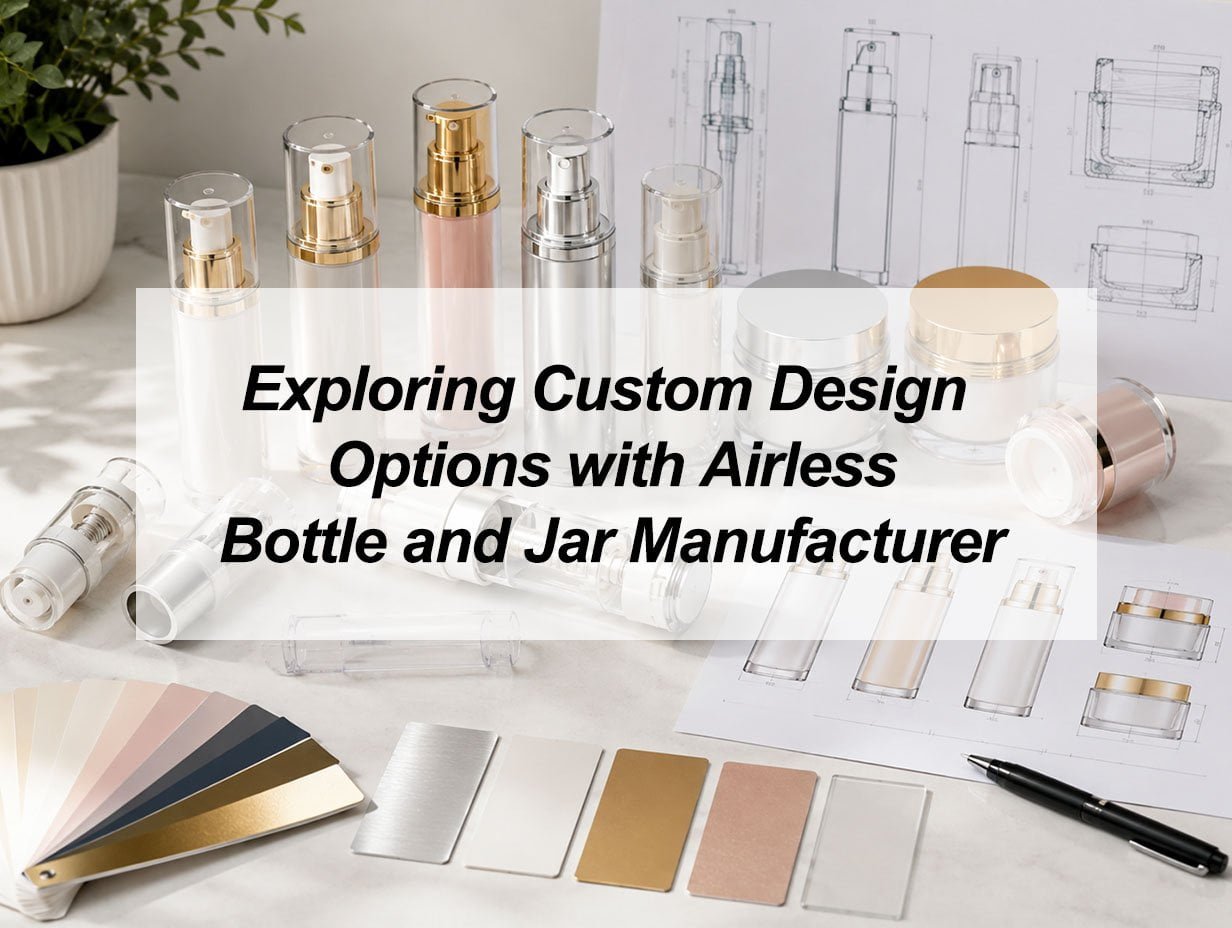
Custom airless packaging can create a premium skincare look, but weak design choices can cause pump problems, leakage, and sourcing delays.
Brands can explore custom design options with an airless bottle and jar manufacturer by choosing the bottle shape, jar style, capacity, material, pump system, refill structure, color, surface finish, logo decoration, and label layout. These choices help match formula protection, user experience, brand image, sustainability goals, and production needs.
Custom airless packaging must balance beauty, formula protection, clean dispensing, accurate dosage, decoration, supplier capability, shelf appeal, and practical mass production needs.
What Custom Design Options Can an Airless Bottle and Jar Manufacturer Offer?
Airless packaging customization has many layers. A brand can customize the outside look, but the internal system must still work with the formula.
An airless bottle and jar manufacturer can offer custom design options such as size, shape, material, pump type, actuator, cap, refillable structure, color, surface finish, logo printing, hot stamping, coating, label area, and secondary packaging. These choices should be selected based on formula needs and brand positioning.
1. Custom Bottle and Jar Format
The first choice is the format. An airless bottle works well for serums, lotions, gels, lightweight creams, foundations, and sunscreens. An airless jar works better for thicker creams, moisturizers, masks, and premium skincare formulas.
Common format options include:
- airless pump bottle;
- airless pump jar;
- refillable airless bottle;
- refillable airless jar;
- dual-chamber airless bottle;
- twist-up airless packaging;
- travel-size airless pack;
- luxury outer shell with inner refill.
A custom airless manufacturer may provide airless pump bottles, jars, tubes, refillable systems, mono-material options, and dual-chamber designs for different cosmetic formulas.
2. Custom Capacity
Capacity affects both appearance and user experience. A 15ml airless bottle may suit eye serum. A 30ml bottle may suit facial serum. A 50ml airless jar may suit face cream. A 100ml airless bottle may suit body lotion or sunscreen.
| Capacity | Common Use |
|---|---|
| 15ml | Eye cream, sample serum, treatment product |
| 30ml | Facial serum, essence, foundation |
| 50ml | Cream, moisturizer, facial sunscreen |
| 75ml | Lotion, mask, body treatment |
| 100ml | Sunscreen, body lotion, professional skincare |
The right capacity should match the formula value, usage amount, retail price, and product routine. A high-value active serum may need a smaller bottle. A daily sunscreen or lotion may need a larger format.
3. Custom Outer Shape
Shape creates brand memory. A round airless bottle feels soft and familiar. A square bottle feels modern and structured. A thick-wall jar feels premium. A slim bottle feels clinical and high-end.
Small shape choices matter:
- shoulder curve;
- base thickness;
- cap height;
- actuator width;
- jar diameter;
- wall thickness;
- grip comfort;
- label panel size.
A shape that looks good in a render still needs testing. It must stand well, fill correctly, pack safely, and allow decoration without distortion.
How Should Brands Choose Materials, Shapes, and Pump Systems?
A custom airless design should start with the formula. The formula decides whether the package can work well in real use.
Brands should choose airless materials, shapes, and pump systems by checking formula viscosity, active ingredients, oxygen sensitivity, filling method, pump output, desired brand image, sustainability goal, decoration needs, and target price. The best design balances formula protection, user comfort, visual appeal, and manufacturing stability.
1. Material Choice
Airless bottles and jars can use several material combinations. PP is common for inner parts and refillable structures. PET and PETG can create clear or glossy looks. ABS and PMMA can support luxury outer shells. Glass can create a premium skincare image. PCR and mono-material options can support a more responsible packaging direction.
| Material | Best Use | Main Benefit | Main Checkpoint |
|---|---|---|---|
| PP | Inner bottle, jar, cap, pump parts | Durable and practical | Decoration and clarity are limited |
| PET | Clear bottle, lightweight skincare pack | Clear and recyclable image | Compatibility testing is needed |
| PETG | Thick-wall premium bottle | Glass-like look | Recycling story can be more complex |
| ABS | Luxury outer shell, cap, decorative parts | Strong and decorative | Mixed-material structure |
| PMMA | High-end transparent outer jar | Premium clarity | Higher cost and recycling limits |
| Glass | Premium serum or cream packaging | Strong luxury feeling | Weight and breakage risk |
| PCR | Sustainable-positioned airless pack | Less virgin plastic use | Color and supply variation |
| Mono-material PP | Recycling-focused design | Simpler material story | Pump performance must be checked |
Material choice affects the full project. It changes cost, weight, appearance, decoration, recycling claims, and formula compatibility. Airless packaging materials are often selected based on clarity, durability, weight, surface effect, chemical compatibility, and premium presentation.
2. Pump System Choice
The pump is the heart of airless packaging. A good pump gives smooth output and keeps the user experience consistent. A weak pump can make the whole product feel cheap.
Brands should check:
- output per press;
- priming time;
- actuator comfort;
- piston movement;
- formula viscosity;
- residual product;
- leakage risk;
- refill structure;
- pump material;
- assembly stability.
A serum may need a small and precise dose. A lotion may need a larger output. A cream may need a wider pump plate or airless jar system. A sunscreen may need stronger testing because formula viscosity and daily use can vary.
3. Shape and Ergonomics
The package should look good and feel easy to use. A tall bottle may look elegant, but it may tip over. A wide jar may look premium, but it may increase shipping volume. A sharp square edge may look modern, but it may feel uncomfortable in hand.
Small ergonomic points include:
- easy one-hand pumping;
- stable standing base;
- comfortable actuator press;
- clear cap opening;
- smooth refill replacement;
- good grip in bathroom use;
- safe travel sealing.
Custom design should not sacrifice daily use. A package that looks beautiful but annoys the customer will not support repeat purchase.
Which Decoration Methods Work Best for Custom Airless Packaging?
Decoration turns a functional airless bottle or jar into a brand product. But every decoration method must match the material and shape.
The best decoration methods for custom airless packaging include silk screen printing, hot stamping, spray coating, matte finish, glossy finish, frosted effect, metallization, anodizing, label application, in-mold color, and color injection. Brands should test decoration on real samples before approving mass production.
1. Printing and Logo Decoration
Silk screen printing is common for cosmetic bottles and jars. It gives a clean logo and product text. Hot stamping can add metallic detail. Labels can provide flexible design and more information. In-mold color can create a clean body color without extra coating.
Airless packaging suppliers commonly offer decoration methods such as in-mold coloration, anodizing, spray frosting, hot stamping, and silk screening for airless bottles, jars, and tubes.
| Decoration Method | Best For | Watch Point |
|---|---|---|
| Silk screen printing | Logo, product name, simple text | Curved surfaces need testing |
| Hot stamping | Metallic logo or premium detail | May not fit every material |
| Spray coating | Matte, glossy, or colored surface | Scratch resistance must be checked |
| Frosted finish | Soft premium look | Can change clarity |
| Metallization | Luxury metallic effect | Recycling claims may be affected |
| Labeling | More text and flexible design | Adhesion must be tested |
| In-mold color | Clean molded color | Higher MOQ may apply |
| Anodizing | Aluminum parts and metallic details | Only suitable for certain components |
2. Surface Finish
Surface finish changes how the product feels. Matte finish feels modern and soft. Glossy finish feels clean and bright. Frosted finish feels clinical and premium. Metallic finish feels luxury. Transparent finish can show formula color or inner structure.
Brands should compare finishes with the target customer:
- Clinical skincare may use white, silver, clear, or frosted finishes.
- Luxury anti-aging skincare may use champagne gold, black, ivory, or metallic caps.
- Natural skincare may use soft green, beige, kraft secondary packaging, or matte texture.
- High-tech skincare may use blue, silver, transparent, or minimal design.
3. Label Space and Compliance
A beautiful airless bottle still needs enough space for required information. Cosmetic labels may need product identity, net quantity, directions, warnings, ingredient declaration, business information, and other required details. FDA guidance says cosmetic labeling must follow requirements under the FD&C Act, the Fair Packaging and Labeling Act, and FDA regulations; it also notes that label panels must provide enough space for required information.
This means decoration should not cover the whole package without planning. The front panel should sell the product. The back or outer carton should explain the product clearly.
What Should Buyers Check Before Ordering Custom Airless Bottles and Jars?
Custom packaging should not be approved only by mockup. Buyers need samples, tests, documents, and clear supplier terms before bulk orders.
Before ordering custom airless bottles and jars, buyers should check formula compatibility, pump output, leakage, priming, filling method, material, decoration durability, MOQ, mold cost, sample lead time, production lead time, label space, supplier documents, and quality inspection standards.
1. Formula and Pump Testing
The real formula should be tested in the real airless package. A pump that works with water may fail with cream. A jar that works with a light lotion may not work with a thick balm.
Buyers should test:
- viscosity match;
- first pump priming;
- dosage per pump;
- product residue;
- leakage during shipping;
- cap and actuator fit;
- piston movement;
- refill replacement;
- heat exposure;
- drop resistance.
2. Mold and MOQ Review
Custom airless packaging can use stock molds, modified molds, or private molds. Each option has a different cost and risk.
| Mold Option | Best For | Main Benefit | Main Risk |
|---|---|---|---|
| Stock mold | Fast launch and lower budget | Lower cost and shorter lead time | Less unique shape |
| Modified mold | Semi-custom design | Better brand difference | Limited change range |
| Private mold | Unique brand packaging | Strong product identity | Higher tooling cost and longer time |
Buyers should ask who owns the mold, how long tooling takes, how many samples are included, and what happens if the first sample does not pass testing.
3. Supplier Capability
A good airless bottle and jar manufacturer should do more than send a catalog. The supplier should help review formula fit, material choice, pump system, decoration method, sample testing, production timeline, and quality control.
A clear RFQ should include:
- product type;
- formula type;
- capacity;
- target material;
- pump output;
- cap style;
- color;
- decoration method;
- order quantity;
- target market;
- refill requirement;
- testing requirement;
- delivery timeline.
Custom airless packaging suppliers often ask buyers to provide product type, capacity, quantity, preferred material, bottle or jar style, pump requirements, artwork, decoration method, surface finish, and target market before quotation.
4. Sustainability and Refill Planning
Refillable airless packaging is attractive, but it must be easy to use. Beauty industry coverage has noted that refill systems can fail when they are expensive, inconvenient, or not used often enough by customers.
Brands should check:
- Is the outer pack durable enough?
- Is the refill easy to replace?
- Is the refill price attractive?
- Can the customer buy refills easily?
- Does the refill reduce material use?
- Are materials easy to separate?
- Can the brand explain disposal clearly?
A refillable design is strong only when customers actually refill.
How Can Custom Airless Packaging Improve Brand Value?
Custom airless packaging can improve brand value when it makes the product feel cleaner, more precise, and more professional.
Custom airless packaging improves brand value by connecting formula protection, controlled dispensing, premium design, refill options, and clear product information. It helps skincare products feel more trustworthy and higher quality when the package looks good, works smoothly, and supports the product story.
1. It Supports a Premium Skincare Image
Airless bottles and jars often feel more technical than simple jars or bottles. They can make a product feel more advanced, especially for serums, creams, eye care, sunscreens, and anti-aging products.
Premium cues include:
- smooth pump action;
- clean dosage;
- soft-touch surface;
- metallic actuator;
- stable cap fit;
- minimal label design;
- strong outer carton;
- refillable inner part.
2. It Builds User Confidence
The customer may not understand every technical detail. But they understand a clean pump. They understand a package that feels controlled. They understand a cream jar that does not require finger dipping.
This creates trust. The product feels more careful. The brand feels more professional.
3. It Makes the Product Easier to Sell
Custom design also helps marketing. A good airless bottle or jar looks stronger in product photos, e-commerce thumbnails, social media, sales decks, and retail displays.
| Sales Channel | Packaging Need |
|---|---|
| E-commerce | Clear front view and readable label |
| Retail shelf | Strong color, shape, and product hierarchy |
| Social media | Premium texture and visual detail |
| B2B catalog | Clear specifications and mockup consistency |
| Travel retail | Durable cap and premium shelf impact |
| Spa or clinic | Clean, professional, and controlled use |
A good custom airless design does not only hold the formula. It helps explain why the product is valuable.
My insights: What Custom Design Options Can Brands Explore With an Airless Bottle and Jar Manufacturer
Custom airless packaging can look simple at first, but small choices in pumps, materials, and decoration can change the whole product experience.
Brands can explore custom design options with an airless bottle and jar manufacturer by comparing shape, capacity, material, pump output, refill structure, color, surface finish, logo decoration, cap design, and label space. The best custom design should protect the formula, fit the brand image, and work smoothly in production.
From Custom Appearance to Practical Airless Packaging Decisions
Custom airless packaging should not start with color only. It should start with the product formula, then move into format, pump system, material, decoration, and testing. A serum, cream, lotion, sunscreen, foundation, and eye cream may all need different airless solutions.
| Design Area | What Brands Can Customize | Why It Matters |
|---|---|---|
| Format | Airless bottle, airless jar, dual-chamber, refillable pack | Different formulas need different dispensing systems |
| Capacity | 15ml, 30ml, 50ml, 100ml, or custom size | Size affects price, use habit, and shelf display |
| Material | PP, PET, PETG, ABS, PMMA, glass, PCR | Material affects feel, clarity, cost, and compatibility |
| Pump system | Piston, vacuum, pouch, twist pump, refillable pump | Pump design affects dosage and freshness |
| Decoration | Printing, coating, hot stamping, label, metallization | Decoration builds brand identity |
| Finish | Matte, glossy, frosted, soft-touch, metallic | Finish changes perceived quality |
| Testing | Leakage, pump output, filling, compatibility | Testing reduces launch risk |
The best custom airless bottle or jar is not only beautiful. It should dispense well, seal tightly, protect the formula, carry the label clearly, support the brand story, and pass real production tests.
Conclusion
Custom airless bottles and jars work best when brands match design, formula protection, pump performance, decoration, testing, sustainability, and procurement before production.