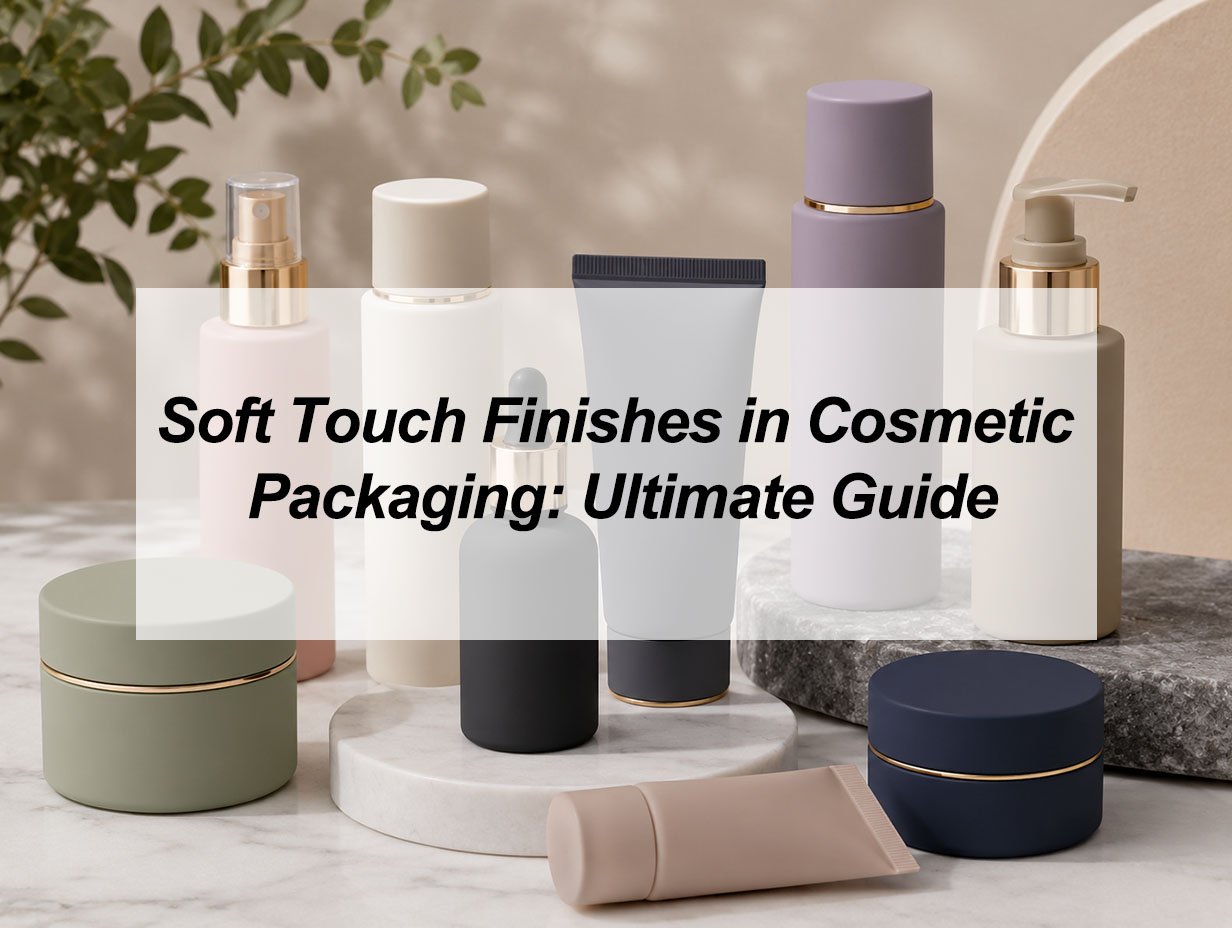
Soft touch finishes can make cosmetic packaging feel premium, but weak coating can scratch, stain, or age poorly after real use.
Soft touch finishes in cosmetic packaging are matte, velvet-like surface treatments used to improve hand feel, luxury perception, and shelf appeal. Brands should choose them carefully by reviewing material compatibility, coating quality, logo decoration, scratch resistance, rub resistance, oil exposure, sustainability impact, and supplier testing standards.
Soft touch cosmetic packaging must balance beauty, durability, decoration, cost, recyclability, and real handling. A good surface should feel premium, stay clean, and support the brand.
What Is a Soft Touch Finish in Cosmetic Packaging?
Soft touch packaging is not only a matte look. It is a surface experience that the customer feels immediately.
A soft touch finish in cosmetic packaging is a special coating or lamination that creates a smooth, matte, velvet-like hand feel on the package surface. It is often used on skincare bottles, cream jars, lipstick tubes, compact cases, airless packaging, cartons, labels, and luxury rigid boxes.
1. The Basic Meaning
A soft touch finish changes how packaging feels in the hand. It can feel smooth, velvety, powdery, rubber-like, or suede-like, depending on the coating system and material. It usually reduces shine and creates a quiet, premium surface.
This finish is common in luxury beauty because cosmetics are highly sensory products. Customers do not only look at the package. They touch it, open it, carry it, photograph it, and judge the brand through small details. Beauty packaging trend coverage for 2026 points to sensory design as an important direction, including soft finishes, magnetic closures, mixed materials, and satisfying opening details.
2. Common Packaging Uses
Soft touch finishes can be used on both primary and secondary packaging. The right use depends on material, shape, price point, and handling risk.
| Packaging Type | Soft Touch Use |
|---|---|
| Airless bottle | Premium skincare and active formulas |
| Cream jar | Luxury cream and anti-aging lines |
| Lipstick tube | Matte luxury makeup effect |
| Compact case | Soft grip and modern surface |
| Perfume carton | Premium outer-box experience |
| Paperboard box | Smooth tactile unboxing |
| Rigid gift box | High-end presentation |
| Label | Soft matte product information surface |
3. Soft Touch vs. Normal Matte
A normal matte finish reduces gloss. A soft touch finish adds a tactile feeling. This difference matters because a soft touch coating can make packaging feel more expensive even when the shape is simple.
| Finish Type | Visual Effect | Touch Feeling | Best Use |
|---|---|---|---|
| Glossy | Bright and reflective | Smooth and slick | Fresh, clean, colorful lines |
| Matte | Low shine | Dry and simple | Minimal skincare and modern beauty |
| Soft touch | Low shine | Velvet-like and smooth | Premium skincare, luxury makeup, gift sets |
| Frosted | Blurred and translucent | Cool and slightly textured | Glass, PETG, serum bottles |
| Rubberized | Matte and grippy | Soft but more rubber-like | Compacts and makeup cases |
The main value of soft touch finishing is emotional. It creates a moment of contact. The customer may not know the coating name, but they understand that the package feels better.
Why Do Beauty Brands Use Soft Touch Finishes?
Beauty brands use soft touch finishes because touch can make packaging feel more expensive, calm, and memorable.
Beauty brands use soft touch finishes to create a premium hand feel, reduce harsh shine, support minimalist design, improve unboxing, and make packaging feel more refined. This finish works well for luxury skincare, clean beauty, fragrance, makeup, gift sets, and products that depend on first-touch impression.
1. It Makes Packaging Feel Premium
Soft touch finishes are often used when a brand wants quiet luxury instead of loud decoration. A soft matte black lipstick tube, an ivory cream jar, or a beige skincare carton can look calm and high-value without too many colors or graphics.
Small premium cues include:
- smooth hand feel;
- low-gloss surface;
- soft color depth;
- clean logo contrast;
- quiet shelf presence;
- better unboxing emotion.
Packaging trend reports also show that 2026 beauty packaging is moving toward tactile engagement and quiet luxury, where texture and finish matter as much as bright visual branding.
2. It Supports Minimalist Branding
Soft touch finishes work well with minimal design. The surface carries part of the brand message. A simple logo can feel stronger when the package surface already feels refined.
| Brand Style | Soft Touch Benefit |
|---|---|
| Luxury skincare | Creates calm, high-value touch |
| Clinical skincare | Adds premium feel without heavy decoration |
| Clean beauty | Supports soft, natural, simple visuals |
| Makeup | Makes compacts and lipsticks feel modern |
| Fragrance | Improves carton and gift-box experience |
| Men’s grooming | Works well with matte black or gray surfaces |
3. It Improves E-Commerce and Social Visuals
Soft touch packaging also photographs well. It reduces strong reflections and creates a softer visual surface. This helps product pages, social media images, unboxing videos, and B2B catalogs.
But the finish must be clean. Dust, fingerprints, oil marks, and scratches can become visible in close-up photos. This is why durability testing matters before final approval.
Which Cosmetic Packaging Materials Work Best With Soft Touch Coatings?
Soft touch coating can work on many materials, but it does not behave the same way on every surface.
Soft touch finishes can work on plastic, paperboard, aluminum, glass, acrylic, ABS, PETG, PP, and labels. The best material depends on the product format, decoration plan, coating method, durability target, and brand positioning. Brands should test the actual finish on real packaging samples before production.
1. Plastic Packaging
Plastic is common for soft touch cosmetic packaging because it can be molded into many shapes. PP, ABS, PETG, acrylic, and PET can all use different surface effects, but each material needs different treatment.
Common plastic uses include:
- airless bottles;
- pump caps;
- lipstick tubes;
- compact cases;
- cream jars;
- mascara caps;
- skincare bottles.
ABS and acrylic are often used for luxury outer components. PP is common for caps and functional parts. PET and PETG are common for bottles and transparent packaging. The coating process should match the material surface to avoid weak adhesion or uneven appearance.
2. Paperboard Packaging
Soft touch lamination or coating is common on cartons, labels, sleeves, and rigid boxes. It can make paper packaging feel smoother and more premium. Recent finish guides describe soft-touch lamination as a common cosmetic packaging finish, often used with foil stamping, embossing, debossing, spot UV, and other premium details.
Paperboard soft touch works well for:
- skincare cartons;
- perfume boxes;
- makeup palettes;
- gift sets;
- sleeve packaging;
- sample kits;
- rigid boxes.
3. Aluminum, Glass, and Premium Components
Soft touch effects can also be used with aluminum, glass, or coated premium parts. These materials can create a modern contrast between cold structure and soft surface. The challenge is durability. Coating on hard, smooth, or curved surfaces must be tested carefully.
| Material | Soft Touch Fit | Main Checkpoint |
|---|---|---|
| PP | Good for caps, jars, pumps | Adhesion and scratch resistance |
| ABS | Strong for makeup and luxury shells | Coating durability |
| PET | Good for bottles | Compatibility and surface prep |
| PETG | Premium clear packs | Coating clarity and recycling story |
| Acrylic | Luxury jars and caps | Scratch and fingerprint risk |
| Glass | Premium bottles and jars | Coating adhesion and chipping |
| Aluminum | Tubes, caps, shells | Denting and coating damage |
| Paperboard | Cartons and rigid boxes | Lamination, fold lines, recyclability |
| Labels | Flexible branding | Adhesion and rub resistance |
The safest approach is simple. Do not approve soft touch from a color card only. Test it on the exact package material, shape, color, decoration, and shipping condition.
What Should Brands Test Before Choosing Soft Touch Packaging?
Soft touch finishes can fail if brands only judge them by first impression. The surface must survive real production and real customer use.
Before choosing soft touch packaging, brands should test scratch resistance, rub resistance, coating adhesion, fingerprint visibility, dust pickup, oil exposure, water exposure, heat stability, transport scuffing, logo durability, color consistency, and recyclability impact. These tests reduce the risk of sticky surfaces, weak decoration, and poor customer experience.
1. Scratch and Scuff Resistance
Soft touch surfaces can look premium when new, but they may show scratches or scuffs during filling, assembly, shipping, and customer use. This is especially important for black, dark blue, deep green, and other dark matte packages.
Brands should test:
- carton-to-bottle friction;
- cap rubbing;
- fingernail marks;
- product handling;
- travel movement;
- shelf display wear.
2. Oil, Dust, and Fingerprint Resistance
Cosmetic packaging is often touched with skincare, oil, sunscreen, cream, foundation, or wet hands. A soft touch surface that attracts oil or dust can become dirty quickly.
Testing should include:
- hand cream contact;
- facial oil contact;
- sunscreen contact;
- alcohol wipe exposure;
- water contact;
- repeated touch cycles;
- dust pickup review.
A soft touch finish guide for cosmetic packaging notes that screen printing, hot stamping, labels, and rub resistance should be assessed together with the finish, and it also highlights scratch and scuff visibility as a key review point.
3. Decoration Durability
Logo decoration must be tested on top of or alongside the soft touch finish. A logo that fades, peels, cracks, or loses metallic shine can weaken the product image.
| Decoration Method | Test Needed |
|---|---|
| Silk screen printing | Rub, scratch, and adhesion test |
| Hot stamping | Tape test and edge durability |
| Spot UV | Contrast and cracking check |
| Label | Adhesion and edge lift test |
| Embossing | Fold and pressure review |
| Debossing | Surface consistency review |
| Metallic coating | Scuff and recycling review |
4. Aging and Sticky Surface Risk
Some soft touch or rubberized coatings can become sticky over time if coating quality is poor or storage conditions are harsh. This is a serious risk for cosmetics because products may sit in warehouses, retail shelves, handbags, bathrooms, or warm environments.
Brands should test:
- heat aging;
- humidity aging;
- UV exposure;
- long storage;
- coating transfer;
- packaging contact marks.
The goal is not only a beautiful launch sample. The goal is a package that still feels good after months of handling and storage.
How Can Brands Balance Soft Touch Beauty With Sustainability?
A soft touch finish can improve the user experience, but brands should review how the coating affects recycling and packaging claims.
Brands can balance soft touch beauty with sustainability by checking coating chemistry, coating thickness, material family, recyclability impact, PCR compatibility, decoration layers, supplier documentation, and local recycling acceptance. A soft touch finish should support the brand experience without creating unclear or exaggerated sustainability claims.
1. Coatings Can Affect Recycling
Soft touch finishes add another layer to the package. That layer may be small, but it can still affect recycling, sorting, decoration removal, or claim language. This matters more as packaging rules become stricter.
The EU Packaging and Packaging Waste Regulation entered into force on February 11, 2025, and will generally apply from August 12, 2026. It aims to reduce packaging waste and support reuse, recycling, and recycled-content direction.
2. Use Specific Claims
Brands should avoid vague claims when soft touch finishes are involved. It is better to say exactly what the package uses and what has been tested.
Weak claims include:
- eco-friendly;
- fully green;
- plastic-free;
- recyclable everywhere;
- sustainable coating.
Stronger claims include:
- soft touch coating on PP component;
- FSC paperboard carton with soft touch coating;
- PCR plastic bottle with tested decoration;
- recyclable where local systems accept this structure;
- reduced secondary packaging compared with previous design.
3. Review the Full Structure
A soft touch finish is only one part of the package. The full structure may include resin, cap, pump, label, coating, foil, glue, carton, insert, and shipping materials.
| Sustainability Check | Question to Ask |
|---|---|
| Material family | Is the main package PET, PP, PE, glass, aluminum, or paperboard? |
| Coating layer | Does the soft touch finish affect sorting or recycling? |
| Decoration | Does foil, metallization, or label reduce recyclability? |
| PCR use | Can the finish work on PCR material? |
| Refill model | Is the package designed for repeat use? |
| Supplier proof | Can the supplier provide material and coating documents? |
| Local recycling | Is the final structure accepted in the target market? |
Soft touch packaging can still be a good choice. But it should be chosen with honest documentation and real testing.
How Should Brands Choose a Soft Touch Finish Supplier?
A soft touch finish is only as good as the supplier’s coating control, decoration skill, and quality testing.
Brands should choose a soft touch finish supplier by checking sample quality, coating stability, decoration ability, material experience, MOQ, lead time, color control, rub testing, scratch testing, aging testing, packaging method, and quality inspection standards. A good supplier should explain risks before production, not after problems appear.
1. Ask for Real Samples
Brands should not approve soft touch packaging from photos only. They should request real samples with the same material, shape, color, finish, and decoration.
The sample review should check:
- surface smoothness;
- color consistency;
- hand feel;
- logo clarity;
- coating edge quality;
- dust pickup;
- fingerprint visibility;
- scratch resistance;
- cap and body fit.
2. Confirm Decoration Ability
Soft touch coating and decoration must work together. Some suppliers can do coating but cannot manage high-quality hot stamping. Some can print well on paperboard but not on curved plastic bottles. Some can create a good prototype but fail consistency in mass production.
| Supplier Capability | Why It Matters |
|---|---|
| Coating experience | Controls hand feel and surface quality |
| Decoration process | Keeps logos, foil, and labels durable |
| Material knowledge | Prevents adhesion and compatibility problems |
| QC system | Catches scratches, color shifts, and coating defects |
| Packaging method | Reduces transport scuffing |
| Batch control | Keeps finish consistent across orders |
| Testing support | Reduces production and launch risk |
3. Define Quality Standards Early
Soft touch finishes are harder to judge than simple color. One person may accept a slight mark. Another person may reject it. This creates conflict if quality standards are not clear.
A clear standard should define:
- acceptable scratch level;
- color tolerance;
- surface dust limit;
- coating adhesion level;
- logo rub resistance;
- packaging protection method;
- inspection method;
- approved sample reference.
This step is especially important for dark matte packaging and luxury cosmetic projects.
My insights: Soft Touch Finishes in Cosmetic Packaging: What Should Brands Know Before Choosing Them
Soft touch packaging can feel premium at first contact, but poor coating can create scratches, dust marks, sticky surfaces, and customer complaints.
Soft touch finishes in cosmetic packaging create a smooth, matte, velvet-like surface that improves tactile appeal and premium perception. Brands should choose them by checking material fit, coating quality, decoration method, durability, scratch resistance, oil resistance, recyclability impact, cost, and the real user environment before mass production.
From Premium Hand Feel to Practical Packaging Decisions
Soft touch finishes should not be chosen only because they look beautiful in photos. They should be tested as part of the full packaging system. A lipstick tube, compact case, airless bottle, cream jar, skincare carton, and rigid gift box all face different handling conditions.
| Decision Area | What Brands Should Check | Why It Matters |
|---|---|---|
| Material fit | PP, PET, PETG, ABS, acrylic, glass, aluminum, paperboard | Coating behavior changes by surface |
| Hand feel | Velvet, rubbery, powdery, smooth, matte | Touch creates the first premium signal |
| Decoration | Silk screen, hot stamping, spot UV, embossing | Logo must stay clear and durable |
| Durability | Scratch, rub, scuff, dust, oil, water | Weak coating lowers customer trust |
| Color choice | Matte black, ivory, beige, soft pink, deep tones | Some colors show marks more easily |
| Sustainability | Coating layer, recyclability, supplier documents | Claims must be specific and defensible |
| Use case | Travel, bathroom, handbag, retail, e-commerce | Real handling affects coating performance |
The best soft touch finish is not just soft. It should keep its look after filling, transport, shelf display, customer handling, and daily use. A premium surface should feel good and stay reliable.
Conclusion
Soft touch finishes work best when brands balance premium hand feel, decoration quality, durability testing, sustainability review, and supplier control before mass production.