Beauty packaging is getting harder to choose. Buyers want beauty, function, proof, and lower waste. A pretty bottle alone no longer feels safe.
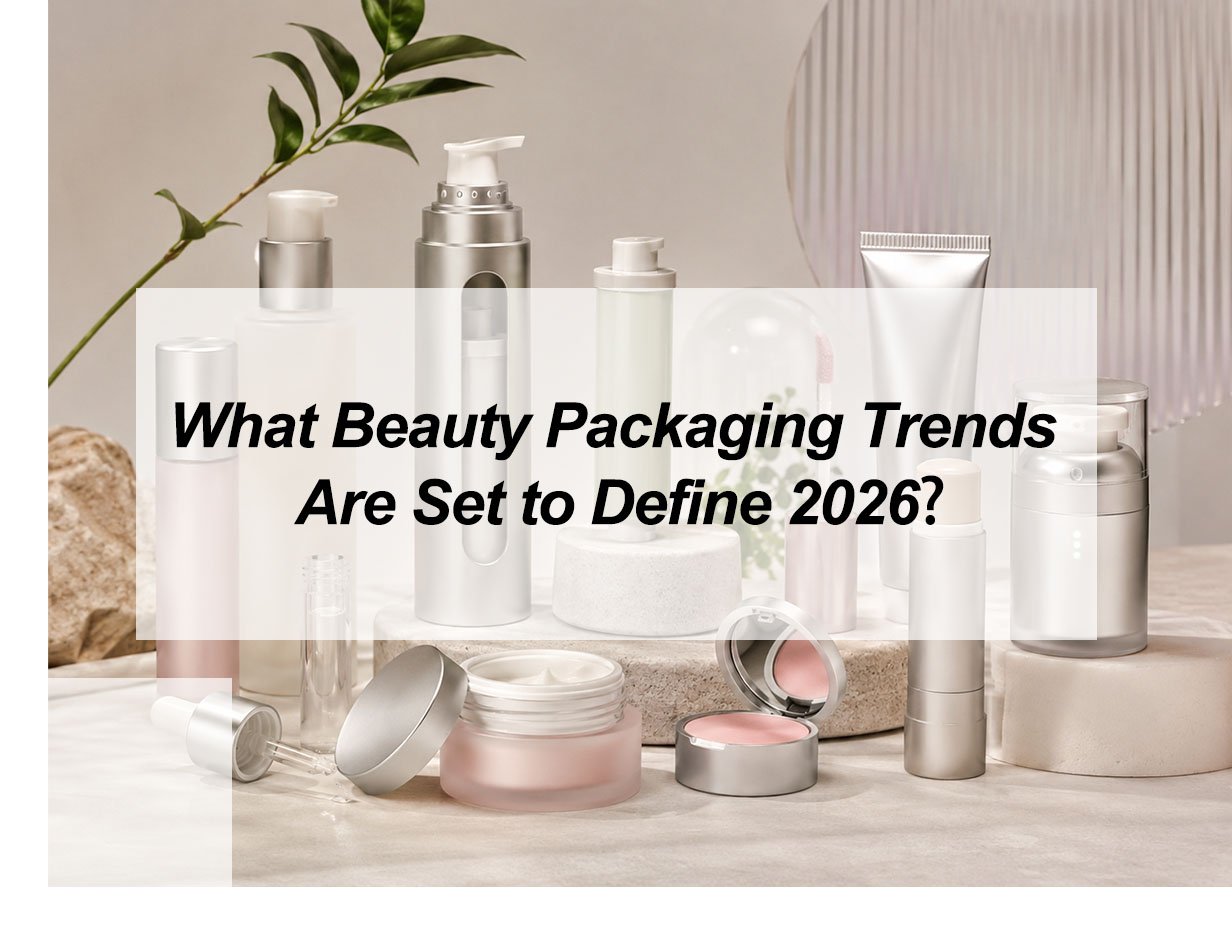
The beauty packaging trends set to define 2026 are refillable systems, mono-material designs, lightweight luxury, smart packaging, precise applicators, portable formats, aluminum packaging, and clearer sustainability claims. I see packaging becoming both a sales tool and a compliance tool. Brands will need packs that look good, work well, travel easily, and prove their environmental value.
I believe 2026 will be the year when beauty packaging stops acting like decoration and starts acting like infrastructure. A package will need to sell on screen, protect the formula, support refill behavior, meet recycling rules, and still feel special in the customer’s hand. That is a high bar, but it is also a strong chance for brands that make packaging decisions early.
What Are the Main Beauty Packaging Trends in 2026?
Beauty brands face a noisy market. Many formulas look similar, and many claims sound the same. Packaging is becoming the fast signal customers notice first.
The main beauty packaging trends in 2026 are sensory packaging, refillable formats, mono-material components, precise applicators, smart QR or NFC labels, aluminum packs, portable beauty formats, and lightweight luxury. I see these trends working together because brands need packaging that can create desire, reduce waste, and support easier product use.
Packaging Must Sell Before the Formula Speaks
I see a clear shift from shelf-first packaging to screen-first packaging. A product may appear first in a TikTok video, a live shopping stream, a marketplace image, or a short ad. In that setting, the packaging has only seconds to explain the value. A soft-touch tube, a clean click, a visible glide, or a satisfying pump can help the product feel more useful before anyone reads the ingredient list.
This matters because beauty categories are crowded. Lip oils, peptide balms, skin tints, barrier creams, body sticks, and scalp serums often use similar claims. Packaging can create the difference. I would not treat the outer shape as a final styling choice. I would treat it as part of the product experience.
The 2026 Trend Map
| Trend | What It Means | Why It Matters |
|---|---|---|
| Sensory packaging | Texture, sound, shape, and motion feel more intentional | It helps products stand out online and offline |
| Refillable packaging | Durable outer packs with lower-waste refills | It supports repeat purchase and lower material use |
| Mono-material packaging | More parts made from one material family | It makes recycling easier and cleaner |
| Precise applicators | Roller tips, needle-nose tips, combs, massage heads, airless pumps | It improves product control and ritual |
| Smart packaging | QR codes, NFC, RFID, and traceability labels | It gives buyers proof, instructions, and after-sale content |
| Lightweight luxury | Premium feel without heavy, wasteful materials | It balances beauty, cost, freight, and sustainability |
I think the best packaging projects in 2026 will not chase every trend. They will choose the few that match the formula, price point, market, and customer behavior. A refillable compact may fit color cosmetics. A mono-material bottle may fit daily skincare. A smart label may fit products with certification claims. A portable keychain lip gloss may fit social commerce. Good design will come from focus.
Why Is Sustainable Beauty Packaging Changing in 2026?
Sustainability has become confusing. Many buyers have heard too many broad claims. Words like eco-friendly now need proof, not just good design.
Sustainable beauty packaging is changing in 2026 because buyers and regulators expect clearer proof. Brands need to show recycled content, recyclability, refill logic, material reduction, and traceability. I see the market moving from vague green language toward measurable packaging choices that can survive buyer questions and regulatory review.
The End of Easy Green Claims
I believe the biggest change is not the arrival of one magic material. The real change is discipline. Brands can no longer say a package is sustainable only because it looks natural, uses kraft paper, or carries a leaf symbol. Buyers are asking better questions. Can the pump be recycled? Does the refill reduce total plastic? Is the pouch accepted by local systems? Is the aluminum tube compatible with the formula? Is the carton overbuilt?
This makes sustainable cosmetic packaging more technical. It also makes supplier communication more important. A buyer needs clear data before ordering. A packaging supplier needs to explain material grade, decoration method, recycling limits, refill structure, and quality control.
Practical Sustainability Questions for 2026
| Question I Would Ask | Why I Would Ask It |
|---|---|
| Is this pack refillable in real customer behavior? | A refill system only works if customers actually use it |
| Is the main component mono-material? | Mixed materials can make recycling harder |
| Can decoration be reduced or changed? | Heavy coatings, labels, and metalized finishes may affect recycling |
| Is the pack lighter without feeling cheap? | Lower weight can reduce material and shipping pressure |
| Can claims be verified? | Buyers need proof for brand trust and compliance |
| Does the pack protect the formula well? | Sustainability cannot replace product safety |
I also see refillable beauty packaging becoming more selective. Refill is not right for every SKU. It works better when customers like the product enough to repurchase and when the outer pack feels worth keeping. A cream jar, fragrance bottle, lipstick case, or compact may support refill better than a low-loyalty product. I would design refill systems around repeat behavior, not around a marketing slogan.
In 2026, sustainability will feel less like a style and more like a system. The winning system will use less material, simpler structures, clear instructions, and honest claims.
How Are Refillable and Recyclable Cosmetic Packaging Formats Evolving?
Refillable and recyclable formats sound simple, but they are hard to execute. Many packs fail because they are not easy, clean, or attractive to reuse.
Refillable and recyclable cosmetic packaging formats are evolving toward simple structures, mono-material pumps, refillable sticks, refill pouches, durable compacts, aluminum tubes, and clearer disposal guidance. I see the strongest designs combining convenience with real material reduction, because customers will not repeat a refill process that feels messy or expensive.
Refill Must Feel Easy, Not Like Extra Work
I think refillable packaging succeeds when it feels natural. A customer should understand how to remove, replace, clean, and store the refill without effort. If the mechanism is too tight, too messy, or too confusing, the refill idea becomes weak. This is why packaging engineering matters as much as appearance.
For skincare packaging, refill pods and inner cups can work well when the jar has a premium outer shell. For makeup packaging, refill pans can work when the compact feels durable and beautiful. For fragrance and haircare, refill bottles and pouches can support repeat purchase if the price saving is clear. For lip and stick products, refillable mechanisms need smooth operation because customers use them often.
Mono-Material Is Becoming More Important
Recyclable packaging is also changing. I see more demand for all-PP, all-PE, PET, glass, paper-based, and aluminum solutions. Mixed-material pumps, springs, caps, mirrors, magnets, labels, and decorative layers can create problems at end of life. Mono-material packaging does not solve every recycling issue, but it makes the package easier to explain and easier to process.
Format Choices by Product Type
| Product Type | Packaging Direction for 2026 | Practical Note |
|---|---|---|
| Face cream | Refillable jars, lighter caps, PCR options | The outer jar should feel worth keeping |
| Serum | Airless pumps, mono-material systems, precise dosage | Formula protection stays critical |
| Lip gloss | Portable tubes, charm formats, soft applicators | The applicator can define the user experience |
| Sunscreen stick | Compact stick formats, travel-friendly designs | Clean use and portability are strong selling points |
| Foundation | Airless bottles, refill cartridges, shade-friendly labels | Hygiene and dosage matter |
| Eyeshadow | Refillable pans, durable palettes, magnetic systems with care | Too much metal can hurt sustainability goals |
I would not choose refillable or recyclable packaging only because competitors use it. I would choose it when the product has repeat purchase potential, when the structure reduces waste in a real way, and when the packaging can be manufactured with stable quality. In 2026, the best packaging brief will compare beauty, cost, MOQ, tooling, recyclability, user behavior, and logistics at the same time.
What Role Will Smart Packaging and Precise Applicators Play in 2026?
Beauty buyers want more proof and better use. A label alone is often too small to explain certification, refill steps, and product care.
Smart packaging and precise applicators will play a bigger role in 2026 because they help brands explain value and improve use. QR codes, NFC tags, traceability tools, roller tips, brush tips, comb tips, and airless pumps can turn packaging into a guide, a proof point, and a better application tool.
Smart Packaging Builds Trust
I see smart packaging moving from novelty to practical use. A QR code can show recycling instructions, refill tutorials, batch information, sourcing details, ingredient education, anti-counterfeit checks, and usage videos. NFC or RFID can support higher-end products that need stronger authentication or customer engagement. This matters for B2B buyers because packaging must support both sales and risk control.
Smart packaging is also useful when a brand sells across countries. A physical label has limited space. A connected label can show different language pages, local recycling guidance, product registration details, and updated compliance information. This can help brands reduce packaging clutter while still giving customers more information.
Precise Applicators Create Product Difference
I also see applicators becoming a major design field. When formulas become similar, the way the product touches the skin can become the main point of difference. A cooling metal tip can make an eye serum feel more premium. A needle-nose tube can make a scalp product feel more targeted. A rollerball can make a lip oil feel smooth and controlled. A massage head can make a cream feel more ritual-based.
Smart and Functional Features to Consider
| Feature | Best Use Case | Benefit |
|---|---|---|
| QR code | Mass-market skincare, makeup, haircare | Low cost and easy education |
| NFC tag | Premium skincare or fragrance | Stronger engagement and authentication |
| Batch traceability | Products with certification or export needs | Better buyer confidence |
| Airless pump | Serum, lotion, foundation | Hygiene and formula protection |
| Roller tip | Eye care, lip care, spot care | Controlled and sensory application |
| Comb applicator | Brow, lash, scalp, hairline products | Targeted use and less mess |
| Refill tutorial page | Refillable jars, sticks, compacts | Better refill adoption |
I would keep smart packaging simple. Customers do not scan every code. The scan must offer something useful. It should answer a real question, such as “How do I refill this?” or “How do I recycle this?” or “Is this product authentic?” In 2026, smart packaging will work best when it removes doubt.
My insights: What Beauty Packaging Trends Are Set to Define 2026 for Brands and Buyers
A trend only matters if it helps buyers make better decisions. Many beautiful packs fail because they are too costly, too complex, or too hard to scale.
The beauty packaging trends set to define 2026 will push brands toward packaging that is attractive, refill-ready, recyclable, lightweight, portable, traceable, and easy to use. I see the strongest brands choosing packaging as a business system, not a final decoration step, because packaging now affects sales, compliance, logistics, and trust.
The Best 2026 Packaging Brief Is More Complete
I believe buyers should enter 2026 with a stronger packaging brief. A simple request like “I need a luxury cream jar” is no longer enough. The buyer should define the product type, formula sensitivity, fill volume, decoration method, target price, destination market, sustainability goal, refill plan, testing need, and launch date. This helps suppliers give better solutions and avoids delays later.
For example, a heavy acrylic jar may look premium, but it may create freight pressure and sustainability questions. A lightweight jar may reduce cost, but it may feel weak if the surface finish is poor. An aluminum tube may look modern and plastic-free, but it must match the formula and filling process. A refillable compact may support loyalty, but it needs strong tolerances and a good refill mechanism.
How I Would Choose Packaging in 2026
| Decision Area | What I Would Check |
|---|---|
| Market fit | Does the pack match the customer’s price point and taste? |
| Formula fit | Does the material protect texture, color, scent, and stability? |
| User fit | Is the pack easy to open, hold, apply, refill, and carry? |
| Sustainability fit | Does the structure reduce waste or simplify recycling? |
| Compliance fit | Can the pack support labeling, traceability, and export needs? |
| Supply fit | Can the supplier deliver stable quality, timing, and documents? |
| Brand fit | Does the packaging create a clear visual identity? |
I also see “lightweight luxury” becoming a key idea. Premium packaging does not need to be heavy. It can use shape, texture, color, closure sound, surface finish, and clean proportion to feel expensive. This is useful for beauty brands that need better margins and better logistics.
Portable formats will also define 2026. Mini compacts, keychain lip gloss, stick sunscreen, travel sprays, and easy-carry skincare fit modern routines. The risk is waste. The solution is to design small packs that are reusable, refillable, or emotionally durable enough to keep.
For brands and buyers, my main view is simple. In 2026, beauty packaging must do more jobs with less waste. It must be beautiful, but beauty is not enough. It must be usable, testable, explainable, and scalable.
Conclusion
Beauty packaging in 2026 will reward brands that combine desire with proof. The best packs will feel beautiful, work clearly, and support smarter sourcing decisions.